













Introduction
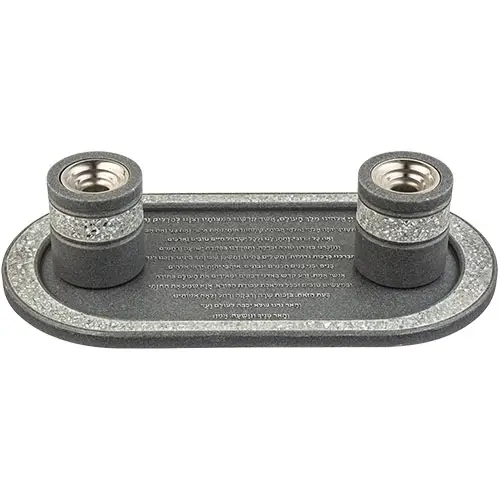
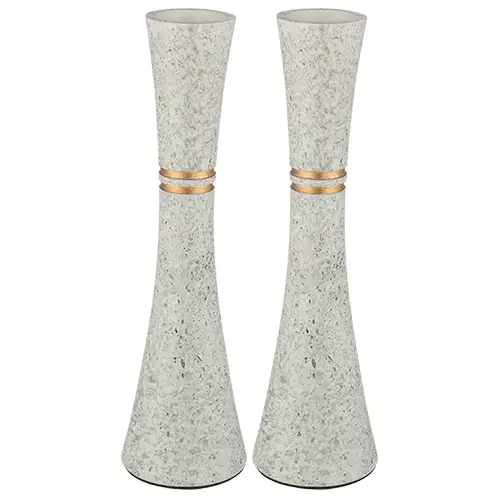
We have now completed the feverish race to prepare for Shabbat. All the dishes have been prepared and the house is neat and clean. Every member of the family is also clean and well-groomed, dressed in attire appropriate for Shabbat. The time has come to welcome our special guest—the Shabbat Queen. We greet her by lighting the Shabbat candles. The kindling of these lights marks the moment when we enter the sacred realm of Shabbat.
Why Do We Light Candles?
There are a few explanations for this custom:
- To honor Shabbat: Tradition teaches us that every Jew receives an “additional soul” on Shabbat that endows him with a sense of tranquility and sanctity on this special day. King Solomon, the wisest of all men, equated the soul of man with a candle (in the verse, “The candle of G-d is the soul of man”). In order to illustrate this concept, we honor the Shabbat day by lighting a candle, which casts its glow on the Shabbat table, illuminates the home, and kindles a “light” in the soul as well.
- To enjoy Shabbat: The very presence of lit candles in the home generates a pleasant sensation. Furthermore, the festive Shabbat meal is a central part of Shabbat itself, and the presence of light increases one’s appetite and enhances the enjoyment that one derives from the special Shabbat foods. Consequently, we endeavor to light the Shabbat candles near the table where we will have our meal, so that we will be able to properly enjoy the Shabbat meal.
- “Peace in the home”: Not long ago, candles were the most common source of illumination in every home. In order to create a sense of tranquility in a home, it is necessary for the house to be illuminated in order to prevent people from bumping into or tripping over objects in the dark. The pain and distress caused from moving around in a dark house would certainly be the opposite of the atmosphere of peace and tranquility that Shabbat is supposed to engender. This specific objective is accomplished nowadays by having electric lights lit, but we still light candles due to the other considerations mentioned above.
Who Lights the Candles?
A married woman lights the Shabbat candles on behalf of herself and her husband. (When the wife is not home, the husband must light candles instead.)
- Even though the wife lights the Shabbat candles, the husband should also contribute his share to the mitzvah by preparing the candles and candlesticks for her to use.
- It is customary to train young girls, as well, to light Shabbat candles. Every girl lights one candle from the time she is capable of speaking until she gets married.
- It is advisable for young girls to light their candles before their mothers light, so that their mothers will be able to help them if necessary. If the mother lights first, she will have “accepted” Shabbat by lighting her own candles, and she will no longer be permitted to handle the flames.
A single boy who lives in his parents’ home is considered to have fulfilled his own obligation by means of the candles that his mother lights. If his mother does not yet light her own Shabbat candles, or if he lives in his own private home, rents a room, or the like, he should light two candles of his own.
What Type of Candles Should Be Used, and How Many
One can use any type of oil and wicks, or any type of candles, for the Shabbat candles.
It is preferable to prepare long candles (or a large quantity of oil) so that they will remain lit throughout the Shabbat meal. It is even better if they remain lit even after the meal has concluded.
- Nowadays, it is simple and easy to use ordinary candles, which do not make a mess. One can even obtain small glasses containing solidified oil, for one-time use, which avoid the necessity of cleaning candlesticks or glasses.
A married woman should light a minimum of two candles, symbolizing the Torah’s two parallel commandments to “remember” and “guard” Shabbat.
- There is a beautiful, widespread custom for a mother to light an additional candle for each of her children. A woman with two children, for instance, would light a total of four candles, the minimum two as well as an additional two for her children.
Why Specifically Women?
The mitzvah of lighting Shabbat candles was given specifically to women because they tend to be at home, they are more involved with the needs of the household, and they tend to possess the type of personality that is more suited to running a household.
An even more profound reason lies in the fact that all women are considered representatives of Eve, the very first woman in history. In the famous incident of Adam and Eve’s sin, Eve caused her husband Adam to eat the fruit of the forbidden tree. As a result, she brought metaphoric “darkness” into the world; man was punished by having to toil for a living, women became subject to the pains of pregnancy and childbirth, and the entire human race was stripped of its immortality. For the rest of history, death would be an inevitable part of the human condition.
The “light” that prevailed in the world before that sin, and that was extinguished when Adam and Eve failed to heed G-d’s Word, is rekindled anew every week on Shabbat when the woman of the house lights the Shabbat candles.
Since women are generally the ones who kindle the Shabbat lights, the following discussion of the laws of the Shabbat candles is written as if it refers to a woman. Nevertheless, a man who must light Shabbat candles should also follow the procedure outlined here.
A Girl Lighting for the Very First Time
When a girl lights Shabbat candles for the first time in her life, she may be required to recite the blessing of Shehecheyanu (“Who has sustained us”—a blessing recited over certain new experiences). As a result, it is preferable to schedule the occasion for a day when she is wearing a new garment or for the beginning of a holiday, both of which are occasions when she would be required to recite this blessing anyway. Of course, the Shehecheyanu blessing accompanies the regular blessing over the Shabbat candles: “Blessed are You … Who has sanctified us with His commandments and commanded us to light the candle of the holy Shabbat.”
- A girl may recite the blessing of Shehecheyanu anytime after she learns how to speak until she reaches the age of twelve. Once she has turned twelve, however, she should not recite Shehecheyanu even if it is the first time she has ever lit Shabbat candles.
Where Are the Candles Lit?
As we mentioned above, one of the reasons for the mitzvah to light Shabbat candles is the fact that the presence of candles enhances the experience of the Shabbat meal. For that reason, the candles should be lit in the room where the Shabbat meals will take place.
The candles should ideally be lit on the table that will be used for the meal, provided that having the lit candles there will not create a dangerous situation.
- If the candles are lit on the table, the challot (or any other object that is permitted to be used on Shabbat) should also be placed on the table before they are lit, in order to prevent the table from becoming Muktzeh.
The Time for Lighting Candles
The Shabbat candles should be lit close to the beginning of Shabbat in order to make it clear that they are being lit in honor of Shabbat.
One should take care to light the Shabbat candles no later than 18 minutes before sunset. If that is not possible, they may be lit until just before sunset itself, but after sunset, it is categorically forbidden to light candles!
If you live in Northern Israel or in Jerusalem, the times for candle lighting are different. In the northern region, the candles should be lit no later than 30 minutes before sunset, and in Jerusalem they should be lit 40 minutes before sunset.
Example: If sunset is at 6:00 on a Friday evening, people outside of Israel and in the other areas in Israel should light their candles by 5:42. Residents of the north should light by 5:30, and the residents of Jerusalem (who have committed to observe Shabbat in a more ideal way by beginning it earlier) should light Shabbat candles by 5:20.
In principle, Shabbat begins at the moment that the sun sets. When a woman lights the Shabbat candles, however, she “accepts” Shabbat even before sunset and she becomes bound by all the restrictions of Shabbat.
- Even after the wife or mother has lit her Shabbat candles, the other family members are not subject to the prohibitions of Shabbat until a moment before sunset.
The exact times for candle lighting throughout the year can be found on Jewish calendars, on the Internet, and on our website, www.yahaduton.com
What Must Be Done Before Lighting Candles?
- One should put on one’s Shabbat finery.
- If a woman feels that she will not have enough time to get dressed in her Shabbat attire before the time for candle lighting arrives, she should light the candles while wearing her weekday clothing. She should not, Heaven forbid, place herself in a position in which she may desecrate the Shabbat by accidentally lighting the candles after sunset.
- One should recite Minchah, the afternoon prayer service.
- One should place a coin in a tzedakah (charity) box.
The Jewish people have a custom for the entire family to gather around their mother when she lights the Shabbat candles, both in order to respond “Amen” to her blessing and in order to be present when she blesses her family members in a whisper, which is part of the candle lighting ritual.
These moments are etched into every Jew’s memory and leave an unforgettable imprint of warmth and sanctity in the children’s hearts that will remain with them throughout their lives.
The Candle Lighting Procedure
Unlike other mitzvot, which we perform only after reciting the relevant blessing, the lighting of the Shabbat candles takes place before the blessing is recited.
- The woman lights the candles.
- If the candles are lit with a match, the lit match should be placed on a piece of aluminum foil or the like and left to go out by itself.
- After the woman lights the candles, it is customary to wave her hands around the candles three times. She then covers her eyes with her hands and recites, “Blessed are You … Who has sanctified us with His commandments and commanded us to light the candle of the holy Shabbat.”
- It is customary for women to keep their eyes covered for a few moments and to recite a silent prayer to G-d for health and satisfaction for their children and the entire family. A woman is permitted to add her own personal requests, as well. This is a fitting time to pray for the Messiah to come.
- When this prayer has concluded, the woman removes her hands from her eyes and gazes at the candles. Now that the candles have been lit, the woman has, in effect, “accepted” Shabbat. From her vantage point, Shabbat has already arrived even if the sun has not yet set, and it is prohibited for her to engage in any activity that is forbidden on Shabbat itself.
- After the candles have been lit, the woman greets her husband and family with the words “Shabbat Shalom.”
After the Lighting
- The woman should ask a man (who has not yet “accepted Shabbat”) to put away the matches (and the tzedakah box, if applicable) because it is forbidden to handle them on Shabbat.
- Once the candles are lit, they should not be touched or moved.
- After the candles have been lit, one should not eat or drink until Kiddush.
Oh No! I Forgot to Light the Candles!
A woman who regularly lights Shabbat candles and forgets to light them one week should light an additional candle on all subsequent weeks, in addition to the number of candles that she regularly lights. This additional candle will serve as a constant reminder to her not to forget the mitzvah of lighting Shabbat candles again.
If a woman was unable to light candles due to unavoidable circumstances, such as the need to stay with a person who was ill, she is not obligated to add a candle in subsequent weeks, since her failure to light was not the result of mere forgetfulness.
Question: I have recently begun to become observant, thank G-d, and I took upon myself the commitment to light Shabbat candles every week. Is it necessary for me to light an additional candle for every week when I did not light Shabbat candles in the past?
Answer: First of all, we wish you much success in the continuation of your return to your roots. With regard to your specific question, it is not necessary for you to light any additional candles to make up for past weeks. You should begin with the number of candles that you are required to light now, and the light of those candles will dispel the “darkness” of the weeks in the past when you did not observe Shabbat.


