










Meals on Friday Afternoon
In order to uphold the honor of Shabbat, our Sages decreed that we should be sure to be slightly hungry when Shabbat arrives, so that we would have an appetite for the Shabbat meals. Therefore, after noon on Friday, one should not serve or eat a meal that is larger than the norm for a weekday.
- When it is necessary to hold a festive meal on Friday in honor of a mitzvah such as a Brit Milah (circumcision) or Pidyon Haben (redemption of the firstborn), one should make sure that the meal concludes before noon.
- It is permissible to eat small meals, without bread, throughout the day.
Working on Friday
After noon on Friday, one should not engage in any work that is not directly related to the preparations for Shabbat. The purpose of this is to ensure that one’s mind remains clear and one is able to focus on preparing for Shabbat.
The following is a partial list of activities that are directly related to Shabbat and are therefore permissible even after noon on Friday: mending clothes, ironing, laundering garments, polishing shoes, and cleaning the house.
Traveling on Friday
Are you planning to spend Shabbat with friends or relatives in a different location? Do you plan on traveling there on Friday itself?
It is very important not to set out on a trip at a late hour on Friday, even if your destination is not far away. Unexpected delays may arise while you are traveling, and you might find yourself stuck alongside your car at the arrival of Shabbat. Whenever you are traveling on Friday, you must see to it that you leave with ample time to arrive at your destination in time for Shabbat.
Preparing the Body for Shabbat
- It is a mitzvah for every person to wash his or her entire body with hot water before Shabbat.
- It is customary for men to immerse themselves in a mikveh before Shabbat. This immersion serves to purify them and is thus a fitting preparation for Shabbat itself. There is a mikveh in every community or neighborhood; one should be certain to find out in advance at what hours it is open.
- It is also a mitzvah to take a haircut and cut one’s nails before Shabbat when necessary.
- Kabbalah dictates many details regarding the cutting of nails, including when and how to do so. For more information, see Yahaduton—Jewish Daily Life.
Special Clothing for Shabbat
One should dress in clean, festive, formal attire in honor of Shabbat. It is customary to wear special clothes on Shabbat that are not typically worn during the week.
- Every man should have a separate tallit (prayer shawl) to use on Shabbat.
Tasting the Shabbat Foods
It is a mitzvah to sample the Shabbat foods on Friday in order to be certain that they are tasty enough to be served on Shabbat.
- It is problematic to add spices or seasoning to the food on Shabbat itself, which makes it even more important to make sure before Shabbat begins that the foods are properly seasoned.
Shabbat Clocks
In order to prevent Shabbat desecration and to conserve electricity, the Jewish people have developed a unique invention known as the “Shabbat clock.” This is actually a small timer that automatically creates or breaks an electric circuit at the times that are programmed into it before Shabbat. Thus, it can turn off the lights in the home after the Friday night meal, so that it will be dark while the members of the household are sleeping, and can turn them on again automatically in the morning in order to provide light for the daytime meal. Shabbat clocks are available today in any electronics store.
- Before Shabbat begins, one should make certain that the entire electrical system of the house is connected to a Shabbat clock and that the switch is adjusted so that the flow of electricity will be controlled by the timer.
- For your own convenience, it is always a god idea to make sure that the clock is set to the correct time and that the times for the electricity to be connected or disconnected are suited to your needs for this specific week. (A Shabbat clock is particularly liable to be set to the wrong time if there was an electrical blackout in the course of the previous week.)
The Shabbat Hot Plate
In order to keep food hot for the daytime meal, one may place the food on top of a flat metal sheet (a blech) that covers the lit stove. The knobs that control the flames on the stove should also be covered. Alternatively, the food may be placed on a non-adjustable electric hot plate, which can serve as a substitute for a lit stove.
Any food that is to be kept warm throughout Shabbat should be placed on the hot plate about half an hour before Shabbat begins. The food should be very hot at that time and should also be already sufficiently cooked.
Is There a Baby in the House?
If there is a baby in your home, you should prepare a sufficient quantity of any items that you need to care for the baby and whose preparation would entail a violation of the laws of Shabbat. Of course, one should also have on hand a sufficient quantity of all baby supplies, such as diapers, baby wipes, etc. The following items should be prepared in advance to avoid potential Shabbat infractions:
- Cooked or mashed baby food
- Pieces of cotton
- Boiling water (in an urn or thermos)
Preparing the Home
- Before Shabbat begins, one should clean and organize one’s house.
- All Muktzeh items should be put aside. This includes cellular phones, cigarettes, laptop computers, wallets, and the like.
- One should make certain that there is cut toilet paper in every bathroom, as well as cut paper towels for use in the kitchen. If you have garbage bags that are attached to each other, you should separate a few before Shabbat in order to be able to use them on Shabbat.
- One should be sure that the lighting in the house is set up appropriately before Shabbat begins. Lights should be extinguished in rooms where they will not be needed during Shabbat (such as bedrooms), and they should be kept lit in whatever main rooms will be used on Shabbat. One should also make sure, where appropriate, that all electric lights are connected to the Shabbat clock.
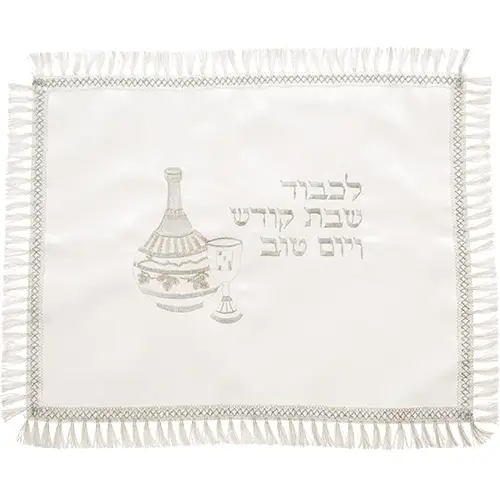
- A white tablecloth should be placed on the table, and the table should be set in a manner that is appropriate and respectful for Shabbat. If you enjoy folding napkins in a decorative fashion, you should be sure to do so before Shabbat begins.
- If you use a disposable tablecloth from a roll, make sure that all the tablecloths you will need throughout Shabbat are cut before Shabbat begins.
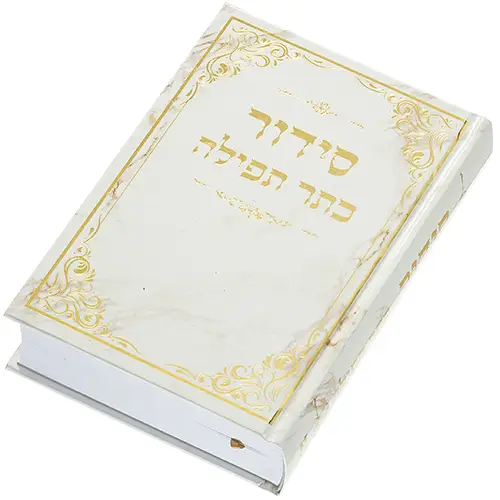
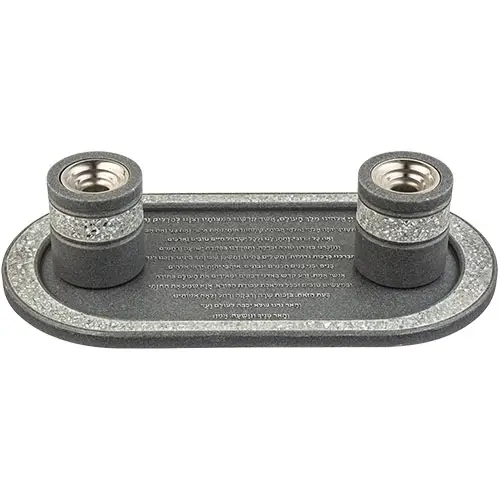
- If you plan to move the tray containing the Shabbat candles after they go out, you should be sure to place an important food item (such as a roll or a bottle of wine) or a religious book (a volume of Psalms, a siddur, and the like) on the tray before Shabbat begins. This will prevent the tray from becoming Muktzeh, which would make it impermissible for it to be moved.
Preparing the Kitchen
- All food items that will be eaten on Shabbat must be cooked before Shabbat begins.
- All cans and bottles that will be used on Shabbat should preferably be opened before Shabbat begins.
- One should prepare a sufficient quantity of boiling water before Shabbat begins to accommodate all of one’s needs on Shabbat itself. The water can be kept hot in a thermos or in an urn. An electric urn must have a special Shabbat setting that keeps its temperature at a fixed level.
- The lights in the refrigerator and freezer should be extinguished before Shabbat in order to prevent it from going on when the door is opened. (Some refrigerators are equipped with a Shabbat mode that is activated by a button or switch. When this mode is activated, opening the refrigerator door has no effect on the thermostat or the motor.)
The Final Preparations
- Before Shabbat begins, inspect all pockets—of a shirt, pants, and jacket—to make certain that they do not contain any Muktzeh items.
- In a place where there is no Eiruv, one must make certain that one’s pockets are completely empty in order to avoid transgressing the prohibition of carrying objects outdoors.


