









Introduction
During the reign of King David, a devastating epidemic raged through the Jewish people, causing 100 deaths every day. The king, who possessed the spirit of prophecy, tried to ascertain why the nation had been subjected to such a harsh Heavenly punishment. It was prophetically revealed to him that the Jews had failed to thank G-d sufficiently for His constant shower of blessings and kindness; they did not praise G-d enough for all that He had done for them.
In order to put an end to the plague, King David decreed that, from that day onward, every Jew must bless G-d every single day at least 100 times.
The Jewish people continue to observe this rule meticulously to this very day by reciting a minimum of 100 blessings daily.
How to Reach 100
In principle, every person should preferably recite all 100 blessings on his own every day. If this is not possible, an individual can count the blessings recited by the chazzan during his repetition of the Shemoneh Esrei, to which he responds “Amen,” as part of his own required 100 blessings. The same applies to the blessings recited by the honorees who are called to the Torah; those who respond “Amen” to these blessings may, in a case of need, count them as part of their own 100 blessings.
In practice, it is very easy to complete the required 100 blessings on a regular day; our Sages have basically woven this number of blessings into our daily prayers.
The following is a listing of the 100 blessings that are generally recited on a weekday, beginning with the Maariv service, which marks the beginning of the Jewish “day.” (For an explanation of some of the concepts and the specific prayers mentioned below, see Your Jewish Guide: The Synagogue and Prayers.)
-
- The four blessings of the Shema recited during the evening prayer service
- The nineteen blessings in the Shemoneh Esrei of the evening service
- The blessing of Hamapil, which is recited before retiring for the night
- The blessing over Netilat Yadayim (the ritual hand washing) that is recited in the morning
- The blessings of Asher Yatzar and Elokai Neshamah that are recited before the Morning Blessings
- The fifteen Morning Blessings
- The three blessings for Torah study
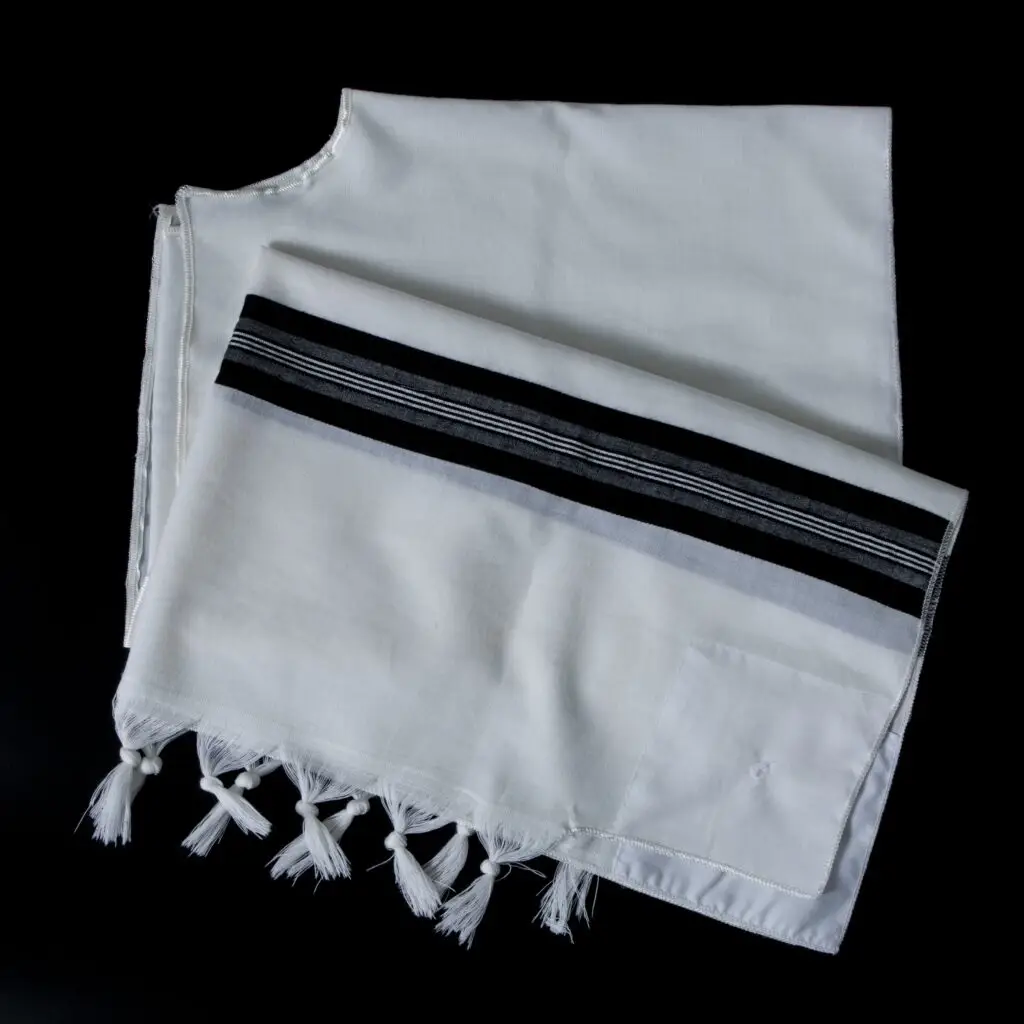
- The blessing for tzitzit—either “regarding the commandment of tzitzit,” for those who wear only a tallit katan, or “to wrap ourselves in tzitzit,” for those who don a tallit for the morning prayers
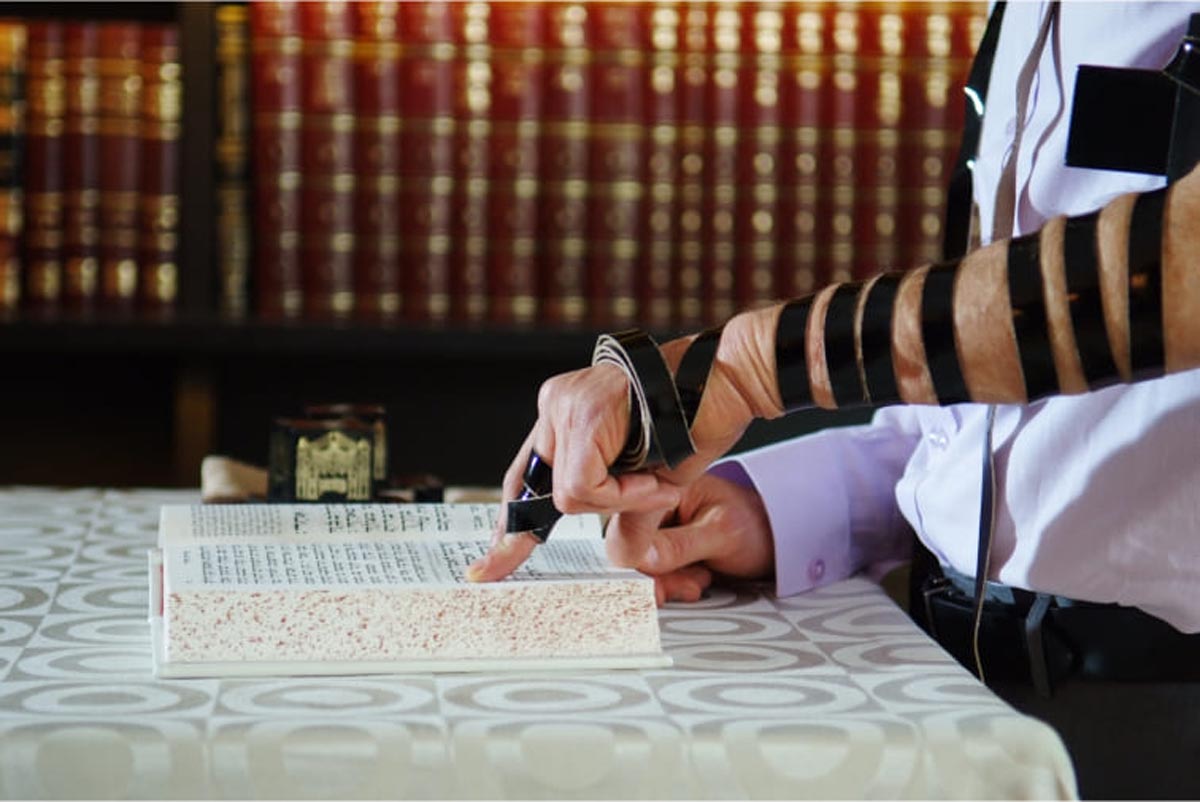
- The blessing recited before donning the tefillin
- The two blessings with which we begin and conclude Pesukei Dezimrah: Baruch She’amar and Yishtabach
- The three blessings of the Shema recited during the morning prayer service (Shacharit)
- The nineteen blessings in the Shemoneh Esrei of Shacharit
- The nineteen blessings in the Shemoneh Esrei of Minchah
If you add up all the blessings in this list, you will find that they reach a total of 90 blessings. In addition, it is normal for a person to have two meals a day at which bread is eaten, which adds another twelve blessings to the list, six at each meal, as follows:
-
- The two blessings recited before the meal begins, one on the Netilat Yadayim and the other, the blessing of Hamotzi, on the bread
- The four blessings that make up the Grace After Meals, which is recited at the conclusion of the meal
Altogether, we have reached a total of 102 blessings, all of which are recited in the course of our normal daily routines. The rule instituted by King David can thus be fulfilled without any special effort on our part.
- Are you not eating bread today? No problem! In addition to the prayer services and meals, a regular day affords a person many more opportunities to recite blessings. Did you use the lavatory? Each time you do, there is a blessing to recite. Did you have a snack between meals? There are at least two blessings to recite every time you do – one before and one after. And there are many more examples. Beginning on the next page, you will learn about other types of blessings that can help you reach the desired number of 100.
On Shabbat, the Shemoneh Esrei prayer is significantly shorter, and the number of blessings recited on an average Shabbat therefore falls short of 100 by a much greater margin. How do we manage to recite 100 blessings on Shabbat? For the answer to this question, see Proper Conduct for Shabbat.


