












Introduction
The Torah contains no fewer than 613 mitzvot (commandments), all of them given to us by G-d.
These commandments consist of two categories: the 248 “positive” commandments and the 365 “negative” commandments. “Positive” commandments are those which require us to take some sort of action, such as putting on tefillin, giving tzedakah (charity), and honoring our parents. The “negative” commandments are the prohibitions of the Torah, the commandments that require us to refrain from certain actions. Examples include the prohibitions against theft, murder, and revenge.
Does the large number of commandments in the Torah make you feel intimidated? Do you wonder how you will ever be able to observe so many mitzvot? Don’t be frightened.
Many of the mitzvot in the Torah can be observed only while the Holy Temple is standing – may it be rebuilt speedily in our days – and the Kohanim (priests) are performing the ritual service there. Many mitzvot also apply only at specific times or to specific people. Out of the 248 positive commandments, only 207 (the numerical value of the Hebrew word ohr, “light”) can be observed today.
Why a Mitzvah?
What is the deeper meaning of a mitzvah? Why did G-d give us so many mitzvot, and why are we supposed to feel joy when we observe them?
While the word mitzvah literally means “a commandment,” it is also related to the Hebrew word tzavta, which denotes connection and togetherness. A mitzvah connects us with G-d, and that is why it is considered such a privilege to perform a mitzvah. The special status of the mitzvot lies in the fact that they have the ability to connect us with the Infinite G-d.
We can illustrate this point with the example of a simple farmer who has no relationship whatsoever with the king of the country where he lives. As far as the king is concerned, this simple farmer does not even exist. But if the king were to ask the farmer to do something, the farmer would become a person of some significance with respect to the king; he would occupy a position of some importance vis-à-vis the king. The king’s request itself would create a connection between the ruler and his subject, and that alone would cause the farmer to do the king’s bidding with the greatest joy.
This illustration is an analogy for our relationship with G-d. In truth, we are absolutely insignificant in contrast to Him. We are tiny, limited creatures (in fact, the human king in the analogy is also a limited, mortal being, which makes him much closer in nature to the farmer than G-d is to us), while G-d, the Creator, is infinite. With respect to G-d, we cannot be considered beings of any importance, and in fact, no entity in all of creation really has the ability to connect with Him. For this reason, we feel tremendously privileged to have been given His mitzvot, which are the only means by which we can forge a connection with Him. We should therefore observe the mitzvot with genuine joy, understanding that they are the means by which a human being—a limited, material creature—can connect with the infinite G-d.
This also explains why G-d has given us so very many mitzvot. It is specifically because He loves us so greatly that He chose to “ask” so much of us. The plethora of mitzvot in the Torah gives us many opportunities to connect with Him at every moment.
So when we put on our tefillin in the morning, we should not be thinking, “When can I get this ritual over with already?” Instead, our thoughts should be, “Thank You, G-d, for giving me the privilege of having a mitzvah to perform so that I can connect with You.”
Rules for Performing Mitzvot
-
- In order to “show” G-d that we are performing His mitzvot with great love and desire, and that we even enjoy them, we must observe every mitzvah with joy. King David states in the Book of Psalms, “Serve G-d with joy,” and we must heed his teaching.
- Whenever we have an opportunity to do a mitzvah, we must do it at the earliest possible opportunity. This shows our love for the mitzvot and our joy at being able to observe them.
- For the same reason, we should always run to perform any mitzvah that we can. We should also constantly be on the lookout for more opportunities to perform mitzvot.
- If one is given the choice between performing a particular mitzvah and letting others do it, it is always best to do the mitzvah oneself.
- Whenever it is possible to observe a mitzvah as part of a group of people, one should seek out as large a group as possible. When more people are present, the observance of the mitzvah takes on more of a sense of importance. The greatest show of importance takes place when a mitzvah is fulfilled in the presence of at least ten adult males (a minyan). For this reason, it is better to pray with a minyan in the synagogue than praying at home, and it is better to engage in Torah study in the company of a large group of people rather than sitting and studying by oneself.
Two Types of Mitzvot
The Torah contains two different types of mitzvot: between man and G-d, and mitzvot between man and his fellow man. The former pertain to our relationship with G-d, while the latter affect our relationships with other people.
Both of these categories of mitzvot share a common denominator: They are both commandments that were given to us by G-d. Even “just” helping another person, which does not seem to have anything directly to do with G-d, is still a Divinely ordained mitzvah. But despite this commonality, the two types of mitzvot also differ from each other both conceptually and in terms of the applicable laws.
One difference between the two types of mitzvot affects the way a person can seek forgiveness for having violated them. If a person has sinned, unfortunately, by failing to live up to the requirements of the mitzvot “between man and G-d,” he must pray to G-d to forgive him for his lapse. But if a person has done something wrong to another person, then he must seek forgiveness both from G-d and from the person he wronged. Even if a person prays fervently for forgiveness at the climactic moments of Yom Kippur, during the Neilah service, G-d will not forgive him for an interpersonal wrong he committed unless he seeks the forgiveness of the person he mistreated.
The following are a few examples of each type of mitzvot. These examples apply regularly in the course of our daily lives.
Between Man and G-d
-
- Putting on tefillin
- Torah study
- Prayer
- Loving G-d (that’s right—just as you love your closest friend, you must love G-d) and fearing Him
Between Man and Fellow Man
-
- “Love your neighbor as yourself” — we are enjoined to try to love every Jew just as much as we love ourselves.
- Performing acts of kindness — If we encounter a person whom we can help in any way (such as by extending a loan at a time of financial distress, saying a good word at a time of trouble, and so forth), we should do so with joy.
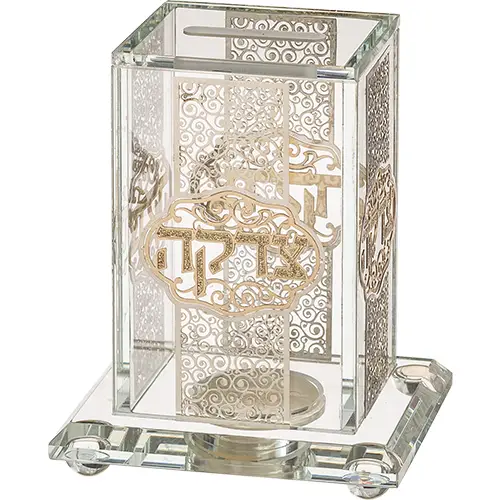
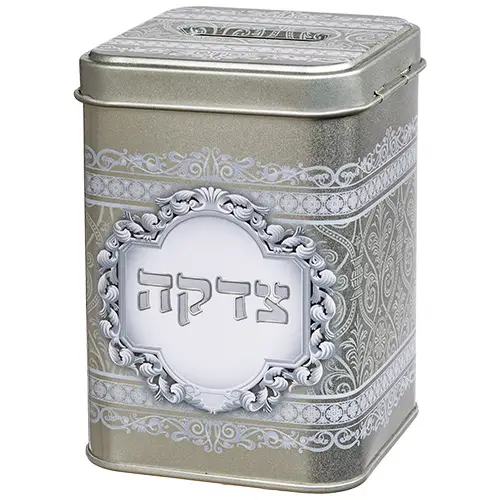
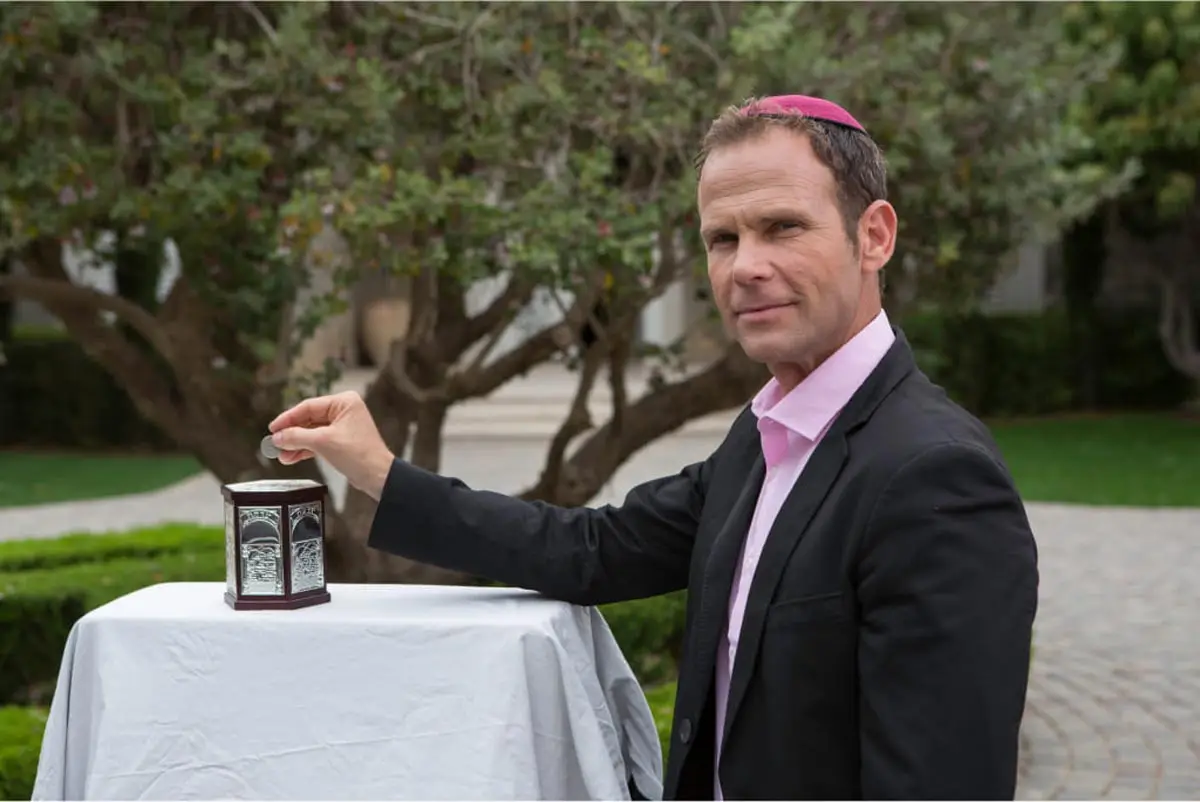
- Tzedakah (charity) — It is a great mitzvah to give charity, even just a single coin, every day. There is no need to make a major donation for this purpose; it is sufficient simply to place a small coin in the tzedakah box. We are also obligated to “tithe” our income by setting aside one tenth of our profits or earnings every month for charity.
- Lashon hara (evil speech) — It is forbidden to tell people something negative or shameful about another person.
- Rechilut (peddling gossip) — In previous generations, it was a common practice for peddlers to travel from place to place, buying merchandise in one town and reselling it for a slight profit in another. This practice, called rechilut in Hebrew, is forbidden by the Torah when the “merchandise,” rather than actual wares, is gossip. It is forbidden for a person to relay information that he heard in private conversation to others for whose ears it is not intended. This is the case even if he tells the truth, and even if the information is not negative.
- Embarrassing others – It is forbidden to embarrass other people or to cause them distress. Embarrassing another person is considered a sin of particular severity. Our Sages teach us, “A person who embarrasses another person publicly has no share in the world to come,” and, “It is better for a person to cast himself into a blazing furnace rather than to embarrass someone else publicly.”
- Theft — The Torah forbids us to steal. None of us are considering acts of robbery; does that make this rule have no bearing on our lives? Not necessarily. One common application of this law is the theft of intellectual property. Any copyrighted material may not be copied without permission; this includes copying compact discs and downloading pictures or other material from the Internet without the owner’s permission.
There are two mitzvot in the Torah that cannot be categorized definitively as belonging to only one of these two categories. In addition, due to their great importance, these two mitzvot are deserving of a separate discussion: the mitzvah of honoring one’s parents, and the mitzvah of raising and educating one’s children.
Honoring Parents
One of the mitzvot that we received as part of the Ten Commandments is the requirement to honor our parents. This mitzvah is also one of the only two commandments whose reward (long life) the Torah reveals immediately after it teaches us the commandment: “Honor your father and your mother, so that your days will be lengthened on earth.”
The Reasons
The simplest explanation for the requirement to honor our parents is the fact that we owe them a debt of gratitude. Our parents are the people who chose to bring us into the world.
They have worked hard for us, taken care of us, worried about us, and simply “been there” for us since our infancy, through our childhood and adolescence, and throughout our lives. They deserve our gratitude and appreciation; it is only fitting that we repay them, at least in some small measure, for all the time and effort they have invested in us.
Furthermore, even though this mitzvah seems to fit into the category of commandments that are between man and his fellow man (in this case, between every person and his or her parents), it is also considered to fall into the category of mitzvot affecting our relationship with G-d. There are three “partners” in the creation of every child: the father, the mother, and G-d. The father and mother create the child’s body, and G-d gives the child its soul. In any good partnership, a slight to one of the partners will be considered an indirect slight to all of them. Similarly, when we honor our parents, we are considered to be honoring the third Partner in their parenthood—G-d Himself.
The Rules
-
- A child should not sit in a place that is designated for a parent.
- A child should not contradict a parent.
- A child should do his parents’ bidding with a pleasant demeanor.
- A child should speak to his parents softly, patiently, and respectfully.
- A child should not tell his parents bad news or things that may cause them to be distressed.
- For a child who lives near his parents, there are many more opportunities to fulfill this mitzvah: doing their supermarket shopping for them, paying their utility bills if they need it, and so forth.
- If a child lives far away from his parents, he can still honor them by making sure to speak with them by telephone or by visiting them in person.
- Even when a parent is no longer alive, the child should continue to honor that parent by doing things in their memory. Examples include:
- Saying a special prayer (Kaddish)
- Conducting a memorial service every year on the anniversary of the parent’s death, and lighting a memorial candle
- Being called up to the Torah on the anniversary of the parent’s death
- Reciting the Yizkor prayer on festivals
Raising Children
Introduction
Time does not stand still, and the way of the world is for each generation to eventually give way to the next. In order to create a society that is cultured and principled—and, of course, Jewish—each generation must take the responsibility of teaching and developing the next.
The greatest responsibility for educating a child rests on the child’s father. (That’s right, the father.) The Torah commands us, “You shall teach them to your children.” It is a father’s responsibility to teach his child the Torah and its commandments and to help the child grow accustomed to living in accordance with the Torah’s dictates.
How to Teach Children
Raising a child means more than simply giving the child instructions on how a Jew should behave in the course of his daily life. It also means shaping and building the child’s personality so that he will come to act as his father desires (or, more importantly, as his Father in Heaven desires) naturally and on his own accord.
The following are a few pointers:
-
- Parents should choose a school where their children will be taught to love the Torah and its commandments.
- It is also recommended that parents maintain close contact with their children’s teachers and the influential people in their children’s lives.
- A father should spend time with his children studying the material they have learned in school.
- Parents should set aside fixed periods of quality time to spend with their children.
- Parents should preserve a child’s dignity even when correcting the child’s mistakes.
An Awesome Responsibility
Sometimes, it may seem as if a child’s education is taking place primarily at school, thus “exempting” the parents from their responsibility. Of course, this is not actually true. Just as every Jewish man has an obligation to wear tefillin every day, he also has an obligation to think about his children’s education every day, to assess how they are doing and to determine how he can better encourage them, guide them, and help them improve themselves.
Take a moment to try to remember a teacher who had a major impact on you when you were a child. It is almost certain that, aside from the dedication and love that the teacher showed you, he or she was probably also a living example of kind, humane, warm, and ethical behavior. When we seek to educate our own children, we must ask ourselves honestly whether we are appropriate role models for them. Beyond “the stick and the carrot,” are we trying to provide them with living examples of what it means to behave as a Jew?


