









Charity
During the days of Hanukkah, it is customary to increase and emphasize giving charity by giving money, food, clothing, or other items to people or organizations in need.
Dreidel” (Spinning Top)
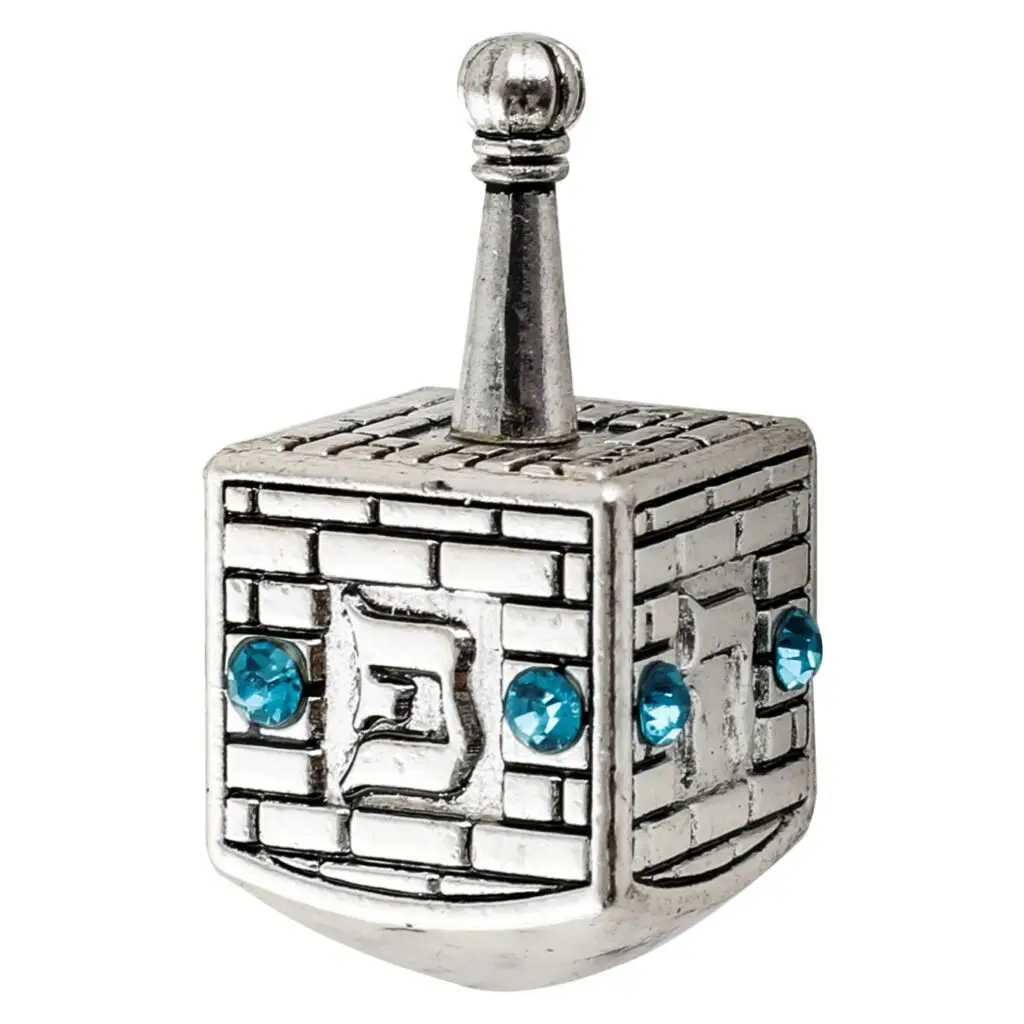
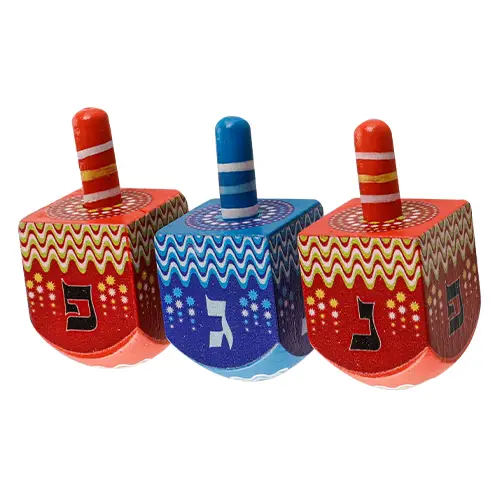
One of the most beloved customs for children is the tradition of playing with a dreidel during the holiday. It is common to give children a sum of money each day, especially on the two nights when four and five candles are lit.
The reason for this custom is to educate (from the word “Hanukkah”) the children, to encourage them to increase their acts of charity, and to enable them to give charity in practice with the money they received.
Special Foods
- During the days of Hanukkah, it is customary to eat dairy foods in memory of the miracle performed by Judith, the daughter of Yochanan the High Priest, who through the dairy foods she brought caused the thirst and drunkenness of the Greek general Holofernes, which ultimately led to his death.
- Additionally, it is customary to eat fried foods, such as sufganiyot (jelly-filled donuts) or latkes (potato pancakes), in memory of the miracle of the oil flask.
Playing with the Dreidel
Since it is customary to sit near the candles for some time after the lighting, over the years, the tradition of playing with the dreidel was invented to make this time enjoyable for children.
There may be variations in the “rules of the game” from one family to another, from one city to another, and from one country to another. However, the common denominator for all is the message hidden in the engraved letters on the four sides of the dreidel, forming the initials of a concise and meaningful phrase: Nun (Nes) – Gimel (Gadol) – Hay (Haya) – Pey (Po), or in the diaspora: Nun – Gimel – Hay – Shin (Sham – in the Land of Israel).
Some claim that the dreidel game is very ancient, dating back to the time of the Maccabees. It was during a time when the Greeks prohibited Jews from studying Torah and imposed the death penalty on anyone caught violating the law. Soldiers of Antiochus’ army would raid houses or hidden caves to find the “rebellious” Jews who dared to oppose the king’s decree.
The children of Israel continued to study Torah secretly, but they would also play with the dreidels at their side. When they heard the soldiers approaching, they would immediately hide the books and start playing with the dreidels.
On Hanukkah, they play with the dreidel, and on Purim, they make noise with graggers (noisemakers).
During Hanukkah, the “awakening” of the Jewish people in the face of their troubles was relatively weak. Many Jews even Hellenized and joined the enemy. However, the Creator “intervened” from above and saved the situation through open miracles. This is symbolically expressed in the dreidel, which is held “from above.”
In contrast, on Purim, there was a collective decree, and therefore the sense of awakening did not rest on any individual. The Jews fasted and prayed, the cry reached the heavens, and in the end, the miracle did happen.
This is symbolically expressed in the gragger, which is held “from below.”
Family Latke Evening
During Hanukkah, it is customary to hold family gatherings, known as “Erev Levivot” (Latke Evening), where all family members come together to discuss the story of the Hanukkah miracle and the lessons we can derive from it for our lives.


