








The Meal
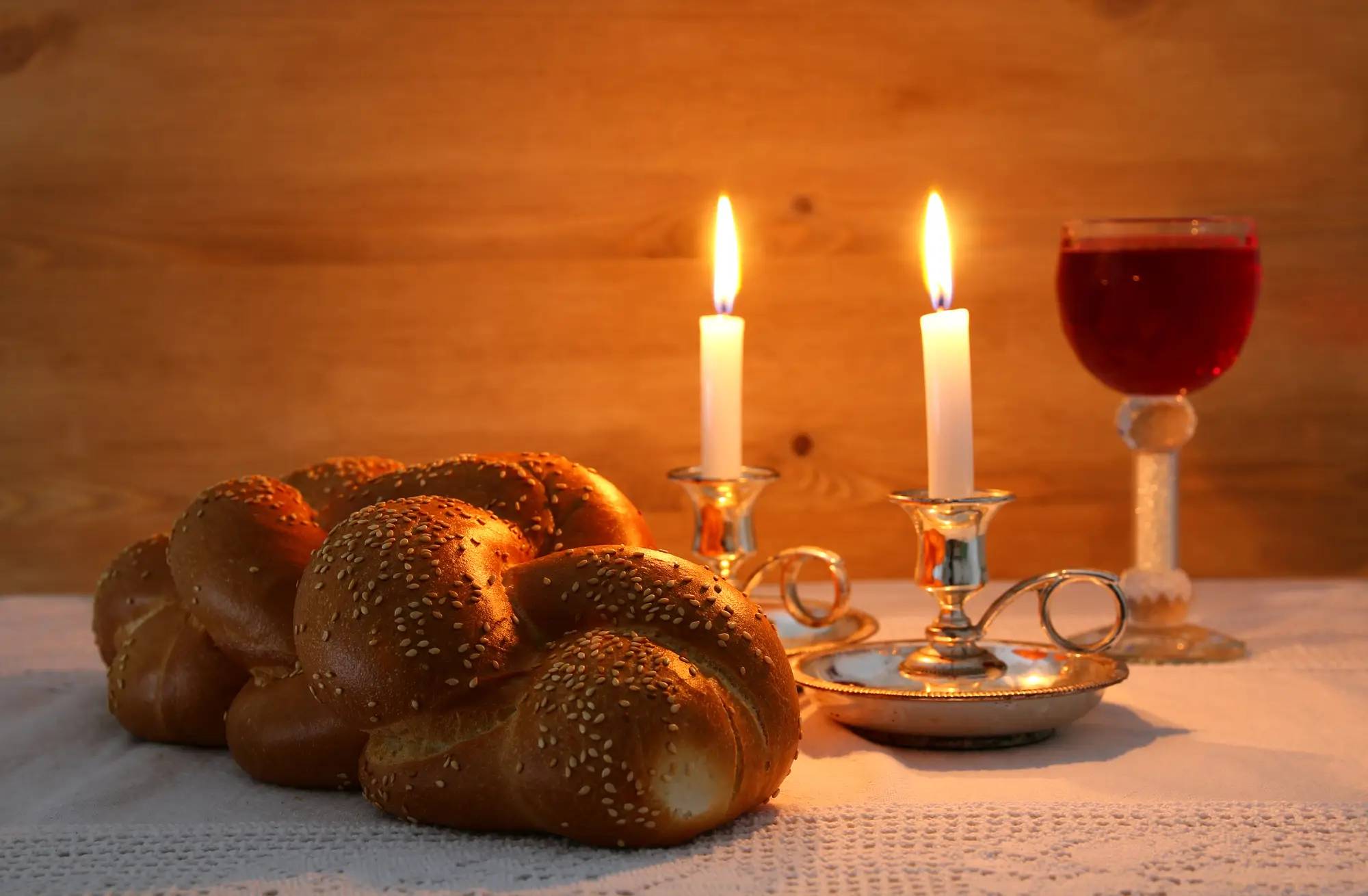
Every individual is required to eat three meals on Shabbat. The first meal takes place on Friday night, the second on Shabbat day after Shacharit and Mussaf, and the third after Minchah of Shabbat day.
The definition of a “meal” in Jewish law is the consumption of bread or challah (or any item whose blessing is Hamotzi) along with any cooked food.
- The Shabbat meal should begin immediately after Kiddush, in the same place where Kiddush was recited.
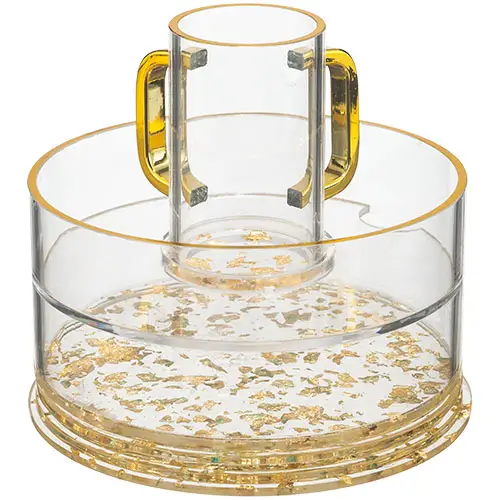
The first stage of the Shabbat meal is Netilat Yadayim, the ritual washing of the hands that is required any time one wishes to eat bread.
Washing the Hands
- First, make certain that the hands are clean and dry.
- Take the cup in your right hand and fill it with water.
- Transfer the cup to your left hand and pour water over your right hand three times. Then transfer the cup back to your right hand and pour water over your left hand three times. In total, you will have poured water from the cup six times.
- Dry your hands well and recite the blessing, “Blessed are You, G-d … Who has sanctified us with His commandments and commanded us regarding the washing of the hands.”
- After this blessing has been recited, it is forbidden to speak until after the blessing of Hamotzi has been recited and one has consumed a kezayit (about 86 cc) of challah.
Lechem Mishneh
At every Shabbat meal, we are required to recite the blessing of Hamotzi over two uncut loaves of challah. This requirement commemorates the double portion of manna that the Jewish people received in the desert every week on Friday; the extra portion was for Shabbat, when the manna did not descend from the heavens. The additional loaf of bread used for the blessing is known as Lechem Mishneh.
The Lechem Mishneh may consist of a loaf of bread, a challah, a roll, a pita, or any other type of bread, provided that it is still whole (i.e., it has not been torn or cut) and that its blessing is Hamotzi.
- While it is acceptable for every participant in the meal to have their own two rolls or loaves of bread, it is also sufficient for the host or the head of household to recite the blessing over two loaves of bread and thereby enable all of the people present to fulfill their respective obligations.
Reciting the Blessing and Cutting the Challah
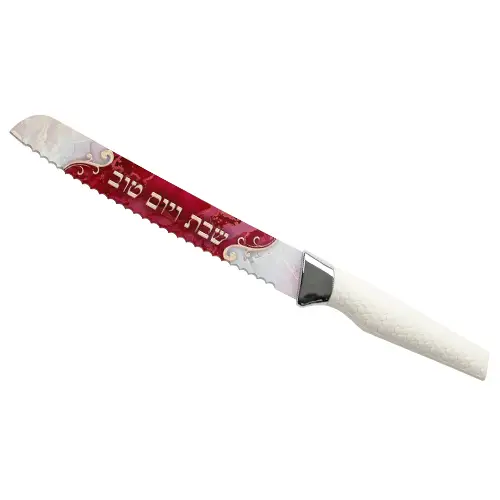
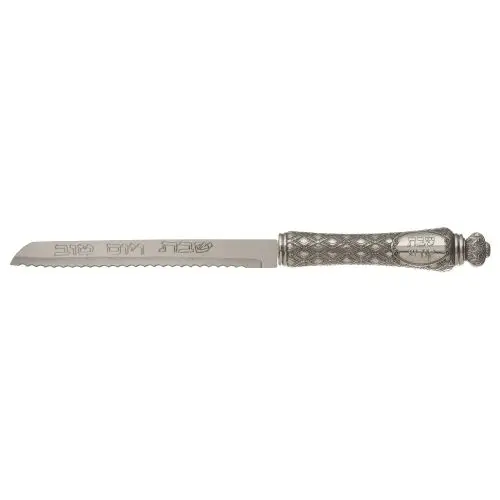
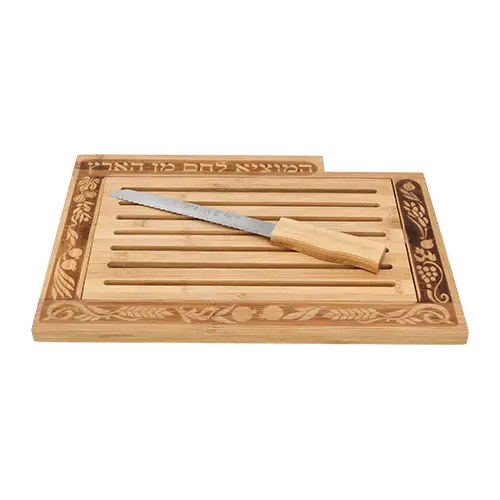
- Before the blessing, the host (or someone else) should delicately scrape the blade of the knife over the challah, without cutting it, in order to create an indentation to mark the spot where the challah will be cut.
- The host (or the head of the household) should take hold of the two challot in his hands. The challah that he wishes to cut first should be on his right and slightly below the other challah.
- While holding the challot, he should recite the blessing for bread: “Blessed are You … Who produces bread from the ground.” The other participants should respond “Amen” but should not yet recite blessings of their own.
- The head of the household should then put down the loaf that he does not wish to cut and should begin slicing the loaf that he planned on cutting, starting from the spot where the indentation was previously made.
- Since the head of the household has already recited a blessing at this time, and one is required to eat a food as soon as possible after reciting a blessing over it, his first priority is to cut a single slice of bread for himself, dip it in salt three times, and eat some of it. Only after he has done so may he continue slicing challah for the others.
- The challah should be passed to everyone present in a respectful and dignified manner. Pieces of challah should not be thrown on the table.
- When passing a piece of challah to someone else, one should place the challah on the table in front of him. Bread should not be transferred from hand to hand because it is customary to hand bread directly to a mourner.
- When a person receives a slice of challah, he should recite on his own the blessing of Hamotzi and then eat at least a kezayit of the challah.
Shabbat in the Kitchen
Any kitchen utensil or other accessory that is used for an activity forbidden on Shabbat is classified as Muktzeh, and it is prohibited to touch or handle any such item on Shabbat. Examples include a frying pan, baking paper, an electric pot, a juicer, and so forth.
Cooking and Warming Food
- It is forbidden to light, extinguish, raise or lower a flame on Shabbat.
- It is forbidden to cook, bake, fry, or roast any food on Shabbat, whether with the heat of an actual flame or any other source of heat (such as a Shabbat hot plate).
- No food should be placed on the fire or hot plate, even for a very short time, even if it was already cooked before Shabbat.
- Matches and lighters are Muktzeh and may not be handled.
It is permissible to place a dry food (not containing any liquid) that was cooked before Shabbat on a hot pot that has been standing on the fire since before Shabbat (or on an electric hot plate).
Food Preparation
- It is permissible to use a peeler to peel a cucumber, an apple, and any other fruit or vegetable that can be eaten with its peel. An onion, an orange, and any other fruit or vegetable that is not eaten with the peel may be peeled only with a knife.
- On Shabbat, one should not cut vegetables into very small pieces (e.g., for a vegetable salad). Rather, the pieces should be somewhat large.
- One should not grate fruits or vegetables with a grater or vegetable slicer.
- One should not squeeze out the juice of fruits and vegetables, even with a regular (non-electric) juicer.
- It is permissible to squeeze a lemon into salad, provided that one plans on eating it afterward.
- One should not crush ice in order to turn it into water, but one may place ice cubes into water or other beverages.
Packages of Food and Bottles or Drinks
It is permissible to open plastic bags, food packages, and cans on Shabbat, but one must do so with care, in accordance with the following guidelines:
- When opening a package of food, one must be very careful not to tear through any letters printed on the package.
- Opening Cans: Since it is forbidden to create a “vessel” on Shabbat, it is preferable to avoid opening cans on Shabbat. Instead, they should be opened before Shabbat. If a can was not opened before Shabbat, however, it may be opened, provided that one renders the can itself unusable in the process. This can be accomplished by piercing a hole through the bottom of the can and then opening it from the top and emptying out the contents immediately.
- It is permissible to open regular beverage bottles, bottles of beer, or bottles of wine sealed with a cork.
Preparing the Table for the Meal
- It is forbidden to cut a disposable tablecloth on Shabbat.
- One may fold napkins in the usual manner, but one should not fold napkins on Shabbat itself into special shapes.
- A pile of mixed cutlery should not be sorted to separate the forks, knives, and spoons. It is permissible, however, to take the desired items from the pile, provided that they are needed at that time for the meal.
During the Meal
- It is permissible to clap one’s hands in the course of singing, but one should not do so as a sign of applause for a speaker and the like.
- One should not separate unwanted matter from food on Shabbat. (For example, bones, pits, or pieces of fruit that are rotten should not be removed from the desired portion of the food.)
- One should also not separate a food that one does not wish to eat from another food with which it is mixed. (For example, a person who does not like onions should not remove pieces of onion from a vegetable salad.)
- When pieces of fish or meat are being prepared for serving, one should remove the flesh from the bones rather than removing the bones from the flesh. At the actual time of consumption, however, it is permissible to separate the bones and the flesh either way.
Shabbat in the Kitchen
Any kitchen utensil or other accessory that is used for an activity forbidden on Shabbat is classified as Muktzeh, and it is prohibited to touch or handle any such item on Shabbat. Examples include a frying pan, baking paper, an electric pot, a juicer, and so forth.
Cooking and Warming Food
- It is forbidden to light, extinguish, raise or lower a flame on Shabbat.
- It is forbidden to cook, bake, fry, or roast any food on Shabbat, whether with the heat of an actual flame or any other source of heat (such as a Shabbat hot plate).
- No food should be placed on the fire or hot plate, even for a very short time, even if it was already cooked before Shabbat.
- Matches and lighters are Muktzeh and may not be handled.
It is permissible to place a dry food (not containing any liquid) that was cooked before Shabbat on a hot pot that has been standing on the fire since before Shabbat (or on an electric hot plate).
- One should not open a hot water tap on Shabbat. When the tap is opened, hot water flows out of a tank and cold water flows into the tank to replace it. This cold water is heated in the tank, and it is forbidden to cause water to be heated (a form of cooking) on Shabbat. This is true even if the hot water originates in a solar heater; if the hot water system is electric, turning on the hot water tap involves an additional prohibition of causing an electric element to be activated.
- For this reason, it is important to exercise care when opening a tap that has a single handle for both the hot and cold water (in which the temperature of the water is raised or lowered by turning the handle to the right or left). Even a slight push toward the “red side” may introduce a flow of hot water, which would lead to the Shabbat desecration mentioned above.
Food Preparation
- It is permissible to use a peeler to peel a cucumber, an apple, and any other fruit or vegetable that can be eaten with its peel. An onion, an orange, and any other fruit or vegetable that is not eaten with the peel may be peeled only with a knife.
- On Shabbat, one should not cut vegetables into very small pieces (e.g., for a vegetable salad). Rather, the pieces should be somewhat large.
- One should not grate fruits or vegetables with a grater or vegetable slicer.
- One should not squeeze out the juice of fruits and vegetables, even with a regular (non-electric) juicer.
- It is permissible to squeeze a lemon into salad, provided that one plans on eating it afterward.
- One should not crush ice in order to turn it into water, but one may place ice cubes into water or other beverages.
Packages of Food and Bottles or Drinks
It is permissible to open plastic bags, food packages, and cans on Shabbat, but one must do so with care, in accordance with the following guidelines:
- When opening a package of food, one must be very careful not to tear through any letters printed on the package.
- Opening Cans: Since it is forbidden to create a “vessel” on Shabbat, it is preferable to avoid opening cans on Shabbat. Instead, they should be opened before Shabbat. If a can was not opened before Shabbat, however, it may be opened, provided that one renders the can itself unusable in the process. This can be accomplished by piercing a hole through the bottom of the can and then opening it from the top and emptying out the contents immediately.
- It is permissible to open regular beverage bottles, bottles of beer, or bottles of wine sealed with a cork.
Preparing the Table for the Meal
- It is forbidden to cut a disposable tablecloth on Shabbat.
- One may fold napkins in the usual manner, but one should not fold napkins on Shabbat itself into special shapes.
- A pile of mixed cutlery should not be sorted to separate the forks, knives, and spoons. It is permissible, however, to take the desired items from the pile, provided that they are needed at that time for the meal.
During the Meal
- It is permissible to clap one’s hands in the course of singing, but one should not do so as a sign of applause for a speaker and the like.
- One should not separate unwanted matter from food on Shabbat. (For example, bones, pits, or pieces of fruit that are rotten should not be removed from the desired portion of the food.)
- One should also not separate a food that one does not wish to eat from another food with which it is mixed. (For example, a person who does not like onions should not remove pieces of onion from a vegetable salad.)
- When pieces of fish or meat are being prepared for serving, one should remove the flesh from the bones rather than removing the bones from the flesh. At the actual time of consumption, however, it is permissible to separate the bones and the flesh either way.
The Procedure for the Meal
There is a mitzvah to honor and enjoy Shabbat by serving and partaking of a festive meal complete with appetizing, elegant foods and beverages. In particular, it is customary to serve large quantities of fish, meat, and wine at Shabbat meals.
- While most foods eaten during a bread meal do not require an independent blessing, wine is generally an exception. Because of its special significance, it usually requires its own blessing even during a bread meal. At a Shabbat meal, however, since the meal was preceded by Kiddush, which includes the blessing for wine and the consumption of wine, it is not necessary to repeat the blessing during the meal if one chooses to drink wine then.
It is customary to sing special traditional songs, known as zemirot, during the Shabbat meals. These songs were composed by great Torah sages and Kabbalistic scholars. They describe the sanctity of Shabbat, praise G-d for granting the gift of Shabbat to His people, and emphasize faith in G-d as the Creator Who fashioned the world in six days and “rested” on the seventh.
There are several special zemirot for the Shabbat meals that were authored by the Arizal (Rabbi Yitzchak Luria, one of the greatest Kabbalists of all time, who lived in the city of Safed during the sixteenth century). These zemirot deal with the hidden aspects of Shabbat and provide a glimpse “behind the scenes” of this holy and exalted day. They are written in Aramaic (the language that was used in the study of Kabbalah) and contain many terms drawn from the world of Kabbalah.
It is customary to sing the Kabbalastic composition Azamer B’shvachin on Friday nights.
During the Shabbat meal, the conversation should include subjects related to the Torah reading of the week. It is also a good time to increase one’s knowledge of halachah (Jewish law) and other areas of the Torah.
The lofty experience of a Shabbat meal is one that is powerfully engraved on the Jewish heart. Certainly, the Shabbat meal is a wondrous experience for the simple reason that it is a time when all the members of the family gather together at the table, sit together calmly, and enjoy each other’s company and conversation, sharing songs and a delightful meal. In addition to that, the Shabbat meal has the ability to lift us “off the ground,” in a sense, and give us a “taste” of sanctity and spiritual elevation. It can be a source of spiritual refreshment that will last us throughout the week.
Desserts
- The pits of melon or watermelon may be removed only immediately before they are eaten.
- It is permissible to remove pits from fruit (such as apricots, plums, peaches, and the like), but once the pits have been removed, one should not play with them or use them for any purpose.
- It is forbidden to cut or break cookies, cakes, or any other food on which letters or words (such as a company name) appear. It is even forbidden to eat such a cookie in a single bite.
- It is customary to refrain from eating nuts or seeds that come in shells (such as sunflower seeds, watermelon seeds, pistachios, walnuts, pecans, and the like).
- When opening the wrapper of a popsicle, ice cream bar, and the like, one should be careful not to tear any of the letters printed on the wrapper.
- A dessert such as ice cream or fruit requires its own blessing (Shehakol in the case of ice cream and the like, and Borei Pri Ha’Adamah or Borei Pri Ha’Etz in the case of vegetables and fruits, respectively). The dessert is considered separate from the rest of the meal, and the blessing of Hamotzi that is recited at the beginning of the meal does not cover it. For further information about the blessings recited over food, see Yahaduton—Jewish Daily Life.
Grace After Meals
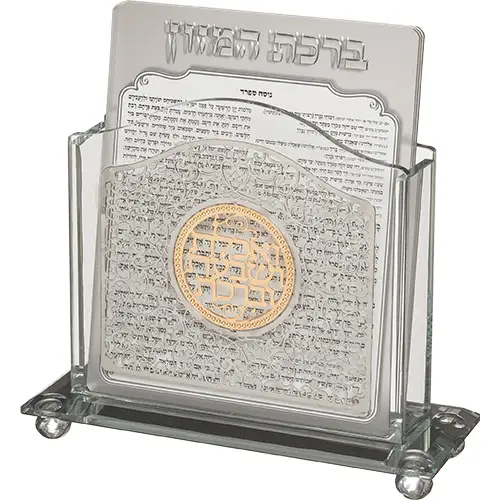
An extensive discussion of Birkat Hamazon appears in Grace After Meals—Daily Jewish Life.
It is customary to preface the recitation of the Grace After Meals with two chapters of Psalms: Psalm 126, “A song of ascents, when G-d returns the exiles to Zion,” and Psalm 87, “To the sons of Korach, a musical song.” These two passages are in addition to the paragraph recited on every weekday, “I will bless G-d.”
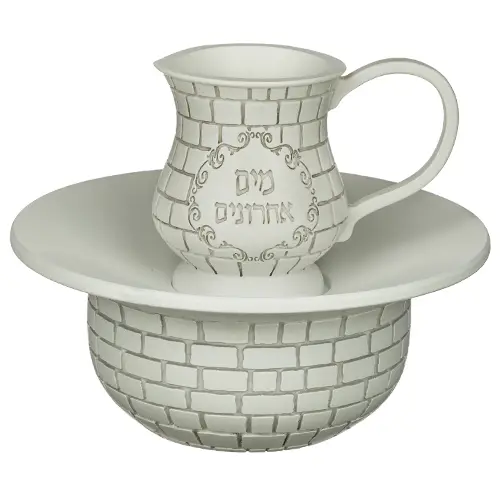
It is customary to wet one’s fingertips and touch one’s lips with them. This custom is known as mayim acharonim, “the final waters.”
- If a minimum of three men over the age of thirteen participated in the meal, the Grace After Meals is also preceded by the zimun, an introduction of sorts to the blessings.
- This prayer is a prayer of thanks to G-d for the food that we have enjoyed. The full text can be found either in a siddur or in a birkon.
- On Shabbat, two additional passages are added to the Grace After Meals: “Retzeh v’hachalitzainu—Desire and save us” and “Harachaman hu yanchileinu—May the Merciful One cause us to inherit the day that is entirely Shabbat.”
After the Conclusion of the Meal
- The tray that contains the candles should not be moved while they are lit. If a non-Muktzeh item such as a book was placed on it before Shabbat began, it may be moved after the candles go out.
- A vase containing live flowers is not Muktzeh and may be moved.
- The tablecloth should not be folded on its creases, but it may be folded in different spots.
- If water spilled on the table, one may place an absorbent paper towel or cloth on it, but one should exercise caution not to squeeze the liquid out of the cloth. The cloth may then be removed from the table.
- It is prohibited to wash the floor with water, but it is permissible to use a broom to sweep it.
Washing Dishes
- It is permissible to wash dishes on Shabbat, but only if they will be used again during the course of Shabbat. Therefore, one may wash the dishes that were used on Friday night since they will be needed again for the daytime meal. Dishes should not be washed after the last Shabbat meal, however; instead, one should wait until after Shabbat has ended in order to wash the dishes.
- Even when it is permissible to wash the dishes, it is forbidden to use any item that can be squeezed, such as a piece of cloth or a sponge. There are special plastic brushes that can be used to wash dishes on Shabbat.
- A bar of soap or detergent gel should not be used. Only liquid soap is permitted to be used on Shabbat.
- One should take care while drying the dishes to avoid wringing water out of the dish towel.
Shabbat Shalom
Before retiring for the night, one should recite the Shema before bed in an abridged version. The first half of the prayer Hashkiveinu is recited, followed by the Shema, Yaalzu Chassidim, and Yosheiv B’Seter Elyon. The passages drawn from Tachanun are omitted. Instead, one should proceed to Ana B’Koach and Shir Lamaalot and then conclude with Gad Gedud.
Hygiene on Shabbat
- It is prohibited to use a toothbrush and toothpaste on Shabbat. One may rinse one’s mouth with mouthwash and the like.
- It is prohibited to wash oneself with hot water.
- If a person is suffering from the heat and feels that he must shower, he may shower with cold water only. Even so, he may not wash his entire body at once. Instead, he should wash one portion of the body, followed by another, and so forth (e.g., first a hand, then a foot, etc.).
- It is forbidden to use a bar of soap on Shabbat. Only liquid soap may be used.
- One may not use a sponge.
- It is forbidden to cut one’s hair, shave, or cut one’s nails on Shabbat.
On Shabbat, it is customary to take leave of others with the words “Shabbat Shalom” rather than “Good night.” Shabbat is a day that radiates a special spiritual light, and there is no place for “night,” with its connotations of darkness, on Shabbat.
It is a mitzvah to honor the Shabbat by sleeping slightly more than usual. There is an allusion to this in the word “Shabbat” itself. The Hebrew word Shabbat is spelled Shin-Bet-Taf, and these three letters can be interpreted as an acronym for the statement Sheinah B’Shabbat Taanug (“Sleep on Shabbat is a pleasure”).


