








Erev Shabbat (Friday Evening)
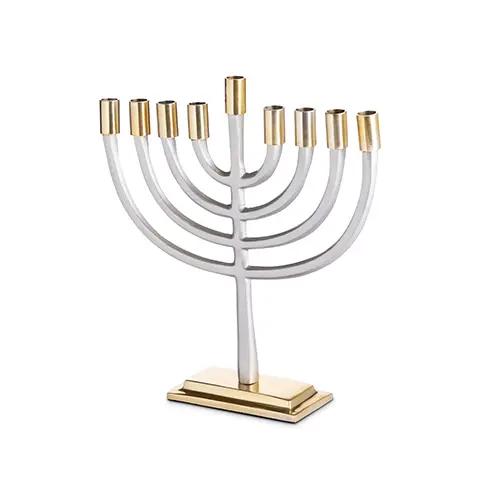
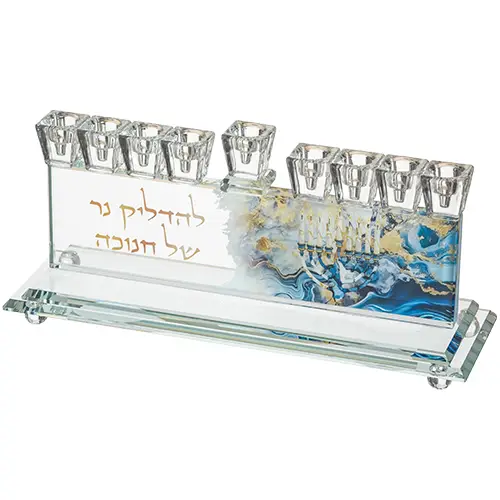
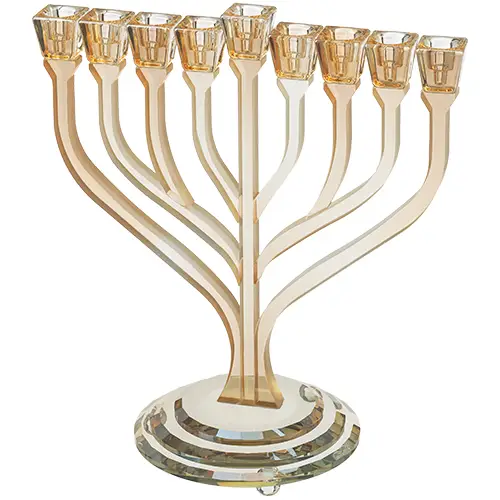
On Friday, the eve of Shabbat Hanukkah, people go to the synagogue earlier than usual to pray Mincha, and then the cantor lights the candles in the synagogue’s Hanukkiah.
Afterward, each person returns home and lights the Hanukkah candles at home. Only after the men finish lighting the candles, the women light the Shabbat candles.
Since Hanukkah candles are lit before the Shabbat candle lighting time, which is at least 20 minutes earlier than the regular lighting time, it is important to use larger candles than usual or a larger quantity of oil so that the candles will burn for at least 50 minutes after sunset and half an hour after “tzet hakochavim” (nightfall).
On Friday evening, it is not customary to linger and sit near the candles. Shortly after lighting the Hanukkah candles and Shabbat candles, people return to the synagogue to recite the “Kabalat Shabbat” and evening prayers.
- If the Hanukkah candles are placed on a windowsill or a chair next to the door and you want to move it after the candles are extinguished (during the height of Shabbat), place any sacred book on the Hanukkiah tray before Shabbat. Only after the last candle is extinguished, you will be able to move the chair or the tray on which the Hanukkiah is placed.
Shacharit and Torah Reading on Shabbat
In most years, Shabbat Hanukkah is also the “Shabbat Mevarchim” (blessing the new month) for the upcoming month of Tevet. In the morning, it is customary to wake up a little earlier and recite the entire book of Psalms. Before the Musaf prayer, we bless the “Birkat Hachodesh” (Blessing of the New Month).
After the “Amidah” prayer of Shacharit, we say “Hallel” with a preceding blessing. The cantor says “Kaddish Shalem” (Full Kaddish) and continue with the recitation of “Shir Shel Yom” (Psalm of the Day).
When Rosh Chodesh Tevet falls on Shabbat Hanukkah, after the recitation of “Shir Shel Yom,” we add the psalm “Barchi Nafshi” (Bless the Lord, O my soul).
On Mondays and Thursdays, we say “Kaddish Yatom” (Orphan’s Kaddish), and then two Torah scrolls are taken out from the Ark. Seven people ascend to the first scroll, as on any Shabbat, and the current weekly Torah portion is read.
Afterward, the second scroll is also placed on the reading desk, and the cantor says “Chatzi Kaddish” (Half Kaddish). They lift and unroll the first scroll, and the “Maftir” (concluding portion) is read from the second scroll, which contains the Hanukkah daily reading. They then lift and unroll the second scroll, and the special “Haftarah” for the Hanukkah holiday is read: “Rani VeSimchi Bat Tzion” from the book of “Zechariah,” which speaks of the Temple Menorah.
When Shabbat Hanukkah falls on the 29th of Kislev (the first day of Rosh Chodesh Tevet), after the reading of the “Haftarah,” the first and last verses of the “Haftarat Shabbat Rosh Chodesh” that begins with the words “Ko Amar Hashem” are added. Similarly, the first and last verses of the “Haftarat Machar Chodesh” that begins with the words “VaYomer Lo Yehonatan” are added.
Motzei Shabbat (Saturday Evening)
In the synagogue: On Motzei Shabbat Hanukkah, after the evening prayer, the cantor lights the candles in the synagogue, before the recitation of “Aleinu Leshabeach” and after lighting the candles and reciting “Haneirot Halalu,” they perform “Havdalah” in the synagogue as on any Motzei Shabbat.
At home: When returning home from the synagogue, it is customary to first perform “Havdalah” for the family as usual, with wine, spices, and a candle.
After “Havdalah,” it is customary to light the Hanukkah candles, and only after the lighting and saying “Haneirot Halalu,” each person recites with their friend the verses of “VeYiten Lecha” (And may He give you) that are recited on every Motzei Shabbat.


