








Choosing the Mohel
The truth is that you should be the one to perform your son’s circumcision… God commanded the father to circumcise his son. However, since not everyone knows (or is capable) to perform the covenant, another person (the mohel) can be brought to circumcise the son – on behalf of the father, and then it is considered as if the father himself circumcised his son.
Not everyone who knows how to perform the surgical act of circumcision is a mohel. Judaism has clear rules for performing the covenant, without them the act will be considered surgical only and not a holy covenant connecting the baby with God. Make sure that the intended mohel has a certificate of circumcision studies from a halakhic perspective – from the Chief Rabbinate of Israel and from a health perspective – from the Ministry of Health. Such a mohel certainly also knows the medical details, otherwise, he would not receive the circumcision approval.
A doctor-mohel, he may not know all the Torah requirements regarding the covenant. In addition, a certified mohel, this is all his work and he performs dozens and hundreds of covenants a year, and his professionalism is much greater than a doctor who does not deal with this.
On the website of the Chief Rabbinate of Israel, you can find a list of certified mohels and doctor-mohels who also specialized from a medical aspect and thus perform the circumcision according to Jewish law without any concern.
- Remember: In medical matters like circumcision, you should choose the more expert mohel and not the more righteous one!
Invitation to the Circumcision Ceremony
It’s customary not to explicitly invite guests to the circumcision ceremony. Instead, we just announce the time and place and express our joy at the guests’ arrival.
The reason for this is the tradition that the prophet Elijah is present at the circumcision ceremony. Therefore, when you invite someone and they refuse a personal invitation (not a general announcement) to such a feast, it is like offending Elijah.
Equipment for the Baby
This day is also a celebration for the little one. It’s a bit uncomfortable, even painful, but the covenant with God is of the utmost importance. Therefore, he should be dressed in festive clothes. It is recommended to dress him in a two-part outfit so that the mohel (circumcision practitioner) can remove only the bottom part before the circumcision.
Additionally, bring extra supplies for the baby, such as diapers, and the like. Contact the mohel, he will give you a list of what you need to bring to the circumcision ceremony.
The Sandak: The “sandak” is the person who holds the baby on his knees during the circumcision. This is considered a special charm for longevity, good years, and wealth. Therefore, it is not advisable to honor one person to be the sandak twice for two brothers.
The Chair of Elijah the Prophet: About 2800 years ago, the prophet Elijah complained to God that the people of Israel were no longer careful to perform the commandment of circumcision. In response, as if to prove him wrong, God told him that from that day on, no circumcision will be performed until he comes and sees that they are observing it.
Over generations, with the belief in Elijah’s presence at every circumcision, everywhere, the custom of placing a distinguished chair at the circumcision ceremony in honor of the prophet Elijah who arrives began. Some people have the custom that the sandak and the baby sit on this chair, and others have a separate chair for Elijah the prophet and a separate chair for the sandak and the baby.
Equipment for the Ceremony
- Chair of Elijah: For the sake of the ceremony’s honor and Elijah the Prophet’s honor, make sure there is a chair of Elijah where the event will be held. If the circumcision will be held in a private place where there is no chair, you can usually contact the local synagogue and the like and borrow the chair for the ceremony. You don’t need to postpone the ceremony if you can’t find one, simply use the most distinguished chair you can get.
- Tallitot (prayer shawls): The circumcision is performed while the mohel, the sandak, and the father of the son are wearing tallitot. The mohel will definitely arrive already equipped with one tallit (sometimes two). Make sure in advance that tallitot have been prepared.
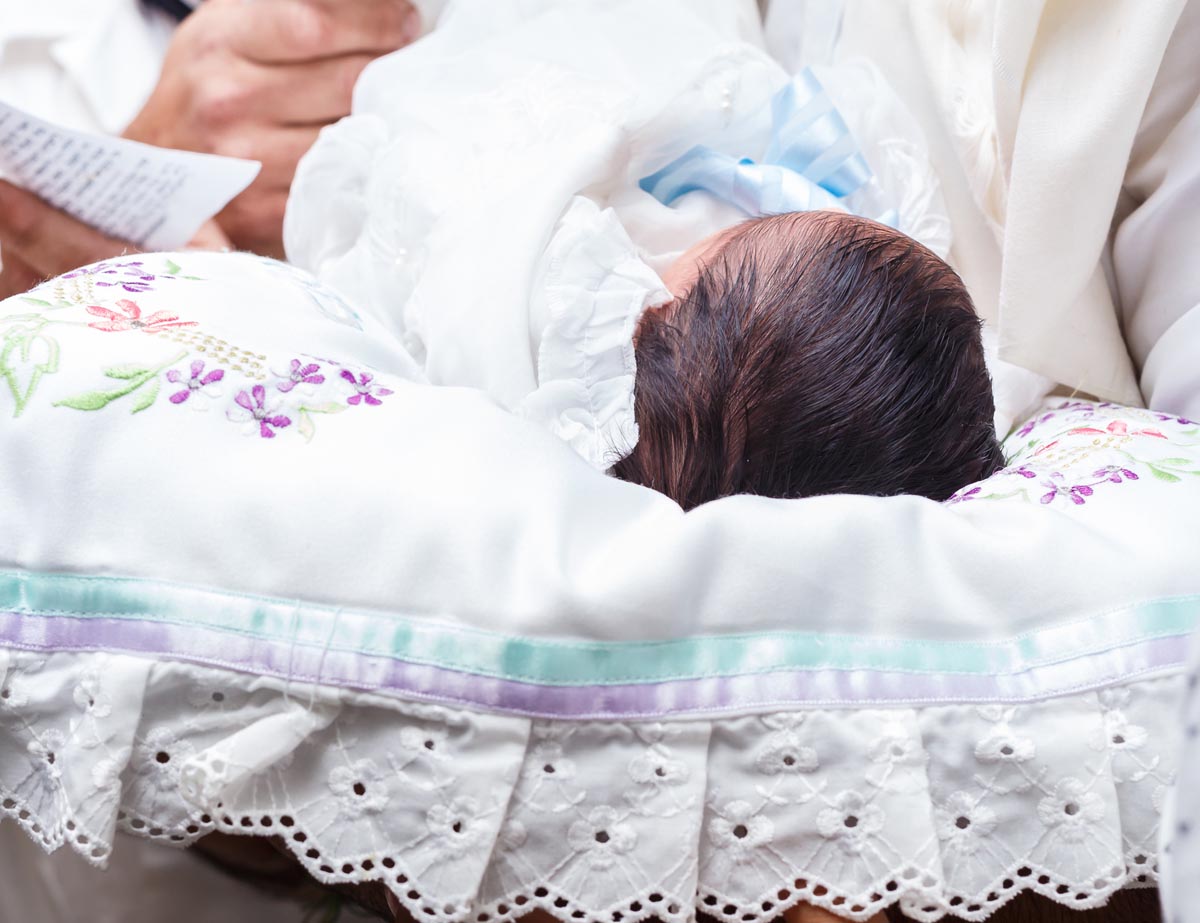
- Pillow: The baby is brought into the ceremony on a suitable pillow, and on it, the mohel also circumcises him. You can get such a pillow in Judaica stores. In certain places, it is even possible to borrow such a pillow (which is used only for the circumcision ceremony).
- Cup and wine: After the circumcision, blessings are recited over the wine, and the baby’s name is announced. Make sure in advance to prepare a cup and wine.
Naming the Baby
The parents should arrive at the circumcision with the baby’s name already clear to them. (How do you choose a name? See page 24.)
The Meal
Guests are coming from near and far, and you certainly want to ensure they have something to eat. But it’s not just for that reason you need to prepare a meal. The mitzvah (commandment) of the Brit Milah (circumcision) is an important one, after which it is customary to have a ‘Seudat Mitzvah’a meal following the commandment that expresses our joy in performing the commandment. Make sure it is a substantial meal (bread and the like, fish/meat and respectable foods as possible).
At the end of the meal, towards the end of the Birkat HaMazon (Blessing After Meals), add a special prayer called ‘Harachaman for the Brit Milah’ in which special blessings are bestowed upon the baby. You can find this in Siddurim (prayer books) and Birkat HaMazon booklets.
Choosing the Sandak
To avoid unpleasantness during the ceremony itself, it’s worth considering in advance who will have the honor of being the Sandak (person who holds the baby during circumcision). When you have a calm moment, you can consider all the options wisely and not under pressure.
Time of the Brit
The day of the Brit is not determined according to free days in the hall, nor according to the day the mother is discharged. The eighth day after the baby’s birth is the day when the Brit Milah takes place!
For example: if the baby is born on a Monday, the Brit Milah will take place on the following Monday – even if the baby was born towards the end of the day.
- Since according to Judaism a new day begins at night (from the time the stars come out), therefore any baby born from the first moment of Monday (which means Sunday night after dark) until the last moment of Monday (the next day on Monday towards the evening, before sunset), will have the circumcision on the following Monday.
Brit on Shabbat
The day of the Brit is so absolute that even if the baby is born on Shabbat, the Brit Milah will be on the following Shabbat – despite the fact that there are actions involved in the Brit that should not be done on Shabbat except for the Brit!
- Brit Milah postpones Shabbat only when it falls on time, but if the Brit Milah is postponed for whatever reason (see below) and by the time Shabbat comes it is already possible to circumcise him, the Brit is not done on Shabbat but postponed to the following day.
- A baby born ‘bein hashmashot’, meaning, between the time the sun sets (when there is still light in the sky) and the time the stars come out (meaning when it gets completely dark). Since this time is doubtful whether it belongs to the ending day or the beginning day, the Brit Milah is always done on the following day.
For example: if the baby was born between Sunday and Monday, the Brit Milah will take place on the following Monday. But if the baby was born between Friday and Shabbat, the baby will not be circumcised on the following Shabbat, but on the following Sunday.
At what time is the Brit performed?
In general, it is preferable to perform the Brit at the beginning of the day – according to the logic that anything I am happy to do I do as soon as I can. However, if delaying the Brit would allow a larger crowd to attend, it is better to postpone it to later hours (even until the afternoon) so that there will be a larger crowd present (which adds to the honor of the Brit and the mitzvah) and a greater joy.
- For a circumcision ceremony that takes place on a Friday, it is preferable to hold it no later than midday, so that the guests will not arrive when they are already full, and will be able to enjoy the Shabbat meal… Also, to ensure that all the guests have time to return home before Shabbat begins.
If the baby is jaundiced or unwell
The baby should be healthy and strong so that he can undergo the circumcision without any risk. If there is even the slightest concern for the baby’s health, the circumcision must be postponed until the baby is fully recovered. Therefore, the circumcision should be performed only after consultation and examination by a certified mohel (circumcision practitioner).
If a baby has jaundice, which has caused the circumcision to be delayed, one should wait a full week from when the baby has recovered before arranging the circumcision.
Why don’t we wait until the baby grows up a little and understands, and even agrees to what is being done to him? Why do we do this to a small and helpless creature?
Our connection with God is a connection with our very existence and is not dependent on understanding. Therefore, there is no need to wait for the baby’s intellectual development, on the contrary, the involvement of the intellect in the circumcision process could potentially harm its purity and uniqueness.
Circumcision ceremony
- In the hall, the relatives and friends are excitedly waiting for the arrival of the newborn. With the arrival of the ‘star of the day,’ the crowd stands on its feet as a sign of respect, and the mohel greets him with the blessing “Welcome”.
- For the circumcision ceremony, a couple is honored to bring the baby, the woman receives the baby from the hands of the birth mother, passes it to her husband, and he takes the baby to the place of the circumcision. It is recommended to grant this honor to a couple who have not yet been blessed with children, as it is a great charm for them.
- After being placed on the lap of the ‘sandak’ (the person who holds the baby during the circumcision), the mohel begins the circumcision ceremony, guiding you (the baby’s father) on what you need to say and do. You don’t have many tasks, so you don’t have to worry about tasks you are unfamiliar with that require preparation. A good mohel will guide you exactly what to say and where.
- At a certain stage of the circumcision, the father blesses: “Blessed are You, Lord our God, King of the universe, who has sanctified us with His commandments and commanded us to enter him into the Covenant of Abraham our father,“ and the congregation responds: “Amen. Just as he has entered into the Covenant, so may he enter into Torah, marriage, and good deeds.”
- The mohel may say the following blessings, or they may be said by someone appointed by the baby’s father. The person blesses “Borei Pri Hagafen” (the blessing over wine) and also the blessing of “Koret HaBrit” (the blessing for the performance of circumcision). Then he says the blessing “Our God and God of our fathers, sustain this child for his father and his mother – and here the name is announced…”, and at the end of the blessings, the congregation says: “Give thanks to the Lord for He is good, for His kindness endures forever. Just as he has entered into the Covenant, so may he enter into Torah, marriage, and good deeds.”
- At the end of the circumcision, the mohel says the ‘Mi Sheberach’ prayer for the baby’s recovery.
- At the end of the ceremony, the couple who brought the newborn to the circumcision ceremony return him to his mother, and then he is taken back to the stroller.
- Now, invite your guests to participate in the celebratory meal.
- At the end of the meal, before the guests leave the hall, they say the blessing after the meal over a cup of wine, and at its end, they add a series of blessings called “Harachaman for the circumcision”, in which they bless the circumcised baby.


