











Background
Thirty days have passed since the joyful day when you first held your eldest son. Yours? Not exactly.
A man’s firstborn is ‘adopted’ by God, and is considered His to some extent. If you want the baby you gave birth to be yours, you need to redeem him from God. Give God a sum of money in exchange for your son, and then he will be yours.
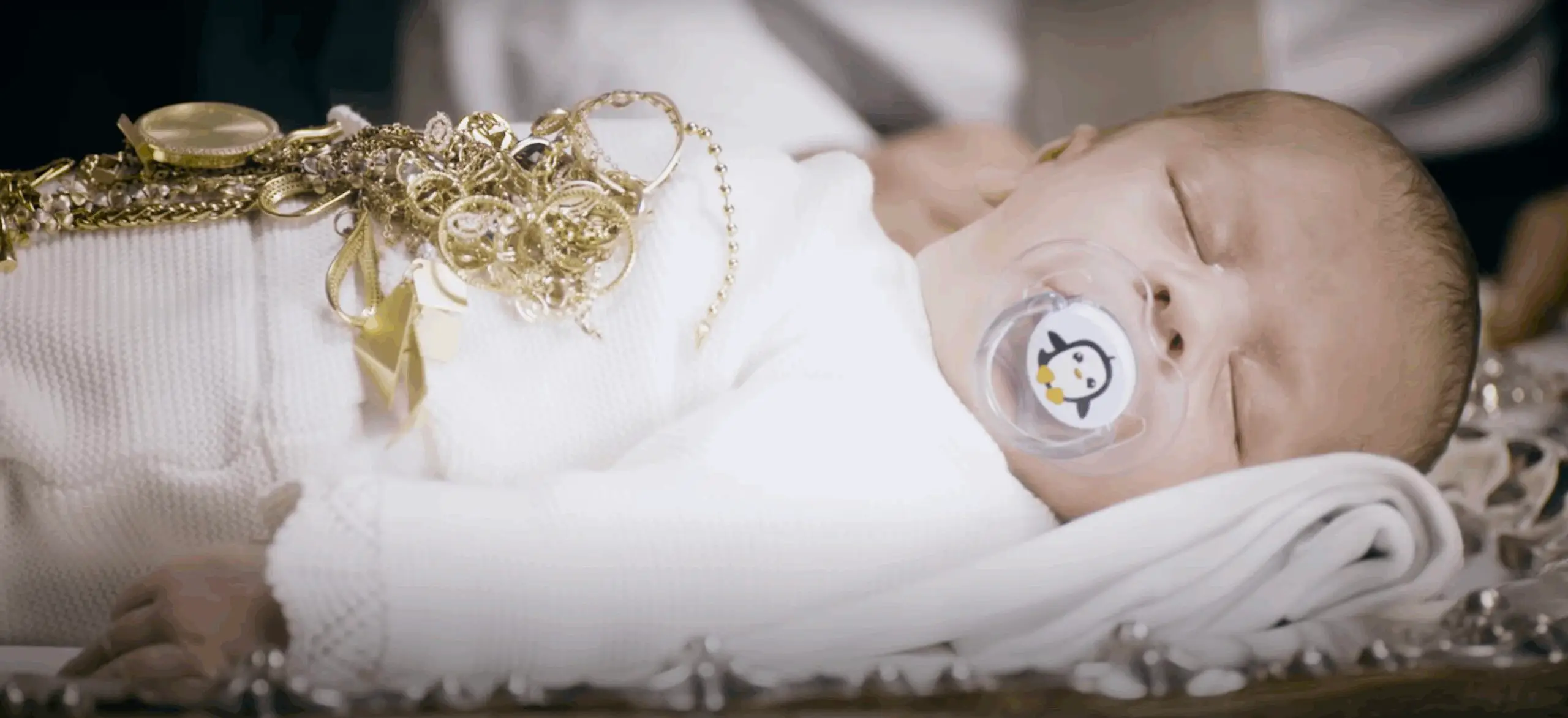
Pidyon Haben is a ceremony celebrated when the firstborn reaches his thirty-first day. The ceremony is done by paying a Kohen (priest) five pure silver coins called ‘shekels’.
Why?
Let’s go back thousands of years. To force Pharaoh to free the Israelites from Egypt, God afflicted the Egyptian people with ten plagues, the tenth being the ‘Plague of the Firstborn’. In this plague, God distinguished between the firstborn of the Egyptians and the firstborn of the Israelites. While the former died en masse, not a single one of the latter fell. This act ‘sanctified’ God’s firstborn and turned them into His priests in the Temple.
After the infamous sin of the Golden Calf, in which the firstborn also sinned, God took away the priesthood from them and gave it to the tribe of Levi. However, their sanctity remained, and therefore we need to redeem them.
Another explanation comes from the Jewish belief that all nature was created by God and therefore everything belongs only to Him.
When a person wants to use one of God’s creations, he must say ‘thank you’ for allowing him to use it. This thanks is expressed by taking the first part of almost everything, the first fruit, and giving it to God. So too with a man’s children. The first, the firstborn, is dedicated to God, and ‘to bring him back home’, he needs to be redeemed.
How to redeem?
To redeem him, we need to go to the ‘Kohen’ – God’s ‘representative’ in the world. When we redeem the baby from God, we perform the ceremony in front of a Kohen – no matter who he is. In the ceremony itself, we negotiate with the Kohen who is interested in our seriousness to receive the baby. He asks the father of the son: “What do you want more, your firstborn son or the money you need to give me in exchange for him?” After the father of the son replies that he is interested in his son (unless he wants otherwise…) the father gives the Kohen five shekels then receives him from the Kohen, and he becomes his.
A ‘shekel’ is an ancient silver coin that was also used at the time of giving the Torah, therefore the Torah uses the name of this coin.
Today, for the purpose of Pidyon Haben, it is necessary to check the current value of the ‘silver’ at the time of performing the Pidyon Haben and give its value to the Kohen.
You can find an updated value at any time on the internet.
Who is a firstborn?
A firstborn who is obligated to be redeemed, is a male son who was born first to his mother, that is, the first child born to a mother naturally and not by Caesarian section. Even if the father has other children from another woman, the baby is considered a firstborn, because what matters in this issue is the baby who opens the womb of his mother.
- If before his birth the mother had a miscarriage of a fetus that was over 40 days, the one born after him is not a firstborn.
- If the father is a Kohen or Levi, or the mother is a daughter of a Kohen or Levi, the firstborn is not obligated to be redeemed.
- These conditions are the reason why the commandment of ‘Pidyon Haben’ (Redemption of the firstborn son) is a rather rare commandment, that most of the Jewish people do not get to fulfill.
When?
The redemption is performed only after thirty days have passed since the birth, on the thirty-first day.
- This day always falls four weeks and two days after the birth. For example, a baby born on a Sunday will have his redemption ceremony on a Tuesday, four weeks later.
- A baby born before sunset is considered to be one day into the thirty days. Even if born just a few minutes before sunset, that day is counted as a full day in relation to the count.
- If the baby is born on a Thursday and the redemption time falls on Shabbat, the redemption is postponed to Sunday.
The reason for waiting for thirty days from birth comes from the Jewish belief that a baby, until thirty days from his birth, is not yet certain to survive. Only after these days have passed and he shows that he continues to live, should he be redeemed.
- A baby who was not redeemed on his 31st day, his father is obliged to redeem him as soon as possible. An adult who was not redeemed must take care of his redemption himself.
- As with the fulfillment of every special commandment, at the end of the ceremony a feast should be held, called a ‘Seudat Mitzvah’ – a meal celebrated with the fulfillment of a special commandment.


