








14th of Nisan
On Erev Pesach, they hurry and pray the morning prayer early, in order to finish the morning meal at a time when it is still permissible to eat chametz. From this day onwards until the end of Passover, they do not say in the prayer the section “Mizmor L’Todah” after “Baruch She’amar”, because it deals with the “Thanksgiving sacrifice” which was offered in the Temple with leavened bread.
It is customary not to eat on the eve of the holiday from the foods from which the charoset and the bitter herbs are made: lettuce, ‘horseradish’, apples, pears and nuts.
Fast of the Firstborn
On Erev Pesach, the “Fast of the Firstborn” takes place – a fast in memory of the miracle that occurred during the “Plague of the Firstborn”, when the Egyptian firstborns were killed and nothing happened to the Israeli firstborns.
All firstborns are required to fast. Also, a father who is not himself a firstborn but has a firstborn son who has not yet reached the age of bar mitzvah (age 13) – fasts on his own for his son.
Nowadays, it is customary to be lenient with this fast, and to avoid the need for it, every firstborn should organize or participate in a “Completion of a Talmudic Tractate” after morning prayer:
“Completion of a Talmudic Tractate” is a term for a ‘celebration of completion’ done by a person who has finished studying a tractate from the Talmud. It is customary to hold the ‘completion’ in a dignified manner, with a large congregation, during a celebratory meal called “Mitzvah Meal”.
At that “Mitzvah Meal” of the ‘completion’, the firstborns can ‘break their fast’ and continue eating throughout the day.
Here’s the English translation of your Hebrew text, with special attention to the Judaic terms:
End Time for Eating Chametz (leavened bread)
- On the morning of Passover eve, it is still permissible to eat chametz for a few hours. The rabbis announce the exact time each year, and it is necessary to follow these announcements. Generally speaking, in Israel, chametz can be eaten until around 10 a.m. by daylight saving time.
- You should finish breakfast early, before the end of the time for eating chametz. After the meal, you should collect the remaining chametz and prepare it for its burning.
- After the time of eating chametz, you should thoroughly clean the place where we ate breakfast, wash your mouth and hands from the leftovers, and shake off your clothes pockets. The remaining chametz that is needed after Passover, is stored in those sealed places on which we wrote “chametz” and that are sold to a non-Jew.
Burning of Chametz
- After the time of eating chametz, take the chametz left from breakfast, together with the bag from the chametz check the night before, and burn them. After we throw the chametz into the fire, we once again ‘nullify’ and abandon any that might remain anywhere, by saying “all leavened bread” (which differs from the passage we said after checking at night).
- The wording of the ‘nullification’ and abandonment: “All leavened bread and leaven that are in my possession, which I have seen and not seen, which I have removed and not removed, are to be nullified and considered ownerless like the dust of the earth”. Anyone who doesn’t understand Aramaic, can say in Hebrew: “All chametz and leaven in my possession, that I have seen and not seen, that I have removed and not removed – should be nullified and considered ownerless like the dust of the earth.”
- Everyone – men, women, boys, and girls – should preferably say the wording of the nullification at the time of burning the chametz, even those who are not next to the fire itself.
- After saying “all leavened bread”, you should say “May it be His will” as it appears in the prayer books.
- When Passover eve falls on Shabbat, burn the chametz on Friday morning – 13th of Nisan, and chametz can be eaten until the time of prohibition to eat chametz on Shabbat morning.
- The end time for nullification and burning of chametz in Israel is around 11:00 a.m. by daylight saving time. Here too, it is important to know that the rabbis announce the exact time each year, and one should follow these announcements.
Additional ‘Stringencies’ and ‘Beautifications’ on Passover
During the Passover holiday and the intermediate days, we are very careful not to eat anything that even has a slight doubt that it may have come in contact with chametz – “fearing chametz” – each according to his parents’ custom and according to his personal level of caution. Since it is not fitting to ask everyone ‘how much they are stringent’, we are careful not to honor one another with food and drink during the Passover holiday.
Here are examples of strictness and stringencies according to different communities:
- Do not eat legumes on Passover, as they remind us of chametz in their form (in fact, this custom is unique to all Ashkenazi communities).
- Some of the legumes are: rice, corn, lentils, beans, sesame, mustard, seeds, soy oil, and the like.
- Also, the Sephardim, who customarily eat legumes on Passover, need to check well that chametz is not mixed with them.
- For infants, it is permissible to relax the eating of legumes only when there is no other option and there is a special need for it, such as mother’s milk substitutes that usually contain legumes. They use special utensils for them, prepare the bottles in a side sink and not in a Passover kosher kitchen.
- We do not eat dried fruits, as they are usually dried using flour.
- Some are careful not to use spices on Passover.
- We do not eat garlic and radish on Passover.
- All fruits and vegetables should be peeled before eating or cooking them, for fear that their outer peel may have come into contact with chametz (leavened food).
- It is important not to eat “soaked matzah” – that is, matzah that has come into contact with water or any other food that has moisture in it. We are worried that there may be uncooked flour crumbs left on the matzah, which may leaven when they come into contact with water. Therefore, during the meals, the matzot placed on the table should be covered, and during the “Grace After Meals,” when moistening the fingers with “Mayim Achronim” (the water we wash our hands with after the meal), we do not pass the fingers over the lips as we do the rest of the year.
Preparations for the Holiday
- It is forbidden to do any work on Passover eve after midday, except for tasks that are necessary for the holiday. It is a mitzvah (commandment) to get a haircut and cut nails in honor of the holiday, but this should be done before midday.
- Many have the custom to bake “mitzvah matzahs” after midday, as this was the time when the “Passover sacrifice” was offered when the Temple was standing. They can be baked in matzah bakeries. During the baking, the “Hallel” (prayer of praise) should be recited, in memory of the “Passover sacrifice” for which “Hallel” was said at the time of its slaughter.
- One should refrain from eating too much during the day, so that we arrive hungry for the Seder night and eat the matzah with appetite.
On the holiday, as on Shabbat, it is forbidden to kindle new fire. But since on the holiday itself it is permitted to cook and transfer fire from an existing fire (which is also forbidden on Shabbat) – it is preferable to leave a fire burning on the stove or a long-burning candle for the holiday, so we can transfer new fire from them.
On the eve of the holiday, the table for the first holiday meal is set, known as “Leil HaSeder” (Seder Night). Comfortable chairs are prepared for the participants, and a special Seder plate (still empty) is placed on the table.
In addition, we place nice and beautiful vessels on the table, expressing feelings of freedom and liberty – in memory of the Exodus from Egypt. It is better to make these preparations during the day, so the house will be ready immediately when people return from the synagogue in the evening.
Here is a list of things to prepare in advance for the Seder night:
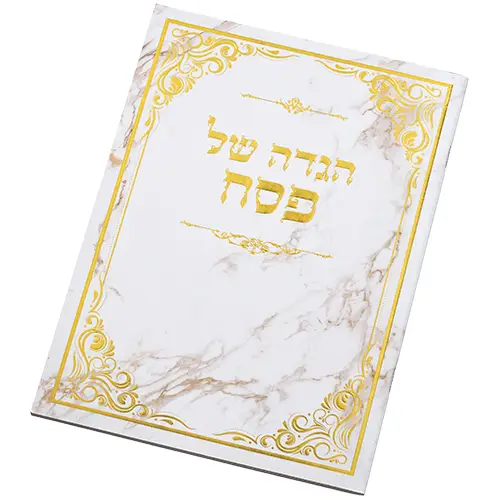
- The Passover Haggadah. A special book for the Seder night, which includes the story of the Exodus from Egypt. In the Haggadah, you can also find the “Kiddush”, “Grace After Meals”, “Hallel” and more.
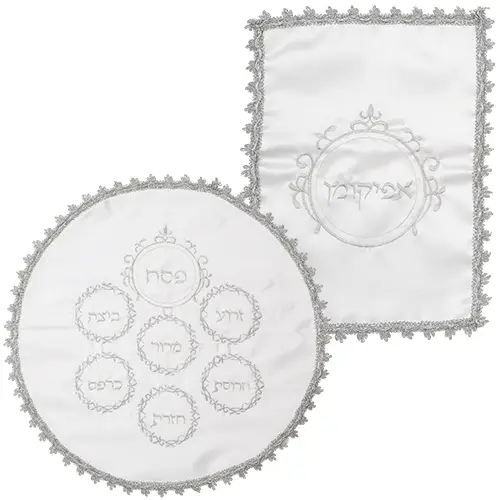
- Matzahs. As already mentioned, the main Torah commandment to eat matzah on Passover is on the first night. For the Seder night, it is advisable to have round hand-made matzahs, also called “Shmurah Matzah”. Prepare 3 whole matzahs for the leader of the Seder, and at least 27 grams (an olive’s volume) of matzah for each participant.
- Wine for drinking the “Four Cups”. It is a mitzvah to use red wine specifically, as it is reminiscent of the blood Pharaoh shed when he slaughtered the children of Israel. But if there is a white wine that is more excellent than the red one – there is a preference for the more excellent one.
- A cooked potato or raw onion for eating the “Karpas”.
- Ground horseradish, for eating the “Maror”.
- Lettuce, both fresh and dried, is also used for eating the “Maror” (bitter herbs). It’s important to fully dry the lettuce so that we can place it in a bowl next to the Matzah and eat it in a “Korech” (sandwich) together with the Matzah, without fear of “Matzah Shruyah” (wet Matzah).
- “Charoset”, a reminder of the mortar that the Israelites worked with in Egypt. It’s prepared with apples, pears, and ground nuts. Mash and grind all of them together until you get a unified paste, and at the beginning of the Seder night, add a little red wine to the mixture.
- Water mixed with salt, to dip the “Karpas” (green vegetable) and the egg in it.
- 2 dishes, a reminder of the “Korban Pesach” (Paschal sacrifice) and the “Korban Chagigah” (Festival sacrifice) that were offered when the Temple was standing. For this purpose, it is customary to prepare roasted meat (shank bone), and a hard-boiled egg.
- Shank: roast a chicken neck (throat), and during roasting, almost all the meat should be removed so that it is completely different from the ‘Korban Pesach’.
- Hard-boiled egg: remember to boil it on the eve of the holiday.
- A broken vessel, to drip wine into it during the recitation of the “Haggadah“ (telling of the Exodus story).
Don’t forget to prepare nuts and almonds to distribute to the children during the evening, in order to arouse them to ask questions about the customs of the Seder night.
Lighting of candles
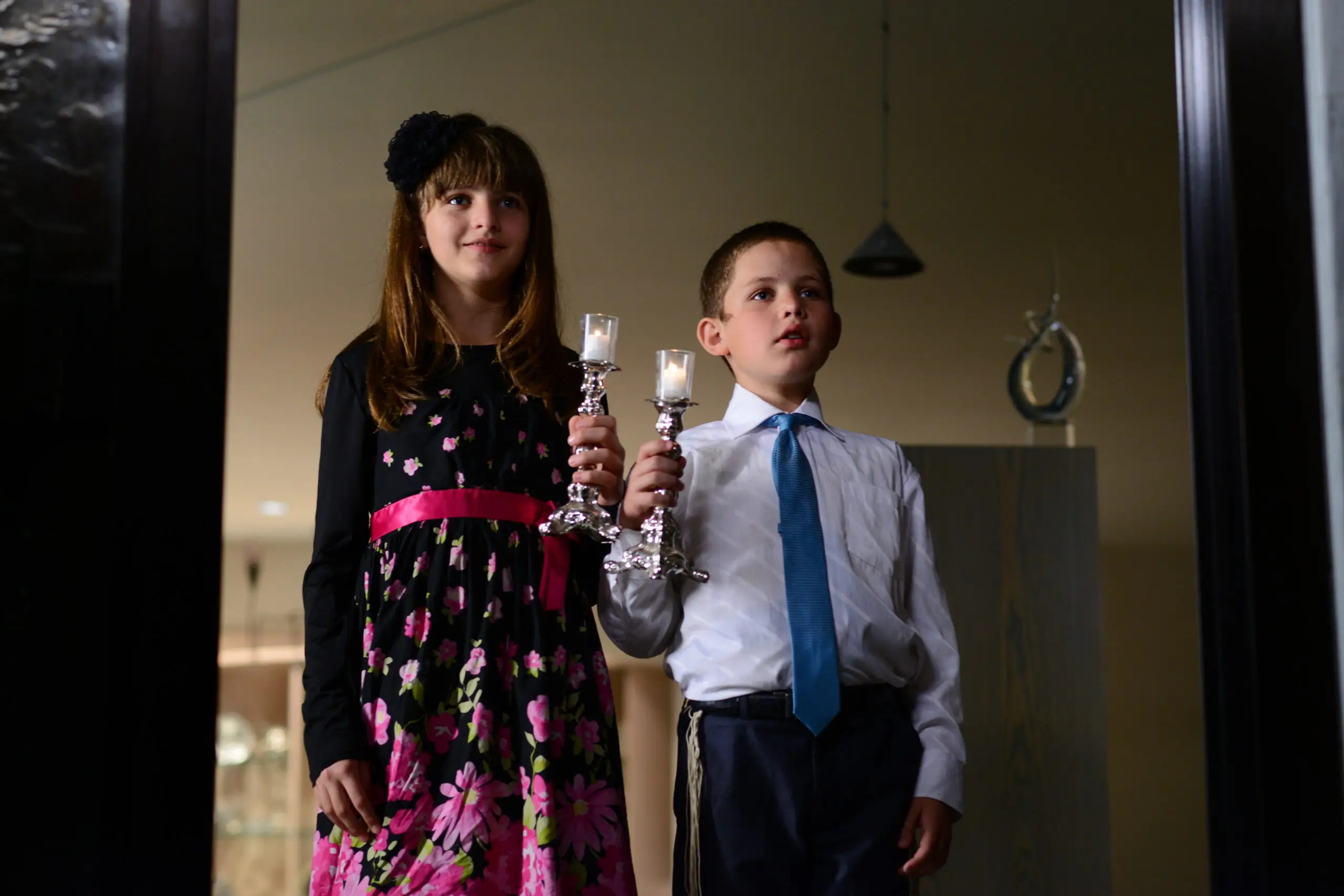
The sages instituted that there should be a candle lit in the house on Shabbat and on the holiday, so that tranquility and comfort prevail over the household. Therefore, before the onset of the holiday, the daughters and women will light candles. Before lighting, you should pray the Mincha prayer and give a coin to charity.
- A girl, from the time she begins to speak until her wedding – lights one candle.
- A married woman lights 2 candles, and in addition one candle for each of her sons and daughters.
After lighting the candles, place your hands over your eyes, and bless 2 blessings:
- “Blessed are You, Lord our God, King of the universe, who has sanctified us with His commandments, and commanded us to light a holiday candle.”
- “Blessed are You, Lord our God, King of the universe, who has kept us alive, sustained us, and brought us to this season.”
Mincha prayer
The Mincha prayer of the eve of Passover is prayed earlier than usual.
This prayer is like every Friday evening and holiday. First say the “Korbanot” (sacrifices), then “Ashrei” (Psalm 145), the “Shemoneh Esrei” (eighteen blessings), and “Aleinu Leshabeach” (prayer of praise).
After the prayer, it is customary to say the text of “Seder Korban Pesach” (Order of the Paschal Sacrifice) that appears in the prayer books. Since the Temple no longer exists and we cannot offer sacrifices, the study is considered before God as if we had offered them.


