













When, and Who Does It?
After Shalom Aleichem and Eishet Chayil, Kiddush is recited.
We have already mentioned that the Torah contains a commandment for us to “remember” and sanctify Shabbat. Our Sages decreed that one of the ways we “remember” Shabbat must be by reciting a blessing over a cup of wine both when Shabbat begins (Kiddush) and when it ends (Havdalah).
Wine is a beverage with a special status in Judaism. The Land of Israel has always been known to possess vineyards of superior quality, and grapes, of which wine is a product, are one of the seven species that are cited in praise of the Land of Israel. That is why wine plays a central role in many rituals, including weddings, circumcisions, and the festive meals of Shabbat and holidays.
- Kiddush may also be recited over grape juice, since it shares the same blessing as wine: “Blessed is He … Who creates the fruit of the vine.”
When Do We Recite Kiddush?
In general, Kiddush is recited after Maariv, following the beginning of night with the emergence of three small stars. It can be possible, however, to recite Kiddush even earlier, when one “accepts” Shabbat earlier.
Kabbalah teaches that one should not recite Kiddush over wine during the seventh hour after “midday,” which begins between 5:40 and 6:40 p.m., because the celestial body Mars (Maadim in Hebrew, related to the word dam, blood) is in ascendance at that time. A person wishing to make Kiddush during that time can easily circumvent this problem by using white wine.
Who Must Make Kiddush?
Both men and women are obligated in the precept of Kiddush, but it is not necessary for every individual to recite it. It is sufficient to hear Kiddush from another person.
When a group of people are attending a Shabbat meal together, it is customary for the host or another person to recite Kiddush aloud and for the others to fulfill their obligation by listening to him. This mechanism is effective only if the person who recites Kiddush has the intent of allowing the others to fulfill their requirements through his recitation. The listeners must also pay attention to his blessings, having in mind that they are listening to him in order to fulfill their own obligation, and respond “Amen” after the blessings.
- Any boy who has reached the age of bar mitzvah (13) may recite Kiddush for himself and exempt others with his recitation.
The Preparations for Kiddush
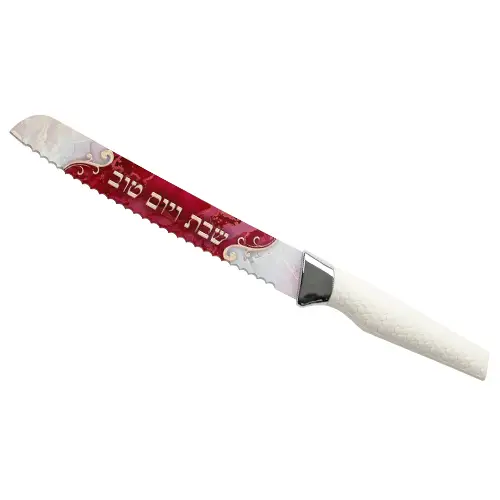
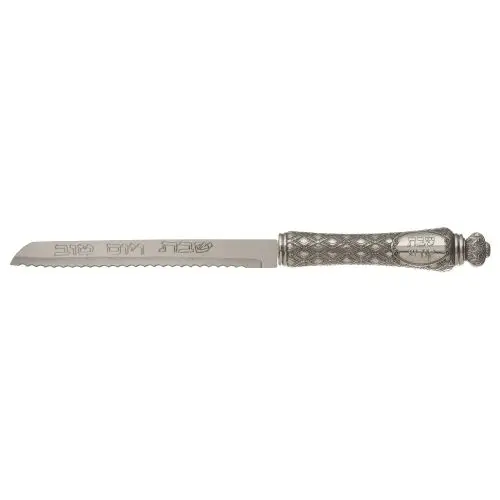
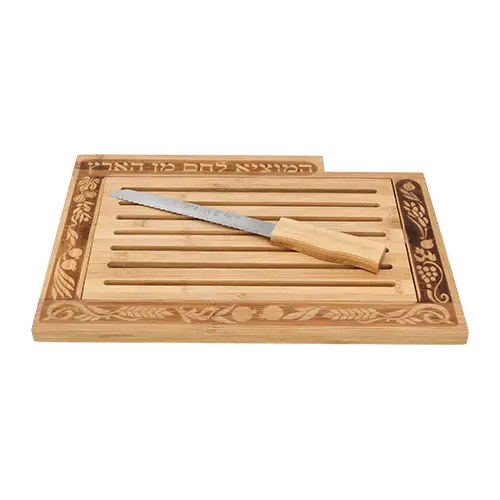
Before Kiddush, one should make sure that the following items are placed on the Shabbat table: wine and a cup for Kiddush; two whole challot covered with a cloth and resting on a tray, cutting board, or another cloth; a knife for cutting the challot; and salt, in which the challah will be dipped.
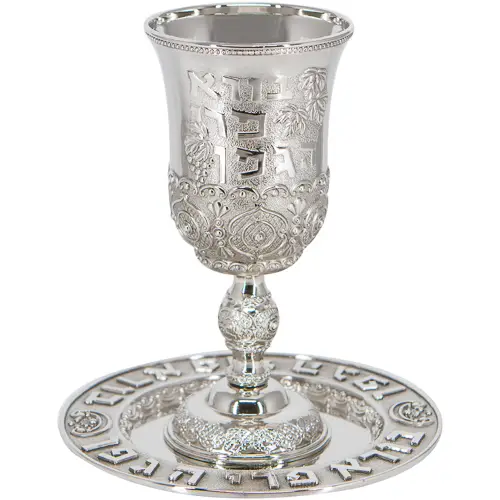
- One should designate a specific cup to be used regularly for Kiddush. Even a glass cup may be designated for this purpose, but in general, it is customary to use a silver cup for Kiddush, in honor of Shabbat.
- Before Kiddush, the cup should be rinsed both inside and outside and dried well.
- The cup should contain a minimum quantity of a reviit (approximately 86 ml) of wine.
- Kiddush should be recited in the room where the Shabbat meal will be eaten.
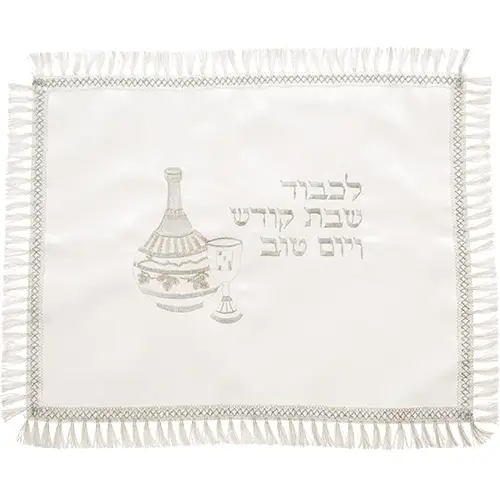
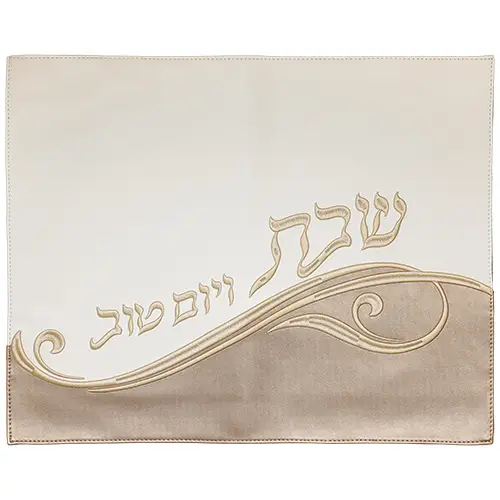
We have the custom of keeping the challot covered during Kiddush because we are technically required to recite a blessing over the challah first. The verse that lists the Seven Species of the Land of Israel enumerates wheat, from which the challot are made, before grapes, and we are taught that wheat products therefore take precedence whenever there is a need to choose one item on which a blessing will be made first. We therefore cover the challot in order to avoid “insulting” them by bypassing them and reciting a blessing over the wine first.
It is also customary both to cover the challot and to place something below them. This custom is based on the fact that the challah is reminiscent of the manna, the miraculous food that rained down from the sky to feed the Jewish people throughout their forty-year sojourn in the wilderness. The manna would fall onto a single layer of dew, and then another layer of dew would descend on top of it, causing it to be encased in dew both above and below it. In commemoration of this miracle, we place the challot on top of one item and then place a cover on top of them.
The Procedure
The person reciting Kiddush begins with Psalm 23, “A song for David, G-d is my Shepherd; I will not fear,” and then continues with a brief passage from the Zohar (“This is the feast”). These passages indicate that the Shabbat meal is very sacred and embodies secrets of Jewish mysticism.
- At this point, the wine is poured into the cup. One should take care to fill the cup to the brim.
- Everyone should stand for Kiddush, both the person reciting it and those listening to him.
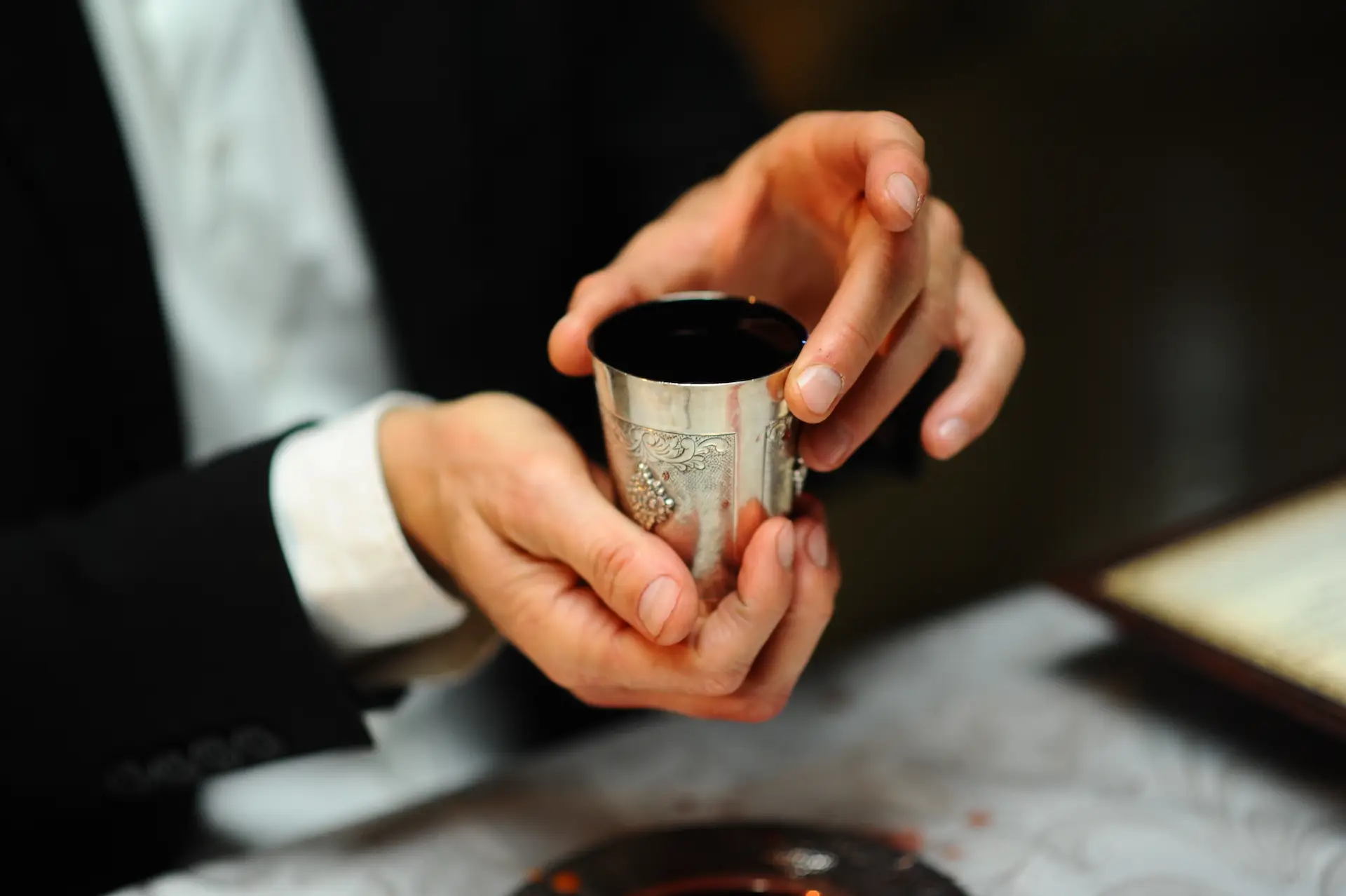
- The person who will recite Kiddush should pick up the cup in his right hand and transfer it to his left hand. He should then use his left hand to place the cup in the center of his right palm, with his four fingers extending upward to wrap around the cup while his thumb rests. He should hold the cup at least 24 centimeters above the table.
- At the beginning of Kiddush, when one recites the words “The sixth day, and the Heavens and the Earth and all their legions were completed,” he should gaze at the Shabbat candles.
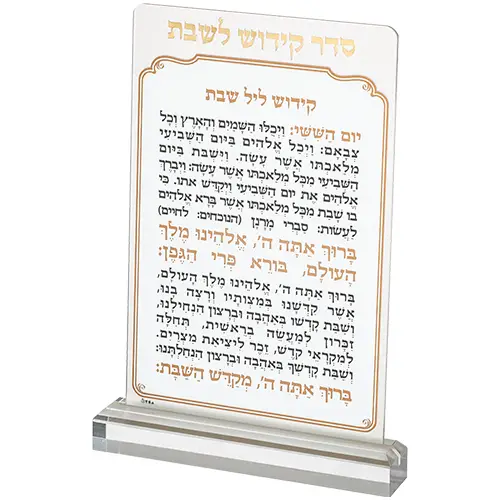
Kiddush begins with the words, “The sixth day, the heavens and the Earth and all their legions were completed.” The first four Hebrew words of this passage (Yom hashishi vayichulu hashamayim) begin with the first four letters of G-d’s name. This passage is an excerpt of the conclusion of the Torah’s account of the world’s creation. In these verses, the Torah relates that G-d desisted from “work” on the seventh day of the week, blessed the seventh day, and sanctified it above the other days of the week.
The blessing of “Who creates the fruit of the vine” is preceded by an announcement in Aramaic, “Savri maranan.” This announcement essentially tells the listeners, “Pay attention! Listen so that you will fulfill your obligation.” In Sephardic communities, it is customary to respond, “L’chayim.”
- During the blessing itself, the person reciting Kiddush should gaze at the wine in the cup. After he concludes the blessing of “Who creates the fruit of the vine,” the listeners should respond “Amen.”
This blessing is followed by another one that encapsulates the Kiddush of Shabbat: “Blessed are You … Who has sanctified us with His commandments and desires us … for You chose us and sanctified us from among all the nations….”
In this blessing, we remind ourselves that G-d chose us over the other nations of the world and gave us the gift of Shabbat to serve as a constant reminder to us that He created the world. We add that Shabbat is the first and most important of all our holidays. It serves as a constant reminder of the miraculous Exodus from Egypt, which laid the foundation for the commandments we later received in the desert and at the Revelation at Sinai.
After the person reciting Kiddush concludes this blessing with the words, “Blessed are You, G-d, Who sanctifies the Shabbat,” the listeners respond, “Amen.”
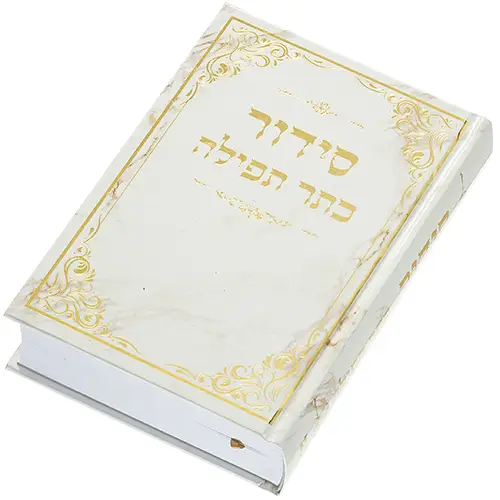
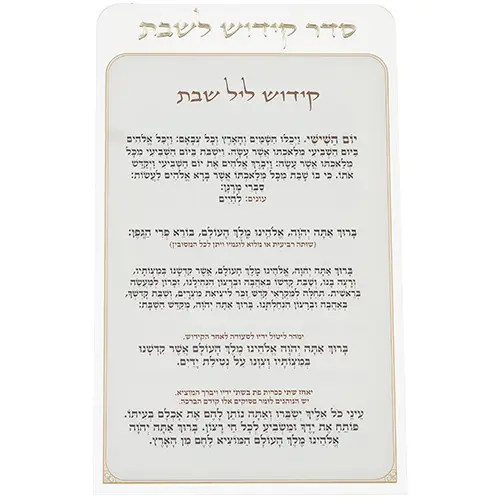
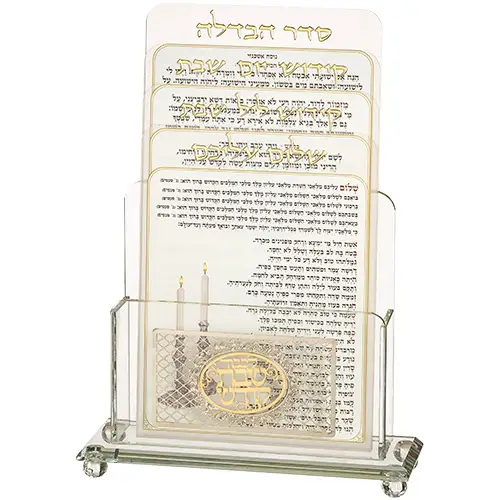
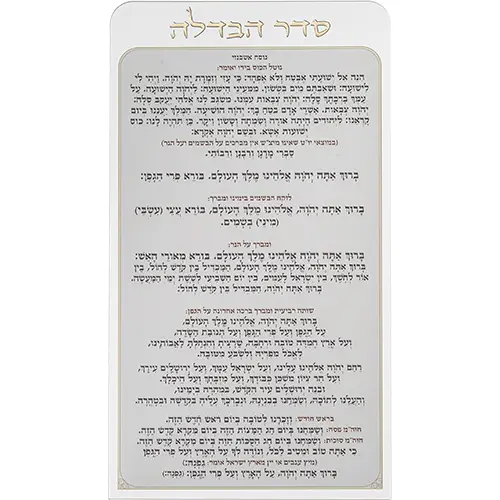
The text of Kiddush appears in the majority of siddurim (prayer books). Most standard birkonim (pamphlets containing the Grace After Meals, also known as bentchers) also contain all of the ritual texts used during the course of the Shabbat meal.
After Kiddush has concluded, the person who recited Kiddush should sit down and drink at least slightly more than half of a reviit of the wine (or grape juice) in his cup. He may then add additional wine to the cup and distribute portions of it to everyone else present. This way, every one of the listeners will also be able to drink from the wine of Kiddush.
- We do not recite a brachah acharonah (blessing after the consumption of food or drink) over the wine of Kiddush. Kiddush is considered a component of the Shabbat meal, and when we recite Birkat Hamazon (Grace After Meals) at the end of the meal, it encompasses everything we have eaten or drunk during the meal, including the wine of Kiddush.
Reciting Kiddush Over Challah
When neither wine nor grape juice is available, Kiddush may be recited over two challot.
In such a situation, one should perform the ritual hand washing (Netilat Yadayim) before Kiddush. Afterward, one should stand and recite the usual text of Kiddush while holding both challot. The blessing over wine, however, should be replaced with the blessing over bread, “Hamotzi lechem min ha’aretz—Who produces bread from the ground.” After the recitation of Kiddush, the loaf of bread should be cut and one should eat a kezayit (the volume of an olive), after which the Shabbat meal continues as usual.


