















Background
Are you flying somewhere for your work, or on a trip with your family? In some ways, the purpose of your trip makes no difference; you must always pack your clothes, your ID or passport, and anything else that you will be needing during the course of your trip.
On long plane trips, as well, Judaism has guidelines for us. Before you pack your suitcase, there are a few important things you should know.
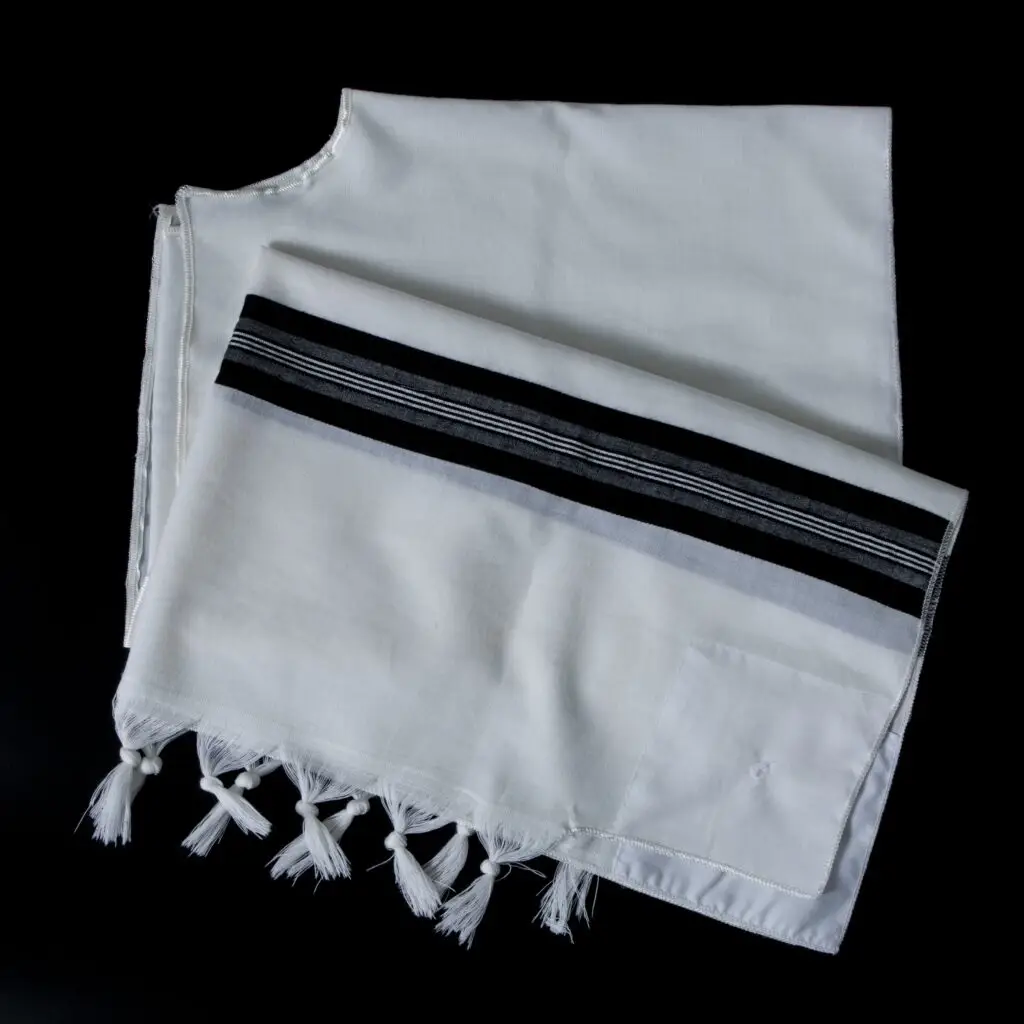
The first item you should pack is your tallit and tefillin, along with your prayer book. After that, you can pack any other personal items you wish. You can take the tallit and tefillin out afterward in order to put in other things (clothing and the like) so that those items will not be placed on top of them, but you should be certain to put them back into the suitcase afterward.
Even if you are only flying somewhere for a few hours and returning on the same day, you should still bring your tefillin along in case of an emergency. Flights are often delayed for various reasons, and you would not want to be “stuck” without your tefillin in the morning.
How to Pack a Suitcase
It is also advisable to pack your tefillin in your carry-on bag, rather than placing them in your checked luggage.
Tefillin are delicate and may be damaged in the course of the normal handling of checked luggage. Checked bags also sometimes do not arrive at their destination, and one would not want to risk being separated from such a valuable possession.
- It’s always preferable to patronize a Jewish travel agent when making your travel reservations, in order to help other Jews earn a living. All Jews are members of a single family, and everyone understands that it’s always better to give business to a family member.
Kosher Food
Before setting out on a trip, one should calculate the total duration of the trip, including both the actual traveling time and the time that will be spent at the destination, and make sure that there will be kosher food available throughout the trip. In most situations, kosher food can be obtained from a Chabad House wherever one is staying.
- Not sure how to find a Chabad House? Visit www.chabad.org for a complete listing.
Personal Protection
Even if we were to have a team of Secret Service agents dogging our steps, we would never be completely protected from harm. Events in the world are not subject to human control, and we must take steps to ensure that G-d Himself will protect us.
When we are traveling by air, a situation in which the danger is often greater, there are a few measures we can adopt as additional guarantees of Divine protection. The following are a few recommendations:
-
- Sacred texts: It is advisable to have a Torah text of some sort in your carry-on luggage, especially the Chitat (described above), as well as a tzedakah (charity) box.
- Giving tzedakah: Before setting out on a journey, it pays to give a coin to charity.
- Being the agent for a mitzvah: It is advisable to ask a friend, a relative, or some other person for a sum of money, even a small one, to be given to charity at one’s destination. A person who does so turns his own personal trip into a journey for the sake of a mitzvah (i.e., giving charity at the destination), and our Sages teach us that a person on such a mission will not come to harm.
Leaving the House
Judaism provides us with guidelines even for things such as taking leave of our family members.
-
- The family members should escort the traveler on his way out of the house and even walk with him a few steps past the door (e.g., until his car). In addition to the fact that this is a mitzvah, it also creates spiritual protection for the family member who will be traveling.
- It is customary not to take one’s leave of the same person twice.
- It is customary not to return home after one has already set out on a trip. Therefore, before you get into your car and head for the airport, it is a good idea to check to be certain that you have everything you need. If you have already left and you realize that you forgot something, it is best to have someone else, who is not traveling, bring it to you.
- It is important to calculate what time you will be on the plane or in the airport in order to determine if you will be able to recite the next prayer service (Shacharit, Minchah, or Maariv) or two while you are there. Whenever possible, it is better not to rely on the time you will be spending in the airport or on the plane for the next prayer service.
- Is there a rabbi in your community? It is a good idea to go visit him before your trip in order to receive his blessing for a safe trip to your destination and back.
The Traveler’s Prayer
- The Traveler’s Prayer is discussed at length in the previous chapter.
A person who lives at a distance from the airport may recite the Traveler’s Prayer at the beginning of his trip, having in mind that it should apply to the actual flight itself, as well. A person who lives near the airport – close enough that he will not be required to recite the Traveler’s Prayer on the way there – should recite it when he is already seated on the airplane, while it gathers speed on the runway in preparation for takeoff.
Question: I am about to spend a few days overseas on a business trip. Should I recite the Traveler’s Prayer every day?
Answer: When you spend more than one day at your destination, it is advisable to recite the entire text of the Traveler’s Prayer every morning, omitting the Name of G-d at the conclusion of the prayer. This should be done even if you are staying in a hotel or at a relative’s home and are not actually in the process of traveling.
Reaching the Destination
Hagomel
Have you made it safely to your destination? That is an occasion to recite the blessing of hagomel in order to give thanks to G-d for the fact that you made it safely through the flight.
- This blessing should be recited only in the presence of ten adult Jewish males.
For more details about the hagomel blessing, see Hagomel – Blessings of Praise.
On a Mitzvah Mission
When you arrive at your destination, don’t forget the money that your friends at your point of origin gave you to distribute to charity.
Question: Is it permissible to take a pleasure trip for a few days by boat, such as a cruise, when one of the days will be Shabbat?
Answer: Yes, but with a few stipulations:
- The majority of the ship’s crew and passengers must be Gentiles.
- You must prepare sufficient food in advance for the entire trip, especially candles, wine, and challah for Shabbat.
- The trip must begin on a Sunday, Monday, or Tuesday, so that you will already be on the boat for at least three days by the time Shabbat begins. The reason for this requirement is that a person must be in a state of tranquility on Shabbat, and the body needs a period of three days to acclimate to the conditions on board a ship.
Question: I am taking a tour in the Far East. Am I allowed to enter the temples of the various pagan religions there for sightseeing purposes?
Answer: No. Pagan religions are considered a form of avodah zarah (idolatry), and they use their temples to pray and offer sacrifices to their deities. It is forbidden to derive any benefit from them or enter their temples.
Returning Home
Most of the guidelines we have presented for traveling apply to the return trip, as well. The tefillin should be the first item to be packed, and upon returning home, one should visit the local synagogue to recite hagomel. After that, it’s home sweet home…


