









Introduction
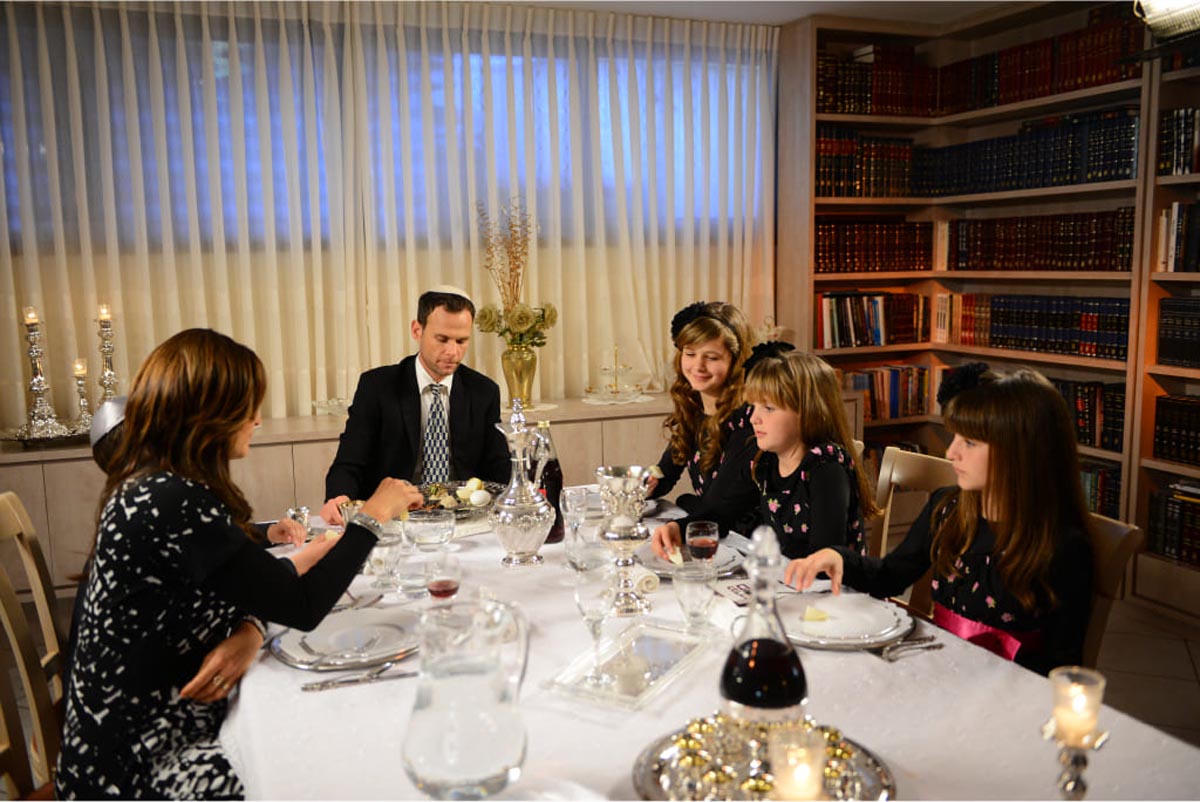
The Grace After Meals (in Hebrew, birkat hamazon) is a series of blessings that we are required to recite at the conclusion of a meal during which bread is eaten. The term birkat hamazon literally means “the blessing on sustenance,” and the term “sustenance” applies to bread, rather than any other food, since it is considered the mainstay of the human diet.
- A person is obligated to recite the Grace After Meals only if he has consumed at least a kezayit (an olive’s volume, 27 cc) of bread.
The Grace After Meals contains four blessings that express our gratitude to G-d for His kindness and generosity, which are with us every day.
Each of the four blessings was composed at a different time, and they were later organized into the structure of the Grace After Meals with which we are familiar today.
The following is a brief overview of the blessings that make up the Grace After Meals:
Introductory Paragraphs
Before we begin the actual blessings, it is customary to recite several additional passages:
- Psalm 137, “On the rivers of Babylon.” This Psalm describes an event that took place while the Jews were in exile in Babylon (after the destruction of the First Temple), when their Babylonian captors asked them to sing some of the “songs of Jerusalem.” The Psalm contains the well-known verse with which the Jews responded to their captors’ demand: “If I forget you, O Jerusalem, may my right hand be forgotten.” At the end of the Psalm, we ask G-d to remember the suffering that our enemies inflicted on us, and to repay them for their evil deeds.
- On special joyous occasions, such as Shabbat, a holiday, a wedding, and other days on which Tachanun is not recited during the regular prayer service, this mournful Psalm is also not recited prior to the Grace After Meals. Instead, we substitute a different Psalm that has a slightly more optimistic tone: Psalm 126, “A song of ascents, when G-d returns,” which describes the laughter that will “fill our mouths” when the Messiah finally arrives.
-
- Psalm 67, “For the conductor on neginot,” which alludes to the ingathering of the Jewish exiles that will occur when the Messiah arrives; to the War of Gog and Magog, which will precede his arrival; and to the fact that in the Messianic era, the entire world will recognize that there is only One G-d.
- This Psalm is also omitted on special joyous occasions, and instead we recite Psalm 87, “For the sons of Korach, a Psalm, a song.”
- Psalm 67, “For the conductor on neginot,” which alludes to the ingathering of the Jewish exiles that will occur when the Messiah arrives; to the War of Gog and Magog, which will precede his arrival; and to the fact that in the Messianic era, the entire world will recognize that there is only One G-d.
- A collection of four verses: “I will bless G-d” from the Book of Psalms; “The end of the matter” from the Book of Ecclesiastes; and “Let my mouth speak the praise of G-d” and “And we will bless G-d,” both from the Book of Psalms.
An Overview of the Blessings
The First Blessing: “Who Sustains the World”
This blessing was composed by Moses when the Jewish people first received the manna, the miraculous “bread” that descended from the heavens throughout the Jews’ forty- year sojourn in the wilderness. The blessing expresses our recognition of and gratitude for the great kindness that G-d performs for His creations by providing us with food and ensuring that all living things receive the sustenance they need.
The blessing begins, “Blessed are You, G-d … Who sustains the world,” and concludes, “Blessed are You, G-d … Who sustains everything.”
The Second Blessing: the Blessing on the Land
This blessing was composed by Joshua, the son of Nun, when he led the conquest of the Land of Israel.
In this blessing, we give thanks to G-d for giving the Land of Israel to us and our forefathers, for liberating us from slavery in Egypt, for giving us the precept of circumcision, for teaching us His Torah, for giving us all of His commandments, and, of course, for constantly providing us with our physical needs.
The blessing contains two paragraphs. It begins with the words, “Let us thank You, G-d, our L-rd,” and concludes with, “Blessed are You, G-d, for the Land and for the sustenance.”
On Chanukah and Purim, a special passage beginning with the words “for the miracles” is inserted in the middle of this blessing. In this special insertion, we give thanks to G-d also for the miracles that He performed for us historically on those days.
The Third Blessing: “He Who Builds Jerusalem”
This blessing was composed by King David and his son, King Solomon, each of whom introduced a paragraph of his own into the blessing.
David and Solomon used this blessing to pray for David’s royal dynasty to continue and for the city of Jerusalem and the Holy Temple to remain standing. Today, we use the same blessing to pray for the restoration of the Davidic dynasty and the rebuilding of the Temple. We also beseech G-d not to make it necessary for us to seek financial assistance or loans from other human beings; we pray that we will be able to rely directly on G-d Himself for all of our needs, and that there will be no need for them to be supplied by human intermediaries.
- The blessing begins with the words, “Have mercy, G-d, our L-rd,” and concludes, “Blessed are You, G-d, Who builds Jerusalem in His mercy, Amen.”
On Shabbat, a special passage (known as Retzeh) is added to this blessing, in which we pray that we will be able to rest Your Jewish Guide 97 properly on the sacred Shabbat day, without experiencing any sorrow or anguish. We also pray for G-d to console Jerusalem by rebuilding the Holy Temple.
On Rosh Chodesh and holidays, the prayer of Yaaleh v’Yavo is added to this blessing. In that prayer, we ask G-d to remember us for good things on these special days, and to quickly send us our true, complete salvation and redemption.
The Fourth Blessing: “He Who Is Good and Does Good”
This blessing was composed by the Sages of the Mishnaic era when permission was granted to bury the fallen followers of Bar Kochba (see box). In this blessing, we give thanks to G-d for all the good that He bestows on us every day, and we pray that He will always continue to shower us with His kindness.
The blessing begins with the words, “Blessed are You … the G-d, our Father, our King…”
During the second century C.E., the Jewish nation, led by Shimon Bar Kochba, rebelled against the Roman Empire, which was then in control of the Land of Israel. The rebellion was successful for several years, but then it was brutally quashed; hundreds of thousands of Jews were slaughtered, and the Roman emperor refused even to allow the victims to be buried. It was only after many years that permission was granted for the bodies to be buried; throughout that time, the victims’ bodies were miraculously spared from decay.
“The Merciful One” and Concluding Paragraphs
-
- Toward the end of the fourth blessing, we add a series of additional requests, which begin with the Hebrew word Harachaman (“the Merciful One”) as a term describing G-d. One of G-d’s sacred attributes is the attribute of mercy, and we refer to that attribute in the context of these brief supplications.
On Shabbat, Rosh Chodesh, and holidays, there are individual special insertions that also begin with the term “the Merciful One.” Each of these insertions is another one-line prayer that relates to that particular day.
- As we prepare to conclude the Grace After Meals, we beseech G-d for the Messiah to come during our lives, for us to have a portion in the World to Come, and for there to be peace in the world.
- In the final passage of the Grace After Meals, we quote a number of verses that make the point that a person who has faith and trust in G-d will never experience poverty or deprivation and will benefit from constant goodness. We conclude by thanking G-d once again for His tremendous kindness, which is evident in the fact that He “opens His Hand” and satisfies the needs of all of His creations. Finally, we declare, “Blessed is the man who trusts in G-d.” When a person places his faith in the Master of the Universe and relies on Him to provide his needs, that person will be truly blessed.
The Procedure for the Grace After Meals
Mayim Acharonim
At the conclusion of a meal containing bread, before the Grace After Meals is recited, the mayim acharonim (literally, “final waters”) ritual is performed. The name of this ritual indicates that it is another ritual hand washing that occurs at the end of the meal, in contrast to the Netilat Yadayim ritual, which is performed before the meal begins.
There are two reasons for this ritual:
-
- Health concerns: In earlier times, foods were seasoned with “salt of Sodom” (salt from the Dead Sea, which is located where the city of Sodom once stood), a very powerful salt that could cause blindness if it came in contact with the eyes. Due to this concern, whenever a meal would conclude, people would wash the tips of their fingers in order to rinse off any residual salt that may have remained there and might accidentally come in contact with their eyes.
- Spiritual reasons: It is proper to wash one’s hands before performing a mitzvah, and the requirement to recite the Grace After Meals is a Biblical commandment.
Even today, when the first reason for mayim acharonim is no longer applicable (both because we no longer use salt from the Dead Sea in our food and because we generally eat with cutlery rather than with our hands), it is still customary to perform this ritual washing of the hands due to the second reason we have cited.
The Procedure for Mayim Acharonim
-
- One should recite the verse, “This is the lot of a wicked man, from God; and the inheritance appointed him by God” (Job 20:29).
- One should then pour a small amount of water from a cup on the tips of the fingers of each hand, while holding the hands with the fingers slanted downward.
-
- The water should be poured into another cup, not on the table or floor.
- The wet fingertips should then be used to wipe one’s lips, and both the fingertips and lips should then be dried.
- One should then recite the verse, “He spoke to me: This is the table that is before G-d.”
- The cup into which the water was poured should then be removed from the table or covered. The water should not be used for any other purpose; it should be spilled down the drain.
- Once the mayim acharonim ritual has been performed, one should not speak until the Grace After Meals has been recited.
Zimun
Zimun is an opening blessing that serves as a sort of introduction to the Grace After Meals. It is recited whenever a minimum of three Jewish males who are 13 years of age or older have eaten together, when at least two of them have eaten bread.
One of the men present is chosen to be the leader of the zimun. Originally, the leader would recite the entire Grace After Meals aloud, for the benefit of those who were not capable of reading it, and he would thereby enable them to fulfill their obligation to recite this prayer. Nowadays, the leader recites aloud only the actual zimun passage itself and the conclusion of each of the other blessings.
The Zimun Procedure
-
- The leader makes the opening announcement of the zimun, which appears in many versions of this passage as, “Gentlemen, let us bless.” There are different versions of this line, and every individual should follow the custom of his own community or family.
- Everyone else responds with the verse from Psalms: “May the name of G-d be blessed from now until eternity.“
- The leader repeats that verse, then continues, “With the permission of my masters, my teachers, and my mentors, let us bless him [G-d] of whose bounty we have eaten.“
- Everyone else responds: “Blessed be He [G-d] of whose bounty we have eaten and by whose goodness we live“.
- Then the leader repeats the same line, “Blessed be He [G-d] of whose bounty we have eaten and by whose goodness we live“.
- A person who is present but did not take part in the meal can also respond to the zimun, but instead of the second response, he should say, “Blessed and greatly blessed is His Name, always, for all eternity.”
A Zimun with Ten Men
When ten adult Jewish males (aged 13 or above) are present, a special sanctity is considered to rest upon them, and G-d’s Presence is felt more intensely. Therefore, when ten or more men have eaten together, and at least seven of them have eaten bread, the text of the zimun is slightly altered.
-
- The word Elokainu, “our G-d,” is added to the text of the zimun as follows:
- The leader says, “Let us bless our G-d, from Whose bounty [property] we have eaten.”
- The others respond, “Blessed is our G-d, from Whose bounty we have eaten.”
- It is customary for the leader of a zimun to hold a cup of wine in his hand during the Grace After Meals, and to recite the blessing of hagefen and drink the wine at the conclusion of the Grace After Meals. When he has finished drinking the wine, he says the after-blessing for hagafen.
How to Recite the Grace After Meals
-
- The Grace After Meals should be recited while seated in the same place where the meal itself took place.
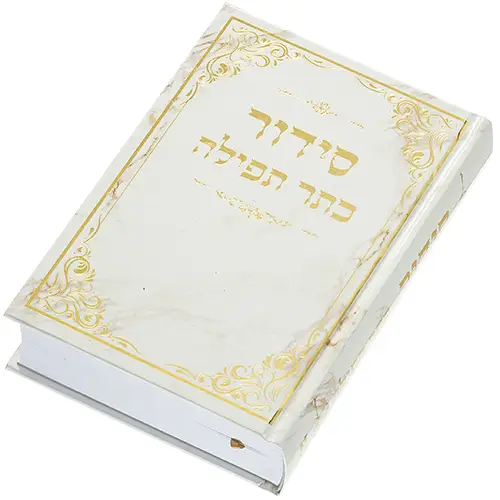
- One should recite the entire Grace After Meals slowly and patiently. The entire text of this service appears both in standard prayer books (siddurim) and in birkonim— special pamphlets or pages that are commonly printed, with the entire text of the Grace After Meals appearing there.
- If a zimun was recited, each individual should pause at the conclusion of each of the first three blessings and wait for the leader to recite the conclusion of the blessing aloud, so that everyone can respond, “Amen.”
- The Grace After Meals is considered to cover every food or beverage that was consumed during the course of the meal, even those which require a separate blessing to be recited before their consumption, such as wine or desserts. There is no need to recite any additional after- blessings when the Grace After Meals is recited.
- On a weekday, one should remove all knives from the table before reciting the Grace After Meals, or at least cover them. During this service, it is considered improper for an implement that can be used to shorten a person’s life (since a knife can be used as a weapon) to be present on a table at which food, which provides a person with vitality and the ability to go on living, was served.
Question: I had something urgent to do immediately after the meal, and I left the table and forgot to recite the Grace After Meals. What do I do now?
Answer: The Grace After Meals may still be recited as long as you still feel a sense of satiation from the meal, 104 Your Jewish Guide which usually lasts until the food you have eaten has been digested. Our Sages estimated that this process takes approximately 72 minutes. Therefore, if 72 minutes have passed, you should not recite the Grace After Meals. In the future, you should try not to leave the table until you have recited the blessing and said “thank you” to G-d. It’s very important not to fall into the trap of ingratitude.
Concluding the Meal
Once a meal has concluded, one should not simply throw the leftover food and crumbs of bread into a garbage pail. Instead, they should be collected and given to animals. Treating leftover bread in a disrespectful manner is considered to lead to poverty, which is understandably something everyone would want to avoid.


