












Introduction
We have concluded our discussion of the morning prayer service and the Jewish approach to breakfast and other meals. For most people, the next part of their daily routine is going to work.
Judaism always has something to say to us, even when we are busy with things that seem to have nothing to do with religion—during our daily routine, on the way to work, at work, in our business dealings, in our relationships with other people, and so on. Following the Torah not only means observing a set of rules that govern our relationship with G-d; it also changes the way we relate to ourselves and, of course, to other people around us.
Jews are encouraged to work in order to support themselves and their families. Many of our people’s greatest sages throughout history practiced various trades, even menial ones. It was not beneath their dignity to work as shoemakers, blacksmiths, and the like—occupations that are a far cry from the high-tech fields that are so prestigious and coveted today.
The importance of combining work with Torah study is expressed by our Sages in their teaching: “Any Torah study that is not accompanied by work will ultimately become nullified and result in sin.”
Nevertheless, there must always be some Jews who spend their entire lives immersed in Torah study. Our nation needs these people to serve as a source of teaching and guidance for all of us.
Leaving the House
Before leaving the home, it is customary to touch the mezuzah in the doorway with one’s right hand. Some have the custom of then kissing the fingers that touched the mezuzah, out of love for this commandment.
The mezuzah reminds us that G-d protects us even when we leave our homes, but it also serves as a reminder and a symbol of our faith in G-d and His commandments. Taking note of the mezuzah before we leave our homes can help us remember to take care throughout the day to always act in an appropriate manner, as G-d wants us to behave.
More information about the mezuzah can be found in The Mezuzah – The Jewish Home.
Public Transportation
Traveling on public transportation is more than cause for a headache; it gives us a chance to observe certain commandments in the Torah.
-
- There are some commandments that we rarely have an opportunity to observe under other circumstances, such as this one: “Rise before an elderly person, and honor the presence of a sage” (Leviticus 19:32). Here, the Torah commands us to stand up out of respect for the elderly and Torah scholars. If you are on a bus or a train, and an elderly person boards and has no place to sit, the Torah obligates you to offer them your own seat—ideally, with a smile. And this commandment should not be interpreted narrowly, as a reference only to the elderly; if the person boarding the bus is an expectant woman, a mother accompanied by a small child, a person with disabilities, or anyone else for whom it would be difficult to stand, the same requirement to surrender one’s seat would apply.
- Traveling on public transportation, when we do not have to concern ourselves with steering a car, also gives us more time to focus on other things. This is an excellent opportunity to engage in Torah study, which the Torah commands us to do, among other times, “when you travel on the road” (Deuteronomy 6:7). One can do this by reading through Psalms, studying the Mishnah, or engaging in any other form of study.
Do you have a smartphone? Nowadays, there are many applications that can help you be involved in Torah study while you are on the road.
Traveling by Private Car
Many of us commute to work in our own private cars. But even when we travel this way, there are many commandments in the Torah that we can still observe “on the road.”
-
- “You shall guard your souls very much” (Deuteronomy 4:15). In this verse, the Torah commands us to take care of ourselves and our health, and not to risk our lives. While driving, we can do so by remaining cautious and alert, and by always obeying the traffic signs and laws.
- “Love your neighbor as yourself” (Leviticus 19:18). Do you have an empty seat in your car? You can take a passenger (as long as he does not seem suspicious) who is traveling in the same direction as you, thereby performing an act of kindness. (There is a saying that a person is not asked in heaven what kind of car he drove, but rather how many passengers he took along.)
- Torah study: Even in your own private car, you can still engage in Torah study by reciting Torah passages or prayers by heart, or by using the car’s stereo system. In Israel, there are radio stations that broadcast Torah lectures throughout the day, and even in other countries, there are plenty of cassette tapes and compact discs available with Torah lectures for easy listening. Many lectures can also be downloaded from the Internet.
Protection on the Road
To have a safe trip, of course, it is necessary to obey all relevant traffic laws, refrain from using alcohol, and so forth.
But there are also some spiritual tactics that we can employ to ensure that we have a safe trip. Here are some valuable tips:
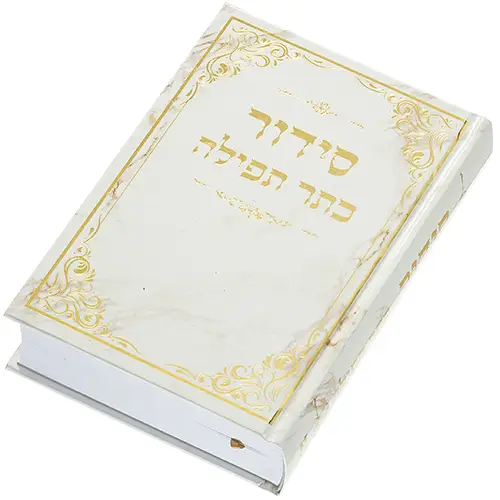
It is highly recommended that every Jewish person keep sacred Jewish texts in his or her car — ideally copies of the Book of Psalms, the Five Books of the Bible, Tanya – the foundation of Chassidic thought. – and/or a siddur (prayer book). One should also use these texts from time to time, in order to gain greater Divine protection in the course of one’s travels.
In stores that sell Jewish books, one can obtain a copy of the Chitat, a volume that contains all four of those basic texts: the Five Books of the Torah, the Book of Psalms, the Tanya, and the text of the prayer book. It is a relatively small volume that can easily fit into a glove compartment.
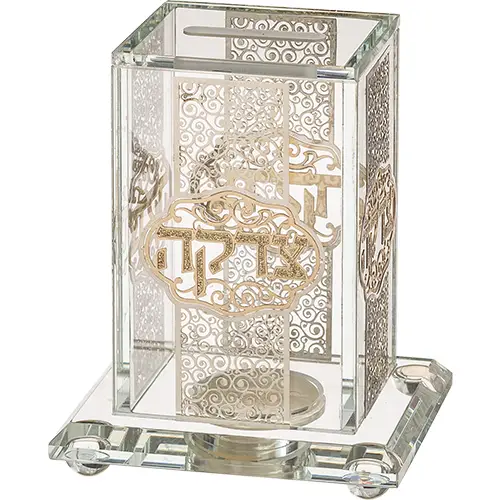
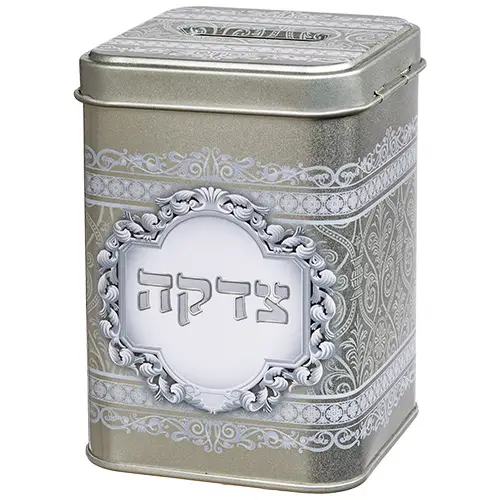
It is also recommended for every car to be equipped with a tzedakah (charity) box. Even a very small container can serve this purpose, and one should try to place a coin (or a few coins) into it at the beginning of each trip. Our tradition teaches us that acts of charity have a great life-saving power
It is important for a person driving in the dark of the night to stop every hour or two for a break.


