








Introduction
The 33rd day of the Omer Counting is called “Lag BaOmer” (the numeric value of “Lag” is 33) and falls on the 18th of Iyar. This day marks the passing of Rabbi Shimon Bar Yochai (Rashbi), author of the holy “Zohar” and father of Kabbalah. Additionally, on this day, the plague that struck Rabbi Akiva’s students ended.
Rabbi Shimon Bar Yochai
Rabbi Shimon was born to his parents Sarah and Yochai after many years of barrenness. In his adulthood, he became a ‘great Torah scholar’, gaining fame for his righteousness, deep wisdom, and primarily for the secrets of the Torah that he taught his students.
During Rabbi Shimon’s time, the Romans ruled over the land of Israel. The Talmud recounts that among their edicts at that time was a decree not to “ordain” new rabbis. Their goal was to interrupt the transmission of the Torah from generation to generation, so it would be forgotten.
One of the great righteous men living at that time, Rabbi Yehuda ben Bava by name, managed to ordain five students – one of them being Rabbi Shimon Bar Yochai – in a hidden location between the mountains. The Romans discovered this, rushed to send soldiers to arrest and kill them. Rabbi Yehuda urged his students to flee and ‘save the Torah’, but he himself could not escape due to his old age. The Romans, understanding they were too late, vented their rage on him and killed him brutally.
Rabbi Shimon was among those who vehemently opposed the Roman rule in the land of Israel. Once, during a friendly conversation, Rabbi Shimon sharply criticized their actions, saying that all the cultivation and beauty the Romans invested in the land of Israel were only for their personal benefit.
His words were reported to the king, and as a result, Rabbi Shimon was sentenced to death by the Roman authorities.
Rabbi Shimon managed to escape the death sentence that hung over him, and he spent the next 13 years – along with his son Rabbi Elazar – in a hidden cave, nourishing themselves with spring water and carob. During these years, he and his son devoted themselves to studying the Torah and its secrets.
After the ‘force of the death penalty’ expired, the emperor died and his decree was canceled, Rabbi Shimon and his son left the cave and continued with greater enthusiasm in studying the Torah and spreading it to the masses.
On Lag BaOmer – the 18th of Iyar – Rabbi Shimon Bar Yochai passed away. Before his death, Rabbi Shimon revealed many of the deep secrets of the Kabbalah to his students. His students wrote his teachings in the book of the “Zohar”, which still serves today as the foundation for Jewish Kabbalah.
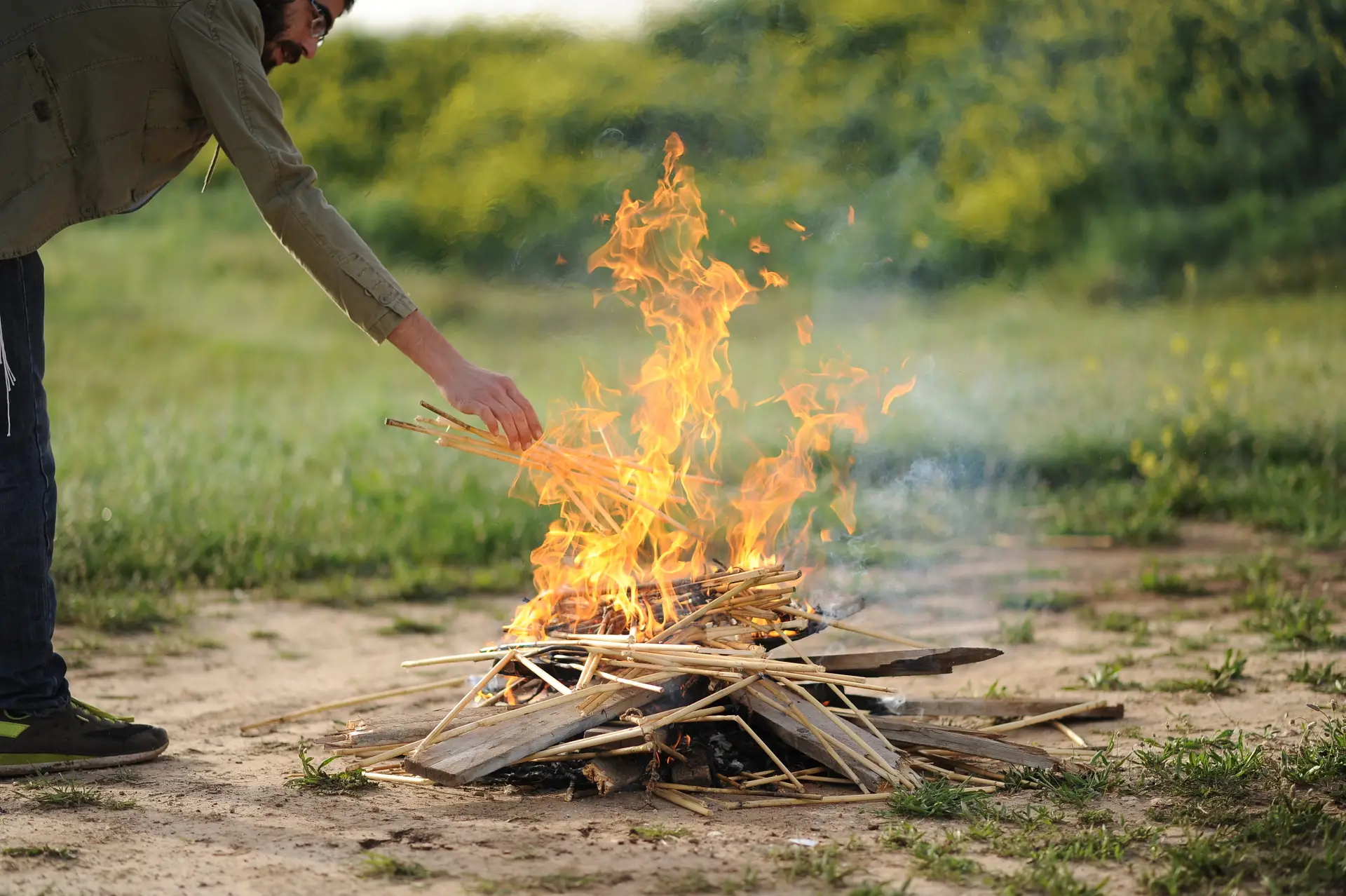
According to the explicit request of Rabbi Shimon Bar Yochai, his death day became a day of joy and thanksgiving for the great spiritual influence we received from him. The candles, bonfires, and fires lit on this day serve as ‘memorial candles’ for Rabbi Shimon, symbolizing the special spiritual light characterized by the Kabbalah.
Jewish communities abroad also follow the custom of lighting bonfires in memory of Rabbi Shimon, but the main custom is especially in the land of Israel, and particularly in Meron – where Rabbi Shimon and his son Rabbi Elazar are buried.
Special Customs for Lag B’Omer
- It is customary to increase joy on this day, and to increase the lighting of candles and bonfires.
- On the night of Lag B’Omer, it is customary to study the Torah of Rabbi Shimon, and to sing special songs composed in his honor according to the “Sod” (Mystical) doctrine and the Kabbalah.
- The parts of the “Tachanun” (supplications) are not said in prayer, starting from the Mincha prayer of the eve of Lag B’Omer.
- On this day, one should participate in parades and gatherings of Jewish children, where they are told about the students of Rabbi Akiva and Rabbi Shimon Bar Yochai, and they say verses of Torah and prayer together.
- Some teachers have the custom to go out with the students outside the city and play with them bow and arrow. This custom comes to remind that in the days of Rabbi Shimon a rainbow was not seen in the sky. According to Jewish tradition, the phenomenon of the rainbow in the cloud hints at calamity that should have arrived, but was prevented only by the covenant that God made with Noah – not to bring another flood to the world. The fact that the rainbow was not seen in the days of Rabbi Shimon showed everyone that his Torah study influenced all Jews and protected them, so there was no need for a rainbow at all.


