








Hoshana Rabbah
The twenty-first of Tishrei is the last day of Chol Hamoed Sukkot and is known as Hoshana Rabbah (“the great Hoshana”). This day is considered the conclusion of the Days of Awe and marks the final sealing of the decree that was issued in the Divine judgment of this period of the year.
On Rosh Hashanah and Yom Kippur, G-d judges every person individually, based on his deeds. On Sukkot, the entire world is judged to determine how much rainfall it will receive over the coming year. Hoshana Rabbah, the seventh day of Sukkot, is the day when the final decree is issued in this judgment. Since human life is dependent on the availability of water, we devote much of this day to prayer and repentance, but we maintain an attitude of joy and confidence that G-d will indeed heed our prayers and fulfill our requests.
When the Temple stood, the Kohanim used to circle the altar seven times on this day while reciting Hoshanot. This is the source of the custom to circle the bimah in the synagogue seven times on this day.
Our Sages teach us that G-d told our patriarch Abraham, “If your children do not receive atonement on Rosh Hashanah, it will be on Yom Kippur, and if not, it will be on Hoshana Rabbah.”
The Night of Hoshana Rabbah
It is customary to remain awake throughout the night on Hoshana Rabbah and to spend the night reading the Book of Deuteronomy and reciting the entire Book of Psalms.
After reciting each of the five sections of the Book of Psalms, one should recite the special yehi ratzon prayer designated for the night of Hoshana Rabbah, which appears at the end of the printed books of Psalms.
Many synagogues have a special program on the night of Hoshana Rabbah. At the end of these programs, each participant receives an apple in honey as an omen of a sweet new year.
The Shacharit Service
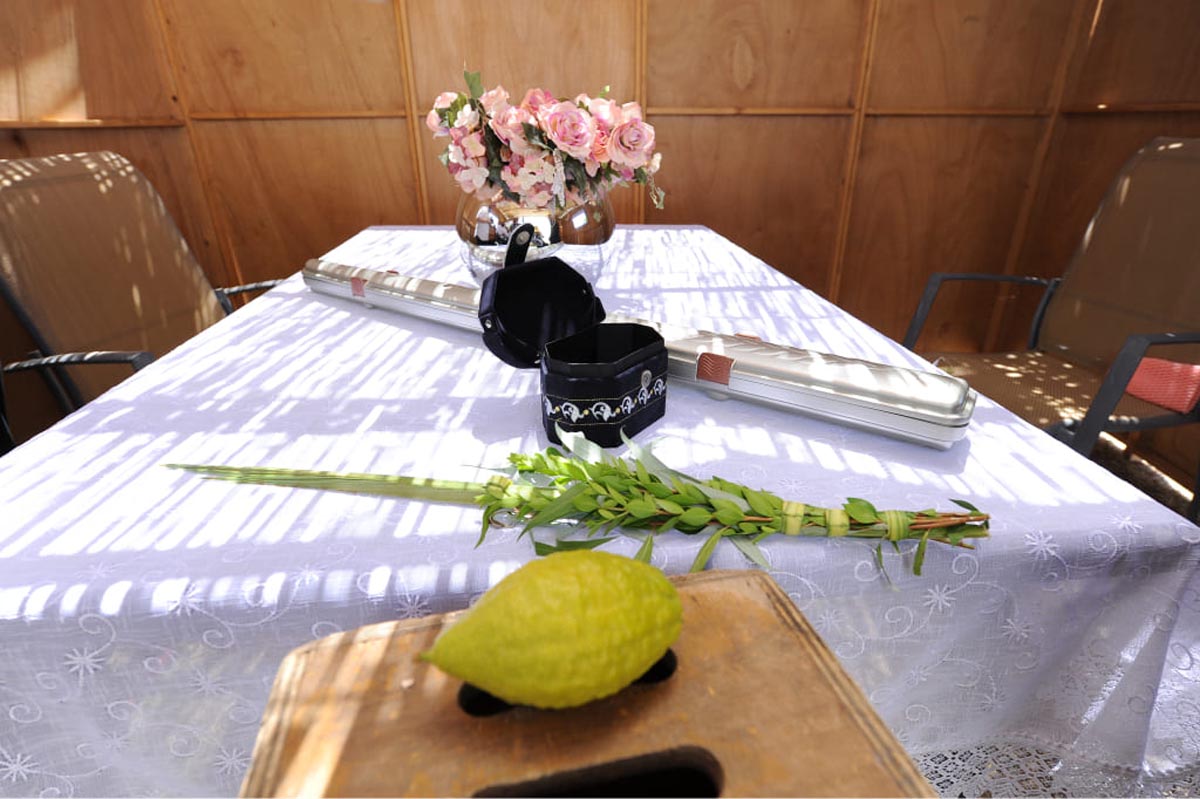
The Shacharit service of Hoshana Rabbah is the same as that of every day of Chol Hamoed, but before Hallel, the two upper rings of the lulav are removed, leaving only the three rings that hold the Four Species themselves.
The Hoshanot Service
After Hallel, all of the Torah scrolls are removed from the Ark and held at the bimah in the center of the synagogue.
The rest of the congregation—those who are not holding Torah scrolls—continue holding the Four Species in both hands while they recite each passage of Hoshanot. The congregation recites each passage on their own until the letter samech, at which point they walk in a circle around the bimah while reciting each subsequent line after the chazzan.
The six passages of Hoshanot that were recited during Chol Hamoed are repeated, with the congregation beginning a circuit of the bimah during each one, beginning with the phrase corresponding to the letter samech. A special seventh passage is then added for Hoshana Rabbah. Altogether, seven circuits of the bimah are made.
After these circuits, additional passages are recited that are unique to this day.
Beating the Aravah
At the conclusion of Hoshanot, the congregation recites the words “Kol mevaser mevaser v’omer—the voice of the herald announces and says,” three times. The chazzan then recites the Full Kaddish, the Torah scrolls are placed in the Ark, and the Four Species are put away.
Each member of the congregation then takes five willow branches that are bound together and beats them against the floor five times.
This is followed by the special Yehi Ratzon prayer that appears in the siddur, in which we beseech G-d to accept our prayers with kindness and compassion, to remove the “iron barrier” that interposes between us and Him, to seal us in the “book of good life,” to accept our complete repentance, and to shower us with goodness and kindness.
After the beating of the aravah, the used aravah branches are placed in a spot in the synagogue that has been designated by that purpose.
The practice of beating the aravah is called a “custom of the prophets” since it dates back to the era of the prophets Haggai, Zechariah, and Malachi. Kabbalah and the Arizal teach us that the deeper meaning of this practice is that it “sweetens” the “five powers” of G-d and awakens His Attribute of Mercy.
- Women and children also customarily perform the beating of the aravah and recite the special Yehi Ratzon prayer that follows it.
- Bound sets of five willow branches are generally available for purchase in any neighborhood of observant Jews.
Customs of the Day
Hoshana Rabbah is considered a holiday, and one should refrain from weekday activities on this day. At the same time, it is not subject to the special prohibitions of Yom Tov.
Festive Meal
It is customary to have a special holiday meal on this day, complete with Netilat Yadayim and the dipping of the challah in honey.
It is customary to serve kreplach (pouches of dough filled with meat) at this meal. The meat symbolizes the Attribute of Judgment, and the dough covering it symbolizes the Attribute of Mercy. This is a symbolic representation of our wish that just as the dough covers the meat, G-d should envelop us in His Attribute of Mercy.
The Blessing of “Pitka Tava”
In many communities, it is customary for people to wish each other pitka tava, a “good note.” (In Yiddish, the phrase is “a gutte kvittel.”)
Tradition teaches us that on this day, G-d delivers the “notes” bearing the decrees for the year to the “messengers” who will deliver them. This represents our final opportunity to alter the decree.
Taking Leave of the Sukkah
Toward the end of Hoshana Rabbah, one should enter the sukkah, have a light meal, and then take one’s leave of it.
- Even though there will be no more need for the sukkah after Hoshana Rabbah, it should not be dismantled until after the conclusion of Simchat Torah.
The Minchah Service
At the Minchah Service of Hoshana Rabbah, Psalm 27 is recited for the last time as part of the regular prayers, before Aleinu.


