











Introduction
If a wedding were just a party, like a high school graduation party, logistical preparations for the event would suffice. But in reality, a wedding is a celebration of the entrance into a new and different life. It’s a celebration marking the change of status (on Facebook, too) to ‘married’. Thus, overly focusing on an event that is merely an introduction to the real life may miss the point. Trying to impress your friends? It’s a waste of effort and money. No matter how big and impressive the event, it will be forgotten shortly after it takes place.
So how should one prepare?
Plan for the real life! Thinking about the responsibilities of marriage, the direction you will take in the home, the atmosphere, the values on which your children will be raised – these are the truly important things. The more you involve God in the picture, the better and more successful everything will go, with the greatest influence.
In addition, one needs to prepare for marriage in the spiritual dimension. The wedding ceremony is a spiritual and exalted event (when conducted according to the laws of Moses and Israel), but married life afterward is equally spiritual and exalted. Judaism greatly sanctifies married life in purity and is willing to make great efforts to preserve the family framework.
Especially since with marriage, real and challenging life begins, and we need a lot of help from God.
Another thing is preparing for shared life. Even if you lived together a bit, life afterward is completely different. Therefore, since the perspectives of men and women vary greatly on many life matters, and often hold completely different opinions, it is worthwhile to learn (or receive guidance from an experienced married couple) a bit about the perspective of the opposite sex so that we know how to consider them and their feelings and understand their actions and desires, and thus prevent problems in ‘peace at home’.
In addition, one should properly prepare by studying the subject of purity and married life. It is also worthwhile to increase good deeds and commandments during this period, such as giving charity, studying Torah, and so on.
Shared Life
The wedding is an event that divides a person’s life in two; before the wedding, the person lives for themselves, primarily caring and considering themselves and is only accountable to themselves and to the Creator of the Universe. With the wedding, everything turns around. First and foremost, a person is obligated to examine everything from an additional pair of eyes – their spouse’s. Every decision must be made jointly. Every experience is a shared experience, and the system of principles and value hierarchy needs to be aligned with each other.
The Recipe for a Happy Marriage
‘Family purity’ – God’s plan for managing marital life. You can read the full details in the booklet ‘Judaism’ – the life of a Jewish woman.
Wedding Date and Location
That’s it. We’re done. It’s time to move on with finding a date and a venue for the wedding.
When setting a date, also consider looking at the Hebrew calendar. There are days when weddings are not held, such as during the Counting of the Omer (at least not before Lag B’Omer) and during the ‘Three Weeks’ – from the 17th of Tammuz to Tisha B’Av. If you only consider the Gregorian calendar, you may not have these days marked as they follow the Hebrew calendar.
- Setting a wedding date that does not align with Jewish law may cause unpleasantness when you go to register for marriage with the rabbinate.
- In any case, it is advisable to precede the wedding as much as possible!
And the venue? That depends on your geographic location and economic situation. But note that venues have kosher certifications. It’s good to get married in a kosher place, as it will add blessing to your new lives, and also to respect the diversity of guests who will attend.
Marriage Registration
In the period before the wedding (no later than 45 days prior to the wedding), you must go and register at the local Rabbinate for the purpose of verifying the validity of your marriage. The Rabbinate will recognize you as legally married by Jewish law, the bride will receive guidance leading up to the wedding, and they will help you find a Rabbi to officiate (if you don’t already have a preferred choice).
Before you both go to the Rabbinate, it would be worth contacting them to clarify all their requirements. This may slightly differ from one local Rabbinate to another. Additionally, prepare a means of payment to cover the registration fee mandated by law.
You can see the documents you need to bring to open the file on the website of the Ministry of Religious Services, and make sure you have:
- Updated identification documents, including an appendix.
- Passport photos of each spouse.
- A copy of the parents’ marriage certificate.
- Payment of the marriage registration fee
Why is it important for marriage registration in the State of Israel to go through the Rabbinate?
Not only because paying the fee in the Rabbinate is cheaper than flying to Cyprus, but because of our desire to live in an organized Jewish state. If we were to open this framework to anyone interested, it would be impossible to build a Jewish life in the country when no one really knows, from a Jewish perspective, who is available and who is married, who is a Kohen (who has limitations on who he can marry), who the parents are, and so on.
Kosher marriage?! Who invented such a thing?
It is the duty of the marriage registration team in the Rabbinate to ensure that the registrants are Jewish, and to ensure that none of them are defined in the Torah as “forbidden to enter the congregation” – that is, forbidden to marry them from a Jewish perspective despite their being Jewish. When it comes to a convert, they have to verify the conversion process was done according to Halacha (Jewish law).
Choosing a Wedding Rabbi
The rabbi who will conduct your wedding ceremony will greatly influence the ceremony. The atmosphere, the impression you get from the ceremony, the participation of your guests, and more. Therefore, it is very important to pay attention to this important detail.
Most couples would prefer a rabbi who conducts the Chuppah (wedding ceremony) in a light and joyful manner. But remember, the rabbi is not a comedian, and the Chuppah ceremony is not a stand-up show. The rabbi needs to combine the seriousness, importance, and sanctity of the Chuppah with a little humor and laughter – to bring out your charm and your guests’ participation. There are many details in the Halacha about the Chuppah ceremony, and he needs to be attentive and pay attention to all the required details.
In addition, it is recommended to choose a rabbi who can explain to you and the participants in your celebration every part of the ceremony.
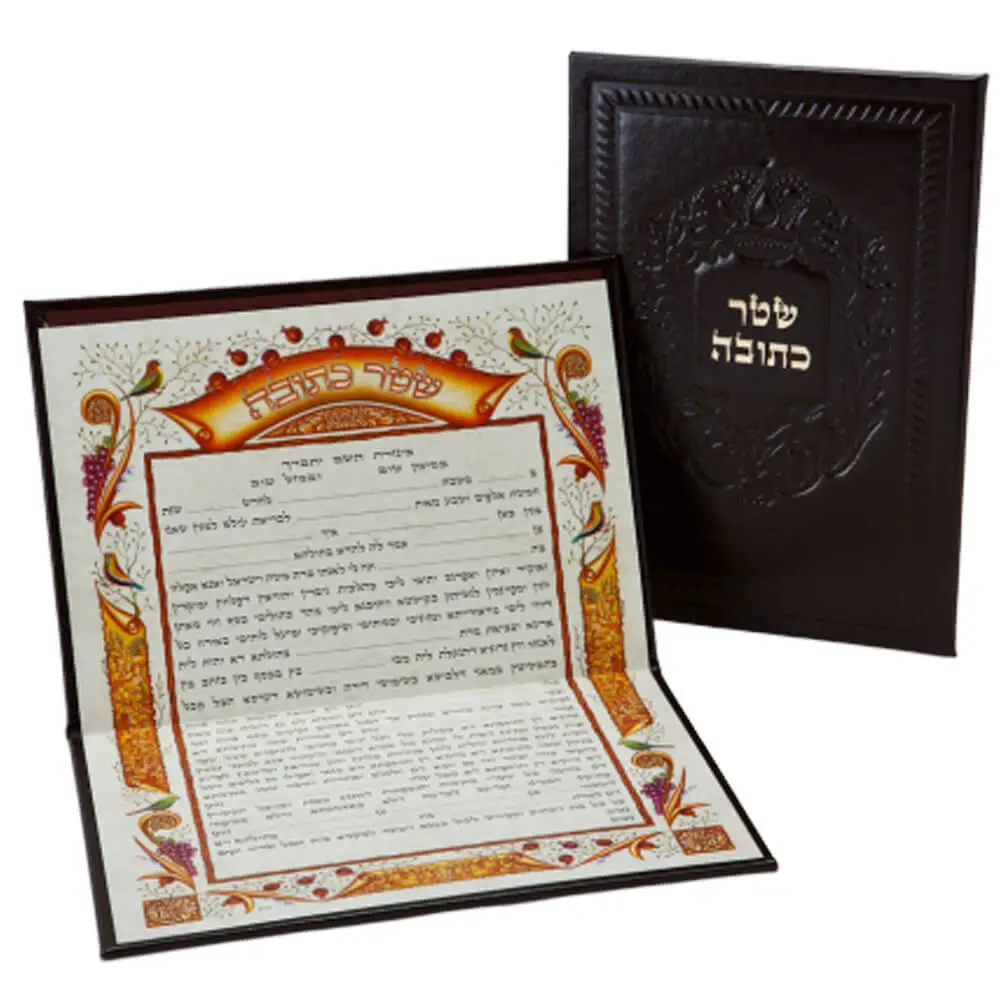
In the days before the Chuppah, it is recommended to meet with the rabbi, in order to make an initial acquaintance with you – so that it does not take place under the Chuppah. In addition, this meeting is important to coordinate your expectations of him and his expectations of you. It is advisable that in this meeting, you will also go through the process of the ceremony as well as the Ketubah document and the texts that the groom should say during the Chuppah, so that they will be familiar on your tongue and you will recite them correctly and accurately.
- Not every rabbi will be able to marry you. He must meet the criteria of the Chief Rabbinate of Israel and be approved by the religious council in which you registered for marriage. It is advisable to confirm this in advance on the website of the Chief Rabbinate of Israel, before you start a process with a rabbi who may not be able to marry you in the end…
The days before the wedding
Time does not rest for a moment, and you are in the last days before the wedding. These days are very special and have great significance, therefore, during these days it is recommended to walk around only with an escort as protection from spiritual harm that tries to harm the bride and groom before their wedding.
Groom’s Sabbath
The Sabbath before the wedding is called “Groom’s Sabbath”. On this Sabbath, the groom comes to the synagogue for morning prayers and receives an Aliyah to the Torah.
Why specifically on the Sabbath close to the wedding?
Married life challenges in many ways. A Jewish home challenges even more and requires special strengths. That is why the groom gets an Aliyah to the Torah – by doing so he receives strength from the Torah and from God, so that the home he will build will be good, successful and happy, and that he will merit to establish a blessed and upright generation.
- In Sephardic communities, the “Groom’s Sabbath” takes place on the Sabbath after the wedding.
- The bride should also take advantage of this special Sabbath, to light Sabbath candles on Friday evening and pray for a good and happy life.
Why do they throw candies at the groom after the Torah reading?
The sweet candy symbolizes our wish for the young groom to have sweet life. It of course also contributes to the joyous and special atmosphere all around…


