










Its meaning
The wedding canopy is the ceremony performed under the fabric with the four pillars – the ‘chuppah’ on the groom and the bride. There, the marriage process is carried out, and all the wedding joy afterward is an expression of happiness and joy from what has just happened under the chuppah.
The moments under the chuppah during the marriage are special moments, in which God’s presence is in the place. This is your (and all the attendees’) opportunity to ask for your future shared lives and for all your acquaintances who wish to request personal blessings from the Creator of the World.
To the chuppah ceremony arrive additional guests, even those not on your guest list, all the souls of your grandparents up to the third generation above you, come to be at your chuppah. They come to be with you together in these holy and special moments, the moments in which their descendants establish their home and continue their lineage.
What do you need to prepare for the chuppah?
- Rabbi.
- Two witnesses.
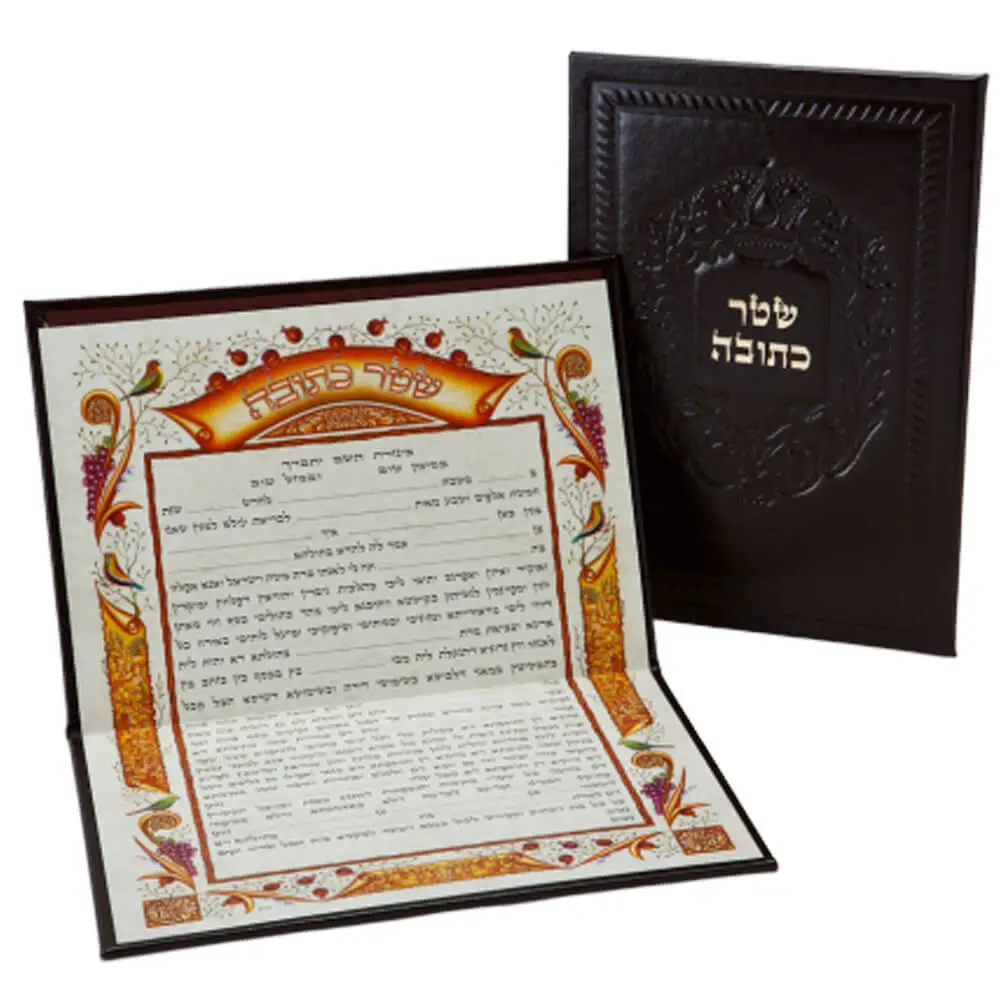
- Ketubah (marriage contract).
- Ring.
- Wine (white wine is recommended so that if, God forbid, it spills on the bride’s dress there will be no prominent stain).
- Wine cup.
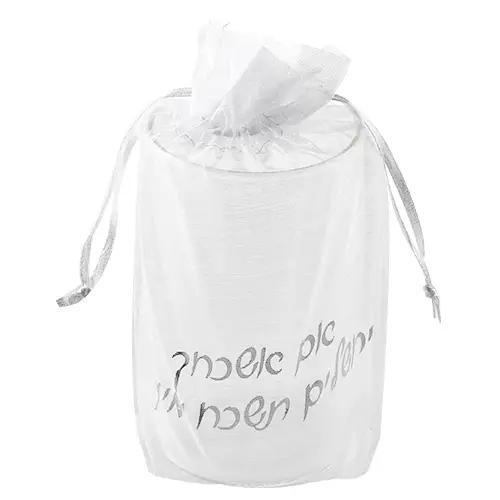
- Glass for breaking.
Under the Chuppah
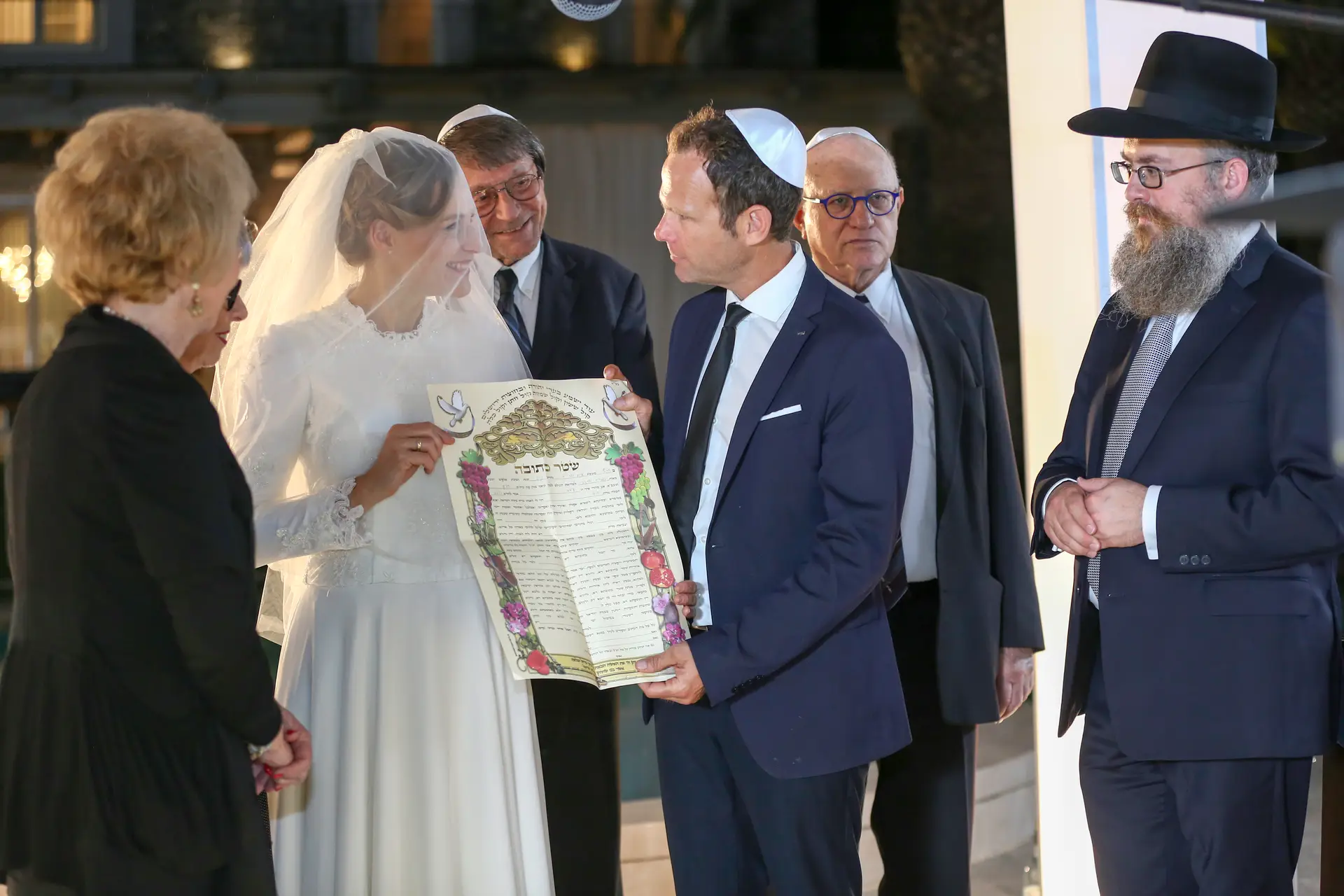
Under the chuppah already await you the parents, the marrying rabbi, and the closest family. The crowd cheers and you move forward and now you are standing next to the place that will change your life for the better.
- Without making any particular noise, try to enter the chuppah with your right foot. Have you already entered? Don’t worry about where everyone stands. For that, there is a well-organized plan.
In the center of those present will stand the groom and the bride with the bride standing to the groom’s right. Next to the groom will stand his father and next to him the bride’s father. Next to the bride will stand her mother and next to her the groom’s mother. The rest of the relatives will stand around.
The hall owners will already take care of two goblets (one for the wine and the other wrapped in silver paper which the groom will break at the end of the chuppah), wine, and a microphone, and everything is ready and can begin.
At the chuppah, there are positive signs for a happy life for the couple, for example: It is recommended to hold the chuppah outdoors, under the dome of the sky and the stars, as it symbolizes the hope and blessing that your offspring will be as numerous as the stars in the sky (have you ever tried to count them?). Additionally, this signifies a hint, a request, and a blessing that you will always be under the watchful eye of God, observing from the heavens.
Kiddushine and Nissouïme (sanctification and marriage)
The chuppah ceremony is built on two significant stages that together form the connection and the marriage: Kiddushin (sometimes also referred to as ‘Eirusin’) – performed by giving the ring from the groom to the bride, and Nissu’in – performed by bringing her under the chuppah and later into the joint home.
In the past, they waited about a year between the two stages, during which time they prepared for their shared life and living together. Meanwhile, they were obligated to each other, but from a Jewish perspective, they were still prohibited from living together.
Nowadays, these two stages almost immediately follow each other under the chuppah.
Order of the Kiddushin
- Typically, the Rabbi will open the ceremony with welcome greetings, congratulations, and a few words about the ceremony or the time in which the chuppah is being held.
- Then, wine is poured, filling the cup, and then the Rabbi makes the blessing “Borei pri hagafen” over the wine and the betrothal blessing. After that, the Rabbi will give the groom a taste of the wine and pass it to the bride’s mother who will give it to her daughter to also taste from the wine.
- When the blessings under the chuppah are recited, you should listen carefully, not speak until the end of each blessing, and respond with ‘Amen’ at the end. The Rabbi, or anyone else who blesses, does this on your behalf and therefore you must listen and respond.
- We will place the wine glass aside, and now we approach the highlight: the giving of the ring.
- To distinguish between the betrothal ceremony, which is done by giving the ring, and the marriage following it, we now read the Ketubah (marriage contract). Some will read it in its language (in Aramaic) and some will read it translated into Hebrew. There is no need to read all of it. There is no need to tell everyone the sum you wrote in the Ketubah. The amount does not reflect the magnitude of your love, and anything hidden from sight is blessed.
- Now we move to the marriage blessings. The recital of seven blessings. Usually, they will be recited by the officiating Rabbi, but if you have close friends or family members that you want to honor (and who can read the blessing well), you can honor them.
- That’s it. We finished the joyous moment, but like in every Jewish celebration, we must also remember the sadness. We have to remember the destruction of our Temple, God’s sorrow that has not been revealed to His children since then, and the hardships of all the people that have greatly intensified since the Temple’s destruction. We do this by breaking the glass with the groom’s foot.
- That’s it. The ceremony is over, the guests are wishing “Mazal Tov” (congratulations) with great joy. Now you are walking together, husband and wife, to the wedding hall for the next mitzvah meal with the joy of fulfilling your marriage commandment.
The reason for passing the wine goblet to the bride for the first time through her mother and the second time through the groom is that at the time of the first drinking, she is not yet his wife as this is before the ring is given – and from a Jewish perspective, there is a prohibition for the groom to give the bride wine when they are not married.
Only the second time, which is after the Kiddushin, can the husband give his wife to drink from the wine.
Before you receive it in your hands, the Rabbi will take the ring and show it to the witnesses, who will quickly check if it has a minimal silver value. The Rabbi will seize this opportunity (or even before this) to tell everyone who the witnesses will be – their testimony is significant in the realm of marriage.
You need to take the ring with your right hand and slide it onto the ‘finger’ of your bride, in her right hand, while you say to her (loudly, so the witnesses and all the attendees can hear), “Behold, you are betrothed to me with this ring according to the law of Moses and Israel”.
At the end of the giving, some will exclaim loudly together: “Betrothed, betrothed”. By doing so, we express that we have seen that you have done this properly and correctly.
Why do we bless the wine during the chuppah (wedding canopy)?
Wine has a special characteristic: over the years, with appropriate storage conditions, it only improves. In this, we are like wishing the young couple that your love will only grow and develop over the years (under the right ‘storage’ conditions: respect, consideration, and genuine listening…)
At the end of the blessings, the Rabbi will pass the wine glass to the groom, in order to taste again a bit of it and pass it to your wife so she can also taste a bit.
What do we do with the wine that remains in the glass after the groom and bride drank? It is accepted, that the remaining wine is a virtue for many things and especially for finding a partner. Surely you will find some of your friends who would like to finish it to the end…
Before the breaking, the groom recites the verse explaining the reason for the breaking: “If I forget thee, O Jerusalem, let my right hand forget her cunning, let my tongue cleave to the roof of my mouth if I remember thee not, if I set not Jerusalem above my chiefest joy.”
Wedding Feast
This meal is a mitzvah meal and it should be prepared honorably as befits a significant commandment; with meat, fish and other good foods. During this meal, it is a great commandment to rejoice and make the groom and bride happy. This joy has many spiritual powers and it merits the participants with God’s blessings.
Sheva Brachot (Seven Blessings)
The seven blessings that were said under the chuppah after giving the ring, we ‘extend’ for all seven days to come. Every time we sit together for a meal where we eat bread (in the presence of ten men), after we finish saying the ‘Grace After Meals’ (the blessing we say at the end of the meal), we add these seven blessings. Starting at the end of the wedding meal…
- These blessings are said over a glass of wine, and the text of the blessings can be found in any prayer book.
Investment Routine
Judaism emphasizes the relationship between husband and wife over the years, and it does not talk about theoretical ideas, but rather sets a life routine of investment in the relationship. Just as a person needs to bring sustenance to his children every month, and to water the flowers in the garden every few days, so it is proper to nurture the marital relationship regularly. How is this done?
- The first tool is the granting of attention: On every Jewish holiday, such as Passover, Shavuot, and Sukkot, it is a commandment to rejoice on the holiday, as it says in the verse: “And thou shalt rejoice in thy feast and thou shalt be only joyful”, but how does one achieve a feeling of joy? The Talmud explains: a person is obligated to make his household happy on the holiday – and how does he make them happy? The men – with wine. The women – with a new garment. The children – with candies.
A little genuine attention to others works wonders. This is one of the reasons we received the holidays from God, to bring home every few months joy and renewal, and to rejuvenate the familial relationships.
There is no need to wait for crises to think about your partner, but this is a steady way of life in which you give attention to the marital relationship.
- The second tool for rejuvenating the marital relationship is related to the great disease of our time: intensity. The relentless pressure of life causes us to distance from each other for long days – and without meeting, there is no relationship.
The chronicle of the deterioration of marriage is as follows: we don’t find time for regular meetings together, therefore we feel tension and mutual anger, and eventually lose interest in the relationship. The beginning of nurturing the marriage is thus in insisting on regular times together.
This is exactly the reason that Judaism sees a need to intervene in personal lives and imposes on couples the obligation to be together regularly every few days, even if they are in a stressful period at work or in general.
A man is forbidden to withhold from his wife her conjugal rights… as it says: “Her food, her clothing, and her duty of marriage, shall he not diminish.” The consistency and perseverance in building the marital relationship – ensure its b existence.
- The next tool can change life: not only the marital life, but also the relationship with the children. But unfortunately, it is the greatest challenge of our time: to know how to disconnect. The media has turned us into pursued people who are not really anywhere. We are not really with our partner, not really with our children, and not even really with ourselves. We are with the iPhone


