








The Festival of Sukkot
Sukkot is one of the regalim, the three central festivals in Judaism. The other two are Passover and Shavuot. Sukkot is seven days long, from the fifteenth of Tishrei until the twenty-first.
During the era of the Holy Temple, every Jew was required to travel to Jerusalem for each of these three festivals. Over the course of the holiday of Sukkot, a total of seventy bulls were sacrificed on the altar in the Temple. Today, we observe the holiday by reciting Kiddush, eating a festive meal, reciting the special prayers for the festival, and, of course, sitting in the sukkah and reciting the blessing over the Four Species, as we will explain.
The first day of Sukkot, the fifteenth of Tishrei, is considered a “Yom Tov” and is subject to all of the laws of forbidden labors and the other laws governing the observance of a Yom Tov. In the Diaspora, the first Yom Tov of Sukkot is actually two days long, as it is observed on both the fifteenth and the sixteenth of Tishrei. The days between the sixteenth and the twentieth of Tishrei are known as “Chol Hamoed,” the Intermediate Days of Sukkot, which form a sort of “mixture” of a weekday and a holiday. Just as Passover concludes with a Yom Tov, the holiday of Sukkot also concludes with another Yom Tov, which is observed on the twenty-first of Tishrei in Israel and on the twenty-first and twenty-second everywhere else. Outside of Israel, these two days are known as Shemini Atzeret and Simchat Torah, respectively, while in Israel itself, they are combined into a single day.
The Festival of Joy
The festival of Sukot is considered a particularly joyous holiday, as it is marked by a special Biblical commandment to rejoice: “You shall rejoice on your festival.” In the prayers of this holiday, we refer to it as “the time of our joy.”
The joy of Sukkot stems from the fact that it comes immediately after Yom Kippur, when we are suffused with the joyous confidence that G-d has judged us favorably and has decreed that we will have long lives.
Another reason for the joy of this holiday is that it is the “festival of gathering.” Sukkot is given this appellation because it takes place during the agricultural season in which the harvested grain is gathered in from the fields, an event that elicits great joy.
Did you know? Sukkot is the only Jewish holiday that does not have any traditional foods of its own.
The Sukkah
Getting to Know the Sukkah
A sukkah is a temporary structure in which we live throughout the seven days of Sukkot. From the standpoint of Jewish law, we are required to use the sukkah for all of the activities that we generally perform in our homes throughout the year.
The sukkah consists of two basic components: the walls and the schach. “Schach” is the name for the covering of leaves or branches that serves as the roof of the sukkah.
The Hebrew word sukkah is derived from the root word sachach, a verb that means “to shelter.” The name of the schach is likewise derived from the same root word.
There are many laws pertaining to the construction of a sukkah, its size and height, and its schach. We will focus only on the most commonly applicable laws.
Why Do We Sit in the Sukkah?
There is a Biblical commandment to sit in the sukkah for seven days, to commemorate the Clouds of Glory that G-d sent to protect the Jewish people after they left Egypt. The mitzvah to remember the Exodus from Egypt is one of the most fundamental tenets of Jewish faith, and we observe many commandments throughout the year in order to make the memory of that event a permanent part of our consciousness. The significance of the Exodus lies in the fact that it marked the birth of Jewish people as the chosen nation, who received the Torah from G-d Himself at Mount Sinai.
Even though the Exodus took place in the month of Nissan, the holiday of Sukkot is celebrated specifically in the month of Tishrei, as autumn begins and winter is on the way, because it is specifically at this time of year that it is apparent when we go out to the sukkah that we are doing so because of G-d’s commandment and not to enjoy the pleasant outdoors.
- Sitting in the sukkah is a time-related positive commandment, and women are therefore exempt from the fulfillment of this commandment.
The Laws of the Sukkah
Anyone can build a sukkah; it is not necessary to have rabbinical supervision in order to do so. Nevertheless, while a sukkah is not difficult to build, there are a few important principles to keep in mind in order to make sure that the sukkah will be kosher and will be usable throughout the festival.
When discussing the length and height of the sukkah, as well as that of the Four Species, we will refer to an ancient unit of measurement known as a tefach (fist breadth). The tefach is a value of approximately eight centimeters.
The Location and Size of the Sukkah
- The sukkah must be located beneath the open sky. It may not be built beneath a roof, an overhang, or the branches of a tree.
- There is no requirement for the sukkah to be anchored in the ground. It may be built on a wagon or boat, and even on the back of a live animal. Nowadays, it is common to find mobile sukkahs built on automobiles. Like the public sukkahs commonly erected in public places, these portable sukkahs make it possible for the public to observe the commandment of eating in a sukkah even while they are away from home.
- A sukkah should not be built in a place where its occupants will experience discomfort or distress, such as a place where there is an offensive odor, strong winds, swarms of mosquitoes, and so forth.
- The interior of the sukkah must occupy an area of at least seven square tefachim (about 56 square centimeters).
The Walls
- A sukkah must have a minimum of three walls. The wall of a house, as well as trees that are connected to each other, may serve as a wall.
- The walls of a sukkah may be built from any material, provided that the material does not produce an offensive odor and does not dry out so quickly that it will clearly not last for the seven days of the festival.
- The walls of the sukkah must be strong enough to remain standing throughout the holiday despite the presence of winds. If the walls are made of fabric, one should supplement them with beams or poles that will not sway in the wind and that run the length of the sukkah. These beams or poles should begin at the ground and end at a height of more than ten tefachim (approximately 81 centimeters) from the ground, with the gap between each of them being less than three tefachim (about 24 centimeters).
The Schach
- The schach serves as the roof of the sukkah. It must be made of something that grew from the ground but is currently detached, such as branches or reeds that are no longer attached to a tree.
- One should not use branches or reeds that have ever been used (or are currently being used) as tools or implements of any kind, such as ladders, crates, wooden surfaces, or boards for scaffolding.
- The schach must be spread out across the roof of the sukkah so that there is no empty space that is not covered by schach.
- The sukkah must be covered to the extent that even on a day when the sun is shining particularly brightly, the shady area inside the sukkah will be sufficiently greater than the area where the sunlight penetrates.
- The schach should be placed on the sukkah only after the walls have been erected.
Nowadays, special schach is available on the market that is durable enough to last for many years. This schach is woven into a mat that is made specifically for use on Sukkot. It is very easy to use and can be folded away and stored for future years.
- It is very important to remember that the schach may not be tied to the walls with any type of metal strings, cable ties, and the like. It may be tied down only with twine made from tree branches or other plant matter, such as string made from flax.
- One may not place a heavy wooden board or the like on top of the schach to prevent it from flying away. There are “kosher” means of holding the schach down, and it is important to find an appropriate technique. The poles on which the schach rests also should not be too wide; if they are, they might hide the schach.
Building the Sukkah
- One should make an effort to begin building the sukkah on the night after Yom Kippur.
- Anyone can build the sukkah, but the schach must be placed on the sukkah only by a Jewish male who is at least thirteen years old.
- The walls must be erected before the schach is placed on the sukkah.
- Many families have the custom of decorating the sukkah in order to allow the children to take part in the joyful preparations for the holiday.
The Commandment to Dwell in the Sukkah
The Torah tells us, “You shall dwell in the sukkahs for seven days.” This verse teaches us that during the seven days of the holiday of Sukkot, we must use the sukkah for all of the activities generally performed in the house: eating, drinking, sleeping, studying, and conversing with friends or family members. A person who does not have access to a synagogue should also pray in the sukkah.
Jewish law dictates that a person who feels distress or discomfort while sitting in the sukkah is exempt from doing so. For instance, when it rains there is no obligation to eat or sleep in the sukkah.
Nowadays, many communities, including the Chabad community, have the custom of not sleeping in the sukkah even if the weather is conducive. This is because Kabbalah teaches us that sublime spiritual “lights” illuminate the sukkah, and it is not appropriate to sleep in such a sacred place.
During the holiday of Sukkot, when one eats in the sukkah, in addition to the appropriate blessing for the food itself, one should recite an additional blessing: “Blessed are You, G-d, our L-rd, King of the universe, Who has sanctified us with His commandments and has commanded us to dwell in the sukkah.”
- While reciting this blessing, one should gaze at the schach overhead.
- This blessing is recited only upon eating a food made from one of the five species of grain or drinking wine. The blessing is not recited when one merely drinks water or other beverages.
Many families open their sukkahs to guests, whether individuals or other families, and invite them to be their guests for the holiday. Such a sukkah is dubbed “a sukkah of kol d’chfin.” This term is rooted in the words from the Seder night on Passover, “Kol d’chfin yeitei v’yeichol—anyone who is hungry should come and eat.”
The Four Species
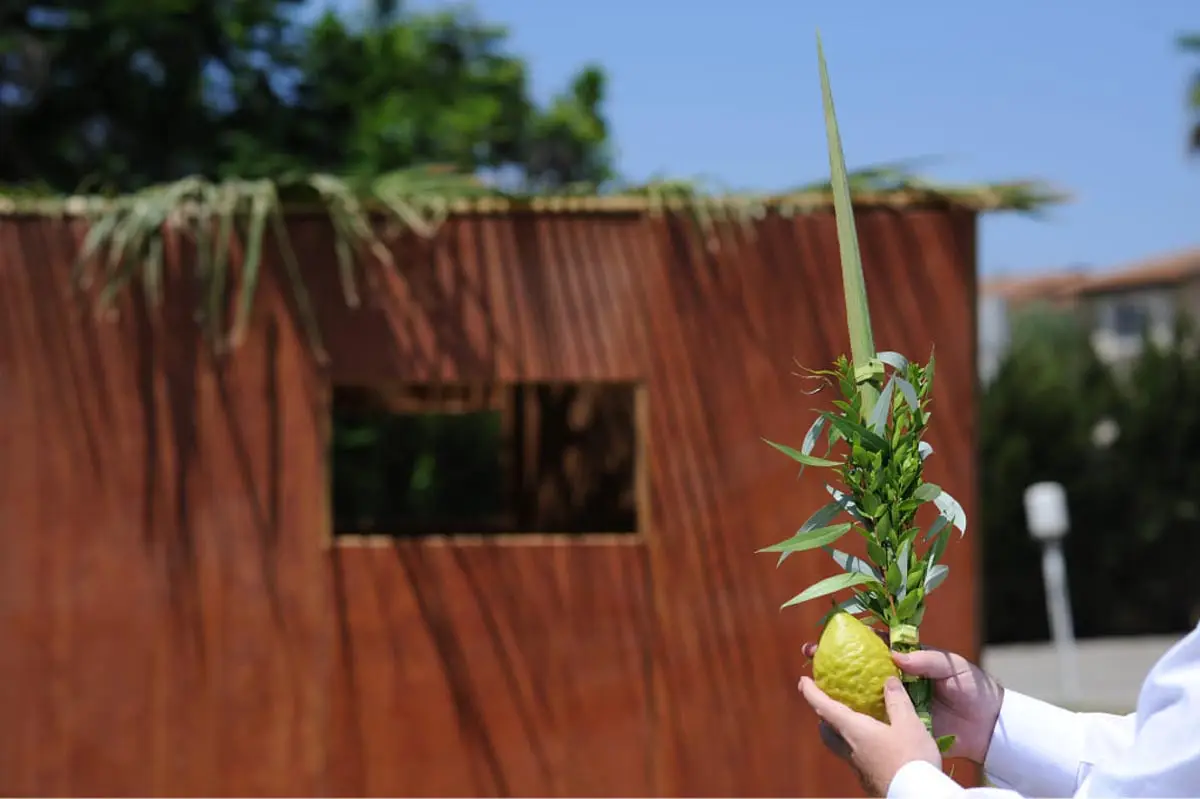
The Torah commands us to “take” four species of plants on the first day of Sukkot: an etrog (citron), a lulav (palm frond), hadassim (myrtle branches), and aravot (willow branches). Our Sages have taught us that in order to fulfill this commandment, we must bind these species together, recite a blessing over them, and shake them. In Jewish law, this ritual is known as netilat lulav, “the taking of the lulav.”
Why These Species?
There are many reasons for the fact that these four species were chosen for this commandment. Due to the lack of space to discuss them all, we will present two of the primary reasons:
- The first idea relates primarily to the appearance of each of the species, which represents a symbolic expression of a Jewish person’s spiritual service of his Creator:
The etrog, which is similar in shape to the human heart, symbolizes our plea for forgiveness for all of the improper emotions and desires that we harbored in our hearts.
The hadas, whose leaves are shaped like the human eye, symbolizes a request for forgiveness for the inappropriate things upon which we gazed.
The aravah, whose leaves are shaped like lips, is symbolic of our plea for atonement for improper speech.
The lulav, which has a single spine, attests to the fact that we, the Jewish nation, are a people with “one heart,” all of us united in the service of our Father in Heaven.
- The second idea pertains to the taste and aroma of each of the Four Species, which creates a symbolic parallel to the four classes of people within the Jewish nation. The presence of “taste” represents those Jews who have performed many mitzvot and good deeds, while the existence of a fragrance symbolizes those who have abundant Torah knowledge and who devote significant amounts of time to Torah study.
The etrog possesses both a taste and a fragrance. It can be used in the preparation of jelly, and its fragrance is also very pleasant. It represents the ideal Jew, who has performed many mitzvot and good deeds and who has amassed a good deal of Torah knowledge and spends much time involved in Torah study. Such a Jew is a person who both speaks of serving G-d properly and acts on his words.
The lulav is part of a tree whose fruit has flavor (a date tree) but does not possess a pleasant fragrance. It symbolizes people who do not have much Torah knowledge and have not learned much Torah in their lives but are nevertheless marked by their virtuous character traits and a record of performing good deeds.
The hadas, in contrast, possesses a pleasant fragrance but is tasteless. It represents those Jews whose strength lies solely in the area of Torah study, who excel in the intellectual realm but have “forgotten” the practical side of Judaism and do not engage in acts of kindness or charity.
The aravah possesses neither a fragrance nor a taste and represents a Jew who has neither Torah knowledge nor mitzvot to his credit, a person who has neither studied nor performed good deeds.
The goal of the Biblical commandment to “take the lulav” is to unite all of these four species, which are so fundamentally different from each other and represent people who have such drastically different mentalities. By doing so, we imply that all of us, despite all of our differences, are members of a single nation and the children and servants of the One G-d.
The Laws of the Four Species
The validity of each of the Four Species is governed by its own individual set of rules and criteria. The determination whether any of the species is “kosher” must be made by a person with significant expertise and extensive experience, and it is therefore very important to show the Four Species to an expert who can determine whether or not they are valid for the performance of the mitzvah.
- In order to avoid unnecessary questions or uncertainties, one should purchase the Four Species in a recognized store under the auspices of a G-d-fearing, professional, and reliable staff.
THE FOLLOWING ARE THE BASIC LAWS OF EACH OF THE FOUR SPECIES:
Etrog
The etrog grows on a low tree with large leaves; its shape is slightly reminiscent of a lemon. The lower half of the etrog contains the oketz (stem), the part that connects it to the tree. The top of the etrog often, but not always, has a pitam, an additional “tip.”
The Land of Israel is considered the global center for the growth of etrog trees and is home to many etrog orchards whose produce is exported throughout the world.
- Each individual needs only one single etrog in order to perform the mitzvah of taking the Four Species.
- The etrog must grow on a tree that is purely an etrog tree and does not contain grafts (in which parts of an etrog tree and a lemon tree have been combined).
- The minimum size of a kosher etrog is 58 cc (slightly larger than a walnut), and it must be shaped like a pyramid; the lower portion must be wider than the upper portion.
- The etrog must be free of any blemish, puncture, or crack.
- If either the pitam or the oketz falls off, the etrog is invalidated. An etrog that never had a pitam, however, is kosher.
- A dried out etrog is invalidated.
Lulav
The lulav is the “spine” of a palm frond. Even though it is only one of the Four Species, the entire mitzvah is called “taking the lulav,” largely because of its height and the fact that it is the most noticeable of the Four Species.
- Every individual needs one lulav in order to fulfill this mitzvah.
- The lulav must be fresh and green; it may not be dried out.
- The lulav must be straight, not bent.
- All of the leaves of the lulav should be closely attached to the “spine,” the central leaf of the lulav.
- The leaves of the lulav, which grow in pairs like “twins,” should be attached to each other, particularly those of the middle leaf.
- The lulav must be at least four tefachim (about 32 centimeters) long. This measurement pertains to the length of the lulav’s spine and does not affect the other leaves.
- If the tip of the center leaf of the lulav is cut, the lulav becomes invalidated.
- If the leaves of the lulav become separated, or even if the lulav grew that way all along, it is not kosher.
Hadas
- Each person must have at least three hadassim, but it is permissible to add additional hadassim in order to enhance the beauty of the mitzvah.
- The hadas must be meshulash (literally, “tripled”). This means that three leaves must emerge from every point along the stem at which leaves are attached. The hadas is considered kosher even if it is only the majority of the branch that has the meshulash status.
- The tip of every leaf must cover the spot at which the leaves above it are attached to the branch.
- Every hadas must be fresh and green; if it is dried out, it is not kosher.
- The minimum length of a hadas is three tefachim (about 24 centimeters).
- If only two leaves grow out of the branch on the same level, with the third slightly above or below them and overlapping with them, the hadas is considered a hadas shoteh (literally, a “foolish hadas”) and is invalid.
- A hadas whose leaves have dried out and begun to fall off is not kosher.
Aravah
- Two aravot are required for the fulfillment of the mitzvah of the Four Species.
- The aravah grows mainly alongside streams of water, but it is considered kosher for the mitzvah even if it grows in the desert or on mountains.
- The leaves of an aravah are shaped as if they are being pulled forward and have a smooth tip. The minimum length of a kosher aravah is three tefachim (about 24 centimeters).
- An aravah is invalidated if its tip is cut off.
- An aravah that dries out or loses most of its leaves is invalidated.
Aravot are very susceptible to drying out, and one should therefore try to keep them constantly moistened. When this is not possible, the aravot should be changed every few days.
- All of the Four Species must be the property of the person using them to discharge his obligation. If any of them is stolen or borrowed, the person is not considered to have fulfilled the mitzvah.
- It is very important to take proper care of the Four Species throughout the holiday in order to prevent them from being damaged or rendered invalid. The etrog may be wrapped in flax or in special paper, and the aravot and hadassim may be kept in a special case while wrapped in a wet cloth. Alternatively, they may be kept in a vessel filled with water throughout the holiday.
- If any of the Species become disqualified during the course of the holiday, one should replace them in order to be able to continue fulfilling the mitzvah.
The Four Species can be purchased in any Judaica store. In addition, many communities have “Four Species markets” that open between Yom Kippur and Sukkot, where merchants offer their wares for sale and allow their customers to choose their own Species from among the selection.
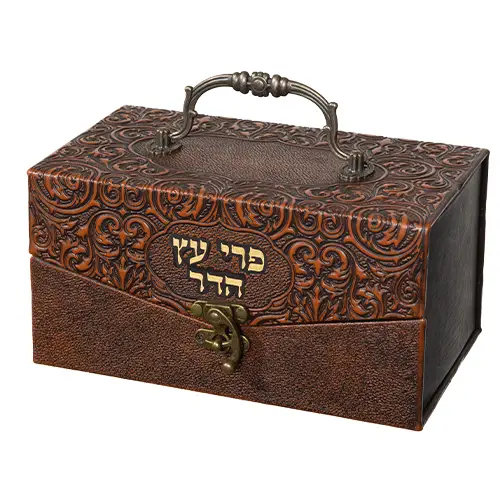
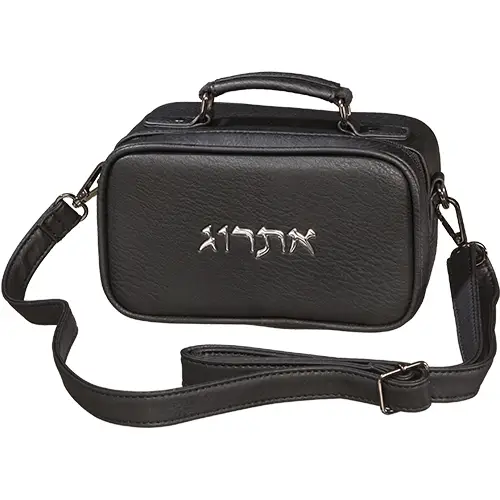
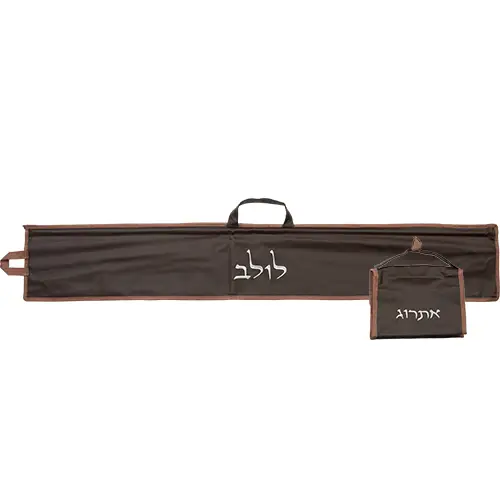
There are special long cases for the lulav and boxes for the etrog that can be purchased; these items make it easier to carry the Species to the synagogue.
The Day Before Sukkot
Preparations for the Holiday
One should prepare for Sukkot by bathing, putting on one’s holiday finery, cutting one’s nails and taking a haircut.
One should also enter the sukkah on the day before the holiday in order to make certain that it is clean and to see if there is anything that needs to be fixed before the holiday begins.
It is preferable to refrain from having a large, festive meal on the day before the holiday. Exercising care in this regard will enable us to have a proper appetite for the first meal in the sukkah, so that we will be able to properly enjoy that meal.
Preparing the Four Species
After midday on Erev Sukkot, it is customary to go into the sukkah in order to prepare the lulav, the hadassim, and the aravot.
- As we have already mentioned, the mitzvah is performed with one etrog, one lulav, two aravot, and three hadassim. (One may add additional hadassim if desired.)
- One should prepare five rings made from lulav leaves and use them to tie the hadassim and the aravot together with the lulav.
- Two of the rings are fastened on the lulav itself, one on the upper part of the lulav and one on its lower section.
- One should then hold the lulav with the spine facing him and place the hadassim and the aravot on the lulav in the following manner: One hadas is placed on the right side of the lulav, another one on the left, and the third in the middle. One aravah should be placed on the right side of the lulav and the other on the left. Efforts should be made to ensure that the hadassim cover the aravot as much as possible.
- The entire bundle is them tied together with the other three rings, which should be placed on the lowest tefach (about eight centimeters) of the lulav.
- The hadassim and aravot should be placed alongside the bottom of the lulav, so that when the lulav is held, the hadassim and aravot will also be in the hands.
- The hadassim must be placed higher than the aravot, and the lulav itself must extend at least one tefach (about eight centimeters) above the hadassim.
- One may replace the hadassim or aravot over the course of the holiday, but it is not necessary to replace them every day.
Eruv Tavshilin
In the Diaspora, when Sukkot begins on Thursday, the two days of Yom Tov are followed immediately by Shabbat. In such a situation, the Eruv Tavshilin procedure is followed. A loaf of bread (or matzah or challah) and a cooked food are set aside on the day before the festival and designated to be eaten on Shabbat.
For more information about the Eruv Tavshilin, see above in the section on Rosh Hashanah.
The Eruv Tavshilin makes it possible for us cook, fry, and engage in other types of food preparation on Yom Tov for Shabbat. One should remember to prepare a flame before Yom Tov that will remain lit so that it can be used for food preparation.
Candle Lighting
Our Sages decreed that women should light candles in every home before every Shabbat and holiday in order to bring honor to these sacred days and in order to make sure that the home will be properly illuminated so that there will be an atmosphere of comfort and tranquility for the members of the household.
- Before lighting the candles, a woman should recite the Minchah service and place a coin in the charity box.
- A single girl lights one candle from the time she begins to speak until she is married.
- A married woman lights two candles, plus one additional candle for each of her children.
The candles should be lit before sunset even though it is permissible to transfer fire from an existing flame on Yom Tov. One should ascertain the exact time for candle lighting in advance. These times can be found on calendars, on the Internet, and on our web site.
- If possible, it is preferable to light the candles in the sukkah itself. However, whenever there is a concern that it might be unsafe to do so, one may light the candles inside one’s home. In such a situation, it is preferable to light them in a place where they can be seen while one is reciting Kiddush in the sukkah.
- After lighting the candles, a woman should cover her eyes with her hands and recite two blessings:
- “Blessed are You, G-d, our L-rd, King of the universe, Who has sanctified us with His commandments and commanded us to kindle the light of the festival.”
- “Blessed are You…Who has kept us alive, sustained us, and brought us to this time.”
- Once she has lit the candles, a woman has ushered in the sanctity of the festival and should refrain from any forbidden labors, as on Shabbat.
Before going to the synagogue, one should perform one final inspection of the sukkah to make sure that it is clean, the electric lights are working, and everything is ready for the holiday.
The Minchah Service
The usual Minchah service is recited: Korbanot, Ashrei, the Shemoneh Esrei, and the chazzan’s repetition. Tachanun is not recited (and, indeed, it is not recited at all during the days between Yom Kippur and Sukkot). The service concludes with Psalm 27 and Aleinu.
The Maariv Service
Maariv begins with “A Song of Ascents” and Barchu, followed by the Shema and its blessings as they are recited on Shabbat. The Shemoneh Esrei for the Three Festivals is then recited, with the holiday of Sukkot identified as “the time of our joy.” Maariv concludes with Aleinu.
The Festive Meal
Kiddush
After returning from the synagogue, the head of the household enters the sukkah, along with the rest of his family, and recites Kiddush.
The Kiddush Procedure: The Kiddush cup is lifted in the right hand and transferred to the left. The left hand is then used to place the cup in the middle of the palm of the right hand, with the four fingers folded over it and the thumb resting alongside it. The cup should be held at least three tefachim (about 24 centimeters) above the table.
Before Kiddush begins, one should gaze at the lit candles. During the blessing of “Who creates the fruit of the vine,” one should gaze at the wine in the cup.
The text of Kiddush for Sukkot consists of the blessing of “Borei pri hagefen–Who creates the fruit of the vine,” followed by the blessing of “Mekadesh Yisrael v’hazmanim- -Who sanctifies Israel and the times,” and then the blessing of “Asher kidshanu b’mitzvotav v’tzivanu leisheiv basukkah- -Who has sanctified us with His commandments and commanded us to dwell in the sukkah.” We then conclude with the blessing of shehecheyanu.
- The person reciting Kiddush should drink at least a reviit (86 mls) of wine from the cup. Wine should be distributed to everyone else present so that they, too, can taste from the wine in the Kiddush cup.
- After the head of the family recites Kiddush, every male who is thirteen years of age or older may recite his own Kiddush.
Kiddush is followed by Netilat Yadayim and the blessing over bread, which is recited over two whole loaves of challah.
The Ushpizin
Jewish tradition teaches us that when we sit in the sukkah, we are visited on every day of the holiday by some very distinguished spiritual guests, the seven ushpizin: Abraham, Isaac, Jacob, Moses, Aaron, Joseph, and King David.
Ushpiz (ushpizin in plural) is the Aramaic word for “guest.”
Every day, these seven spirits visit every single Jew in his sukkah, but on each day, a different one of the Ushpizin acts as the leader. The “main” Ushpiz on the first day of Sukkot is Abraham; on the second day, it is Isaac.
- There is a common and beautiful custom to tell over a Torah thought on every day of the holiday that is associated with the principal guest of that day.
The chassidim of Chabad have a tradition that along with our holy Patriarchs, there is another group of “Ushpizin” who also come every night, headed each night by a different member of the group. These Ushpizin are the great Rebbes who were the leaders of the chassidut: the Baal Shem Tov, the Maggid of Mezeritch, the first Lubavitcher Rebbe, the middle Lubavitcher Rebbe, the Tzemach Tzedek, the Rebbe Maharash, the Rebbe Rashab, the Rebbe Rayatz, and the Lubavitcher Rebbe.
The Festive Meal
On the first night of Sukkot, there is a Biblical requirement to eat at least a kezayit (about 27 grams) of bread or challah in the sukkah.
Men, women, and children who do not recite the Kiddush on their own are required to recite the blessing on sitting in the sukkah after the blessing over bread, before they partake of the challah.
- It is customary to dip the challah in honey, but salt is also kept on the table.
Even though rain may exempt us from eating in the sukkah at any other point during the holiday, the requirement to eat this quantity of bread in the sukkah remains in effect on the first night even in the face of torrential rainfall.
- Sukkot should be marked as a joyous occasion. One should drink wine, partake of delicious foods, and sing joyously.
- The following additions are made to the Grace After Meals:


