









Shemini Atzeret
On the twenty-second of Tishrei, after the seven days of Sukkot, we experience an additional Yom Tov known as “Shemini Atzeret” and “Simchat Torah.” Even though this day follows immediately after the holiday of Sukkot, it is considered an independent festival. There is no requirement on this day to sit in the sukkah or to take the Four Species.
The name “Shemini Atzeret” originates in the verse “Bayom hashemini atzeret tihyeh lachem—on the eighth day, you shall have a day of ceasing [work].” This verse instructs us to refrain from forbidden labors on the eighth day from the beginning of Sukkot.
Simchat Torah
Every Shabbat, we read the weekly Torah portion in the synagogue from a Torah scroll. On Simchat Torah, we read the final portion of the Torah, Vezot Habrachah (the end of Deuteronomy) and immediately begin reading the Torah again from the first portion of the Book of Genesis.
The name of this holiday, “Simchat Torah” (“the joy of the Torah”) stems from the simple fact that we conclude our annual cycle of Torah readings on this day and begin it again anew. This is a source of great joy.
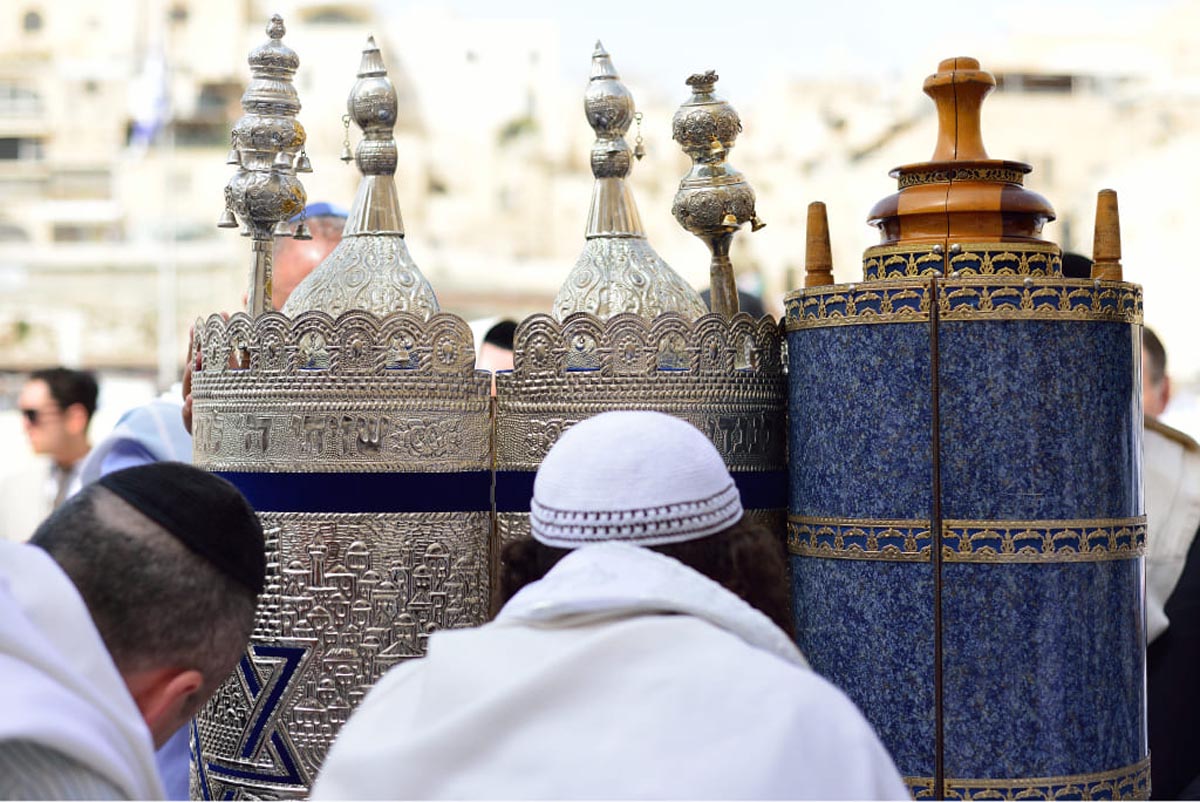
On the night of this holiday, as well as on the next day, we recite Kiddush and have a joyous meal to celebrate this occasion. We also rejoice and dance with the Torah scrolls in an even greater manifestation of joy than the simchat beit hashoevah.
It is interesting to note that on Simchat Torah, we do not hold Torah lectures or set aside time for longer Torah study sessions than usual, even though it would have seemed that such things would be the greatest expression of joy over the Torah.
Instead, we dance with Torah scrolls that are closed, even ones that are disqualified for use for the public readings. By doing so, we express the greatest possible joy over the Torah. We convey the message that there is no distinction between a person who learns more and a person who is “weaker” in his Torah study, that there is no qualitative difference between a Jew who is a Torah scholar and a simple Jew or one who is far from the path of Torah observance.
On Simchat Torah, we express the inner essence of the Jewish people. Every member of our nation belongs to the Torah. We are all nourished from it, we all have a portion in it, and no one has a monopoly over it.
In Israel, both Shemini Atzeret and Simchat Torah are observed on one day: the twenty-second of Tishrei. In the Diaspora, however, the holiday is two days long; the first day is called Shemini Atzeret and the second is Simchat Torah. On Shemini Atzeret in the Diaspora, it is customary to continue eating and drinking in the sukkah, albeit without reciting a blessing over it.
Candle Lighting
Before the holiday begins, women and girls light candles.
- A woman should recite the Minchah service and place a coin in a charity box before lighting candles.
- The candles should be lit before sunset even though it is permissible to light a fire from an existing flame even on the holiday itself. One should find out the exact time for candle lighting in advance; this information is available on Jewish calendars, on the Internet, and on our web site.
- Once she has lit candles, a woman has taken on all of the restrictions of the holiday and is prohibited from engaging in any of the forms of forbidden labor.
Two blessings are recited when the candles are lit:
- “Blessed are You, G-d, our L-rd, King of the universe, Who has sanctified us with His commandments and commanded us to light the candle of Yom Tov.”
- The shehecheyanu blessing.
- Since it is permissible to cook on Yom Tov on a preexisting flame, before lighting candles a woman should prepare a flame that will burn throughout the day and can be used for cooking, frying and the like.
- Yizkor is recited in the synagogue on Shemini Atzeret. Consequently, a person who has lost one or both parents should kindle a memorial light in their memory before this holiday.
In the Diaspora, when Shemini Atzeret falls on Thursday, the two-day festival will be followed immediately by Shabbat. One should therefore prepare an Eiruv Tavshilin, a procedure which we have explained at length above.
The Maariv Service
Maariv begins with “A Song of Ascents,” followed by the usual Maariv of the Shabbat and holidays. In place of the usual Shemoneh Esrei, the special Shemoneh Esrei of the Three Festivals is recited.
At the conclusion of the prayer service, before Aleinu, we conduct the Hakafot.
In some synagogues, the congregation eats the holiday meal together before the Hakafot. In others, everyone goes home to eat with their families and returns to the synagogue for Hakafot only after the meal has concluded. In either situation, one should recite Kiddush before the meal.
The Hakafot Procedure
The Hakafot begin with the entire congregation reciting Atah Hareita together three times. It is customary to distribute the verses among the congregants so that many people can have the honor of reciting a verse aloud and having the congregation repeat it after them.
The Ark is then opened, and all of the Torah scrolls inside it are taken out. Even the scrolls that contain mistakes that disqualify them for use for the public reading are taken out for the dancing on Simchat Torah.
At the beginning of each Hakafah, one of the congregants is chosen to read aloud the special verses for that Hakafah. He walks around the bimah, with the rest of the congregation following him and repeating the verses after him aloud. Each Hakafah begins with the words, “Please, G-d, save now; please, G-d, grant success now,” and then continues with another three lines.
The verses of the Hakafot form an alphabetical acrostic; most of the Hakafot represent three letters of the alphabet.
After the chazzan has concluded the alphabetical verses, everyone completes the circuit around the bimah while reciting the additional verses that are printed in the siddur: “The Torah of G-d is perfect, it restores the soul,” and so forth.
Once this series of verses has been concluded, the congregation begins dancing joyously while holding the Torah scrolls. The gabbai announces the end of each Hakafah in turn.
Altogether, seven Hakafot (circuits of the bimah) are completed over the course of this ritual. The Torah scrolls are then returned to the Ark.
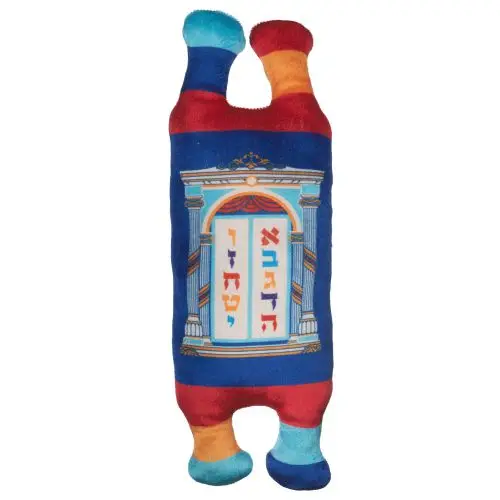
- There is a very praiseworthy common practice of bringing small children to the synagogue to dance and celebrate during the Hakafot. Some people provide the children with small toy Torah scrolls or colorful flags associated with Simchat Torah, in order to inculcate love for the Torah in their impressionable hearts.
After the Hakafot have concluded, the prayer service concludes with Aleinu, and everyone wishes each other a chag sameach (happy holiday).
“Those forty-eight hours [in the Diaspora; in Israel it is only twenty-four hours] of Shemini Atzeret and Simchat Torah must be valued greatly. One can draw from them buckets and barrels full of treasures, both spiritual and material, all by means of the dancing” (quote from Rabbi Sholom Dov Ber Schneerson).
The Festive Meal
Anyone who has not yet recited Kiddush must now recite it over wine.
The meal begins with Atkinu Seudata and the standard Kiddush of Yom Tov. We recite the blessing over wine, as well as the shehecheyanu blessing in honor of the new holiday.
- It is customary for every man to make Kiddush for himself on this day, rather than fulfilling his obligation by listening to someone else.
Kiddush is followed by Netilat Yadayim and the blessing over two uncut loaves of challah, followed by the holiday meal.
Two additions are made to the Grace After Meals:
- Yaaleh V’Yavo
- The special Harachaman for holidays: “May the Merciful One cause us to inherit the day that is all good.”
The Shacharit Service
The Shacharit service of the morning of this holiday follows the standard pattern of the Shacharit of Shabbat: Korbanot, Pesukei Dezimrah, and the Shema and its blessings.
For Shemoneh Esrei, we recite the standard text for the Three Festivals, incorporating the appropriate passages for Shemini Atzeret.
The Blessing of the Kohanim
Unlike on other holidays, on Simchat Torah the Kohanim bless the people during the chazzan’s repetition of Shacharit. This is because it is forbidden for a Kohen who is drunk to recite the Blessing of the Kohanim, and there is no guarantee of the state in which he will be at the conclusion of the Hakafot.
During the Blessing of the Kohanim, we recite the special prayer for dreams that begins with the words, “Master of the Universe.” This prayer is recited by the congregation while the Kohanim sing a tune at the conclusion of the Blessing of the Kohanim.
Shacharit is followed by the Whole Hallel and the Song of the Day. A kiddush is then held in the synagogue.
Kiddush and the Daytime Hakafot
Kiddush consists of the passage of Atkinu Seudata, followed by the verse “These are the appointed times of G-d…” and then the blessing over wine.
All of the Torah scrolls are removed from the Ark, and the verses of Atah Hareita are recited three times once again. The Hakafot with the Torah scrolls around the bimah then begin with singing, joy, and dancing.
During the day, we do not circle the bimah seven times. Instead, we complete only three and a half circuits, reciting a passage for an entire Hakafah at each half-circuit. At the conclusion of each half-circuit, the end of a Hakafah is announced. After three and a half circuits, we conclude our recital of the text of the Hakafot.
The Torah Reading
The Torah reading follows the Hakafot. The Ark is opened, and three Torah scrolls are taken out.
In the first Torah scroll, we read Vezot Habrachah, the very final portion of the Torah. It is customary for all of the congregants in the synagogue to be honored by being called up for this reading. Since many people may be present, a group of people can be called up for each reading, and they can recite the blessings over the Torah reading in unison.
Kol Hanearim
Unlike every other day on which the Torah is read, on Simchat Torah even children are called up to the Torah. Each child is called by his own name and his father’s name, and a large tallit is held aloft over them. The children all stand beside the Torah scroll and recite the blessings aloud and in unison, with the help of an adult. This aliyah is called “Kol Hanearim” (literally, “all the youths”). In general, this is the fifth aliyah of Vezot Habrachah.
Chatan Torah
The person who is called up for the sixth portion of the Torah reading, with which we conclude the Torah portion of Vezot Habrachah—and thereby conclude the reading of the entire Torah—is known as the chatan Torah (groom of the Torah).
The gabbai calls this person up to the Torah with a special lengthy, rhyming passage that begins with the words, “With the permission of the great, mighty, and awesome G-d.” The name of the honoree and his father’s name are included in this passage, and he is summoned to approach the Torah as a representative of the entire congregation.
The final section of Vezot Habrachah is read. After the reader concludes the final words of the Torah, “before the eyes of all of Israel,” the entire congregation shouts together, “Chazak, chazak, venitchazeik—Be strong, be strong, and let us be strengthened.”
- Hagbahah is then performed on this Torah scroll, and it is placed on the side, next to the third scroll. The second scroll is placed on the reader’s table.
Chatan Bereishit
With the second scroll, we begin reading the Torah again from the beginning, from the Torah portion of Bereishit (the beginning of the Book of Genesis). The honoree for this Torah reading is known as the chatan Bereishit (groom of Bereishit).
This honoree is also called up with a special rhyming formula that begins with the words, “With the permission of He Who is exalted over every blessing and song.” The honoree’s name and his father’s name are inserted into this passage, which invites him to approach the Torah as a representative of the entire congregation and describes the great privilege he has received by coming to the Torah for such an important reading.
During this Torah reading, we read the Torah’s entire account of the creation of the world in the Book of Genesis. The congregation joins in at the conclusion of the Torah’s account of the creations of each day. For instance, when the reader finishes the words, “G-d called the light day, and He called the darkness night,” the congregation then recites aloud the next words, “It was evening and it was morning, one day.” The same applies to the other days of creation.
When the reader finishes his reading of the sixth day, the congregation recites aloud the words, “It was evening and it was morning, a sixth day,” and then continues with the following verses, beginning with the words, “The heavens and the earth and all their legions were completed,” until the conclusion of the reading, “that G-d created to do.”
- After the Torah reading, the Torah scroll is lifted and placed beside the first scroll. The third scroll is then placed on the reader’s table.
Maftir and Haftarah
For the reading from the third Torah scroll, one person is called up for Maftir. The reading from this scroll deals with the sacrificial offerings of the holiday and is taken from the Torah portion of Pinchas.
After Hagbahah, the blessing on the Haftarah is recited by the honoree, who then proceeds to read the Haftarah. The Haftarah is taken from the beginning of the Book of Joshua and describes Joshua’s actions after the death of his mentor, Moses.
After the Haftarah, the honoree recites the concluding blessings over the Haftarah, ending with the blessing “For the Torah and for the service,” in which he refers to the holiday as “the day of Shemini Atzeret, this holiday.”
“Sisu V’Simchu”
After the conclusion of the Torah reading and the Haftarah, the congregation recites together the passages “Sisu v’simcha b’Simchat Torah—Rejoice and be glad on Simchat Torah,” “Hitkabtzu malachim—Gather, angels,” and “Ashreichem Yisrael—Fortunate are you, Israel.”
When Shemini Atzeret coincides with Shabbat, we recite Yekum Purkan and Mi Shebeirach at this point.
Yizkor
The next portion of the prayer service is the Yizkor prayer, a special prayer in memory of the souls of departed relatives. It begins with the words “Yizkor Elokim—May G-d remember.”
Anyone who still has two living parents is required to leave the synagogue for this prayer. The only people remaining in the synagogue are those who have been lost one or both parents.
This prayer asks G-d to “remember” the soul of the departed and to allow the soul to enter the Garden of Eden. The person reciting the prayer promises to donate money to charity in memory of the deceased after the holiday concludes.
- At the end of Yizkor, all of the congregants return to the synagogue.
The Mussaf Service
Next, Ashrei is recited and the three Torah scrolls are returned to the Ark. This is followed by the Mussaf service of the Three Festivals.
Before Mussaf, it is customary for the gabbai to remind the congregation that during this prayer, we will begin to recite “mashiv haruach u’morid hageshem—He causes the wind to blow and brings down the rain,” in the Shemoneh Esrei, in place of the phrase “morid hatal—He brings down the dew,” which is used during the summertime.
The Prayer for Rain
At the conclusion of the silent Shemoneh Esrei, one congregant opens the Ark and the chazzan begins a special repetition of the Shemoneh Esrei known as the “prayer for rain.” In this prayer, we praise G-d for the might He displays by bringing down rain, and we pray to Him to cause rain to fall at the proper time, throughout the winter months.
The prayer for rain concludes with three requests that the chazzan recites aloud, and to which the congregation responds “Amen”:
“For a blessing and not for a curse.” “For life and not for death.”
“For satiety and not for hunger.”
The chazzan then continues his repetition of the Shemoneh Esrei, which is followed by Ein K’Elokeinu, Aleinu, and the Six Remembrances, after which we recite the daily portion of Psalms.
- Beginning with this Mussaf service, we include the phrase “mashiv haruach umorid hageshem” in every Shemoneh Esrei of every prayer service. This continues until Passover, exactly half a year later.
- In the weekday prayers that follow the holiday, we still continue using the phrase “vetein brachah—and place a blessing” in the blessing of the Shemoneh Esrei that begins with the words Bareich Aleinu (Bless for us). Even though this phrase is the summertime version of the prayer, we continue using it until the seventh of the month of Cheshvan, when we switch to the phrase, “vetein tal u’matar l’brachah—place dew and rain for a blessing.” (In the Diaspora, this change occurs on the fourth of December.)
The Holiday Meal
Kiddush is recited over wine, following the procedure for the Three Festivals. We then perform Netilat Yadayim and recite the blessing on bread over two uncut loaves of challah.
Yaaleh V’Yavo and Harachaman are added to the Grace After Meals.
The Minchah and Maariv Services
Minchah follows the same pattern as that of Shabbat: Ashrei and Uva Letzion, followed by the Shemoneh Esrei of a festival.
Maariv is the standard weekday Maariv, with the addition of Atah Chonantanu in the Shemoneh Esrei.
Havdalah
The text of Havdalah is the same as that which we use on Motzaei Shabbat. This Havdalah, however, is performed only with a cup of wine.
The Second Hakafot
In Israel, it is customary to have Hakafot on the night after Simchat Torah, as well. These Hakafot are called Hakafot Sheniot (Second Hakafot). This custom indicates that the Jews of Israel identify with their brethren in the Diaspora, who celebrate Simchat Torah only after the conclusion of Shemini Atzeret.
At these Hakafot, as well, two Torah scrolls are taken out and the verses of Atah Hareita are recited. In many places in Israel, the local municipality arranges the Hakafot, which are held in the center of town with musical accompaniment and are well attended by a large crowd.


