












Isru Chag
The day after Sukkot, the twenty-third of Tishrei, is known as “Isru Chag.” The same term is applied to the day following each of the other Festivals, Passover and Shavuot.
This term originates in a verse in Psalms, “Isru chag ba’avotim ad karnot hamizbeiach—Bind a festival with cords until the corners of the altar.”
In the most straightforward sense, this verse means that the sheep that will be brought as a sacrificial offering on the festival should be bound with chains near the corners of the altar.
Our Sages, however, cited this verse to encourage people to continue celebrating each festival for another day after its conclusion. With regard to this, the Sages state, “Anyone who makes an addition (issur) to the holiday with another day of eating and drinking is viewed as if he built an altar and offered a sacrifice upon it.”
When the Holy Temple still stood, every Jew was obligated to observe the commandment of aliyah l’regel, literally, “ascending on the Festival.” This precept requires every Jew to travel to Jerusalem on Passover, Shavuot, and Sukkot, the holidays that are collectively known as the “Three Festivals.” Some of the people who made this pilgrimage would remain in Jerusalem on the day following the festival, as well, and this led to the custom of celebrating an additional day after the holiday has ended.
Nowadays, we customarily distinguish Isru Chag from other days in the following ways:
- We do not fast on Isru Chag.
- We endeavor to have large, festive meals on this day.
- We return to our regular prayer services and wear tefillin, but Tachanun is still omitted
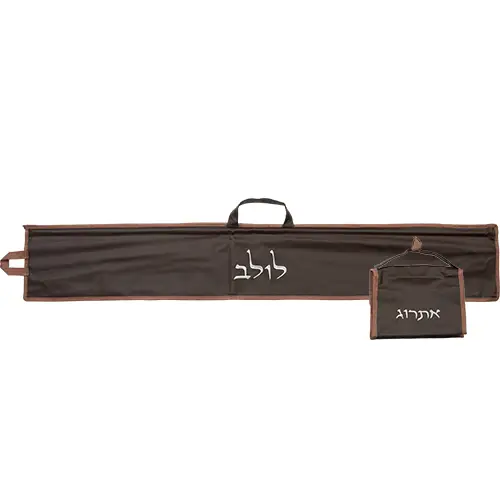
We have now finished using the Four Species. What do we do with them now? The lulav should be put away until the day before Passover, when it is burned together with the chametz. The etrog can be made into jelly, and the hadassim can be used as fragrant herbs for Havdalah.


