







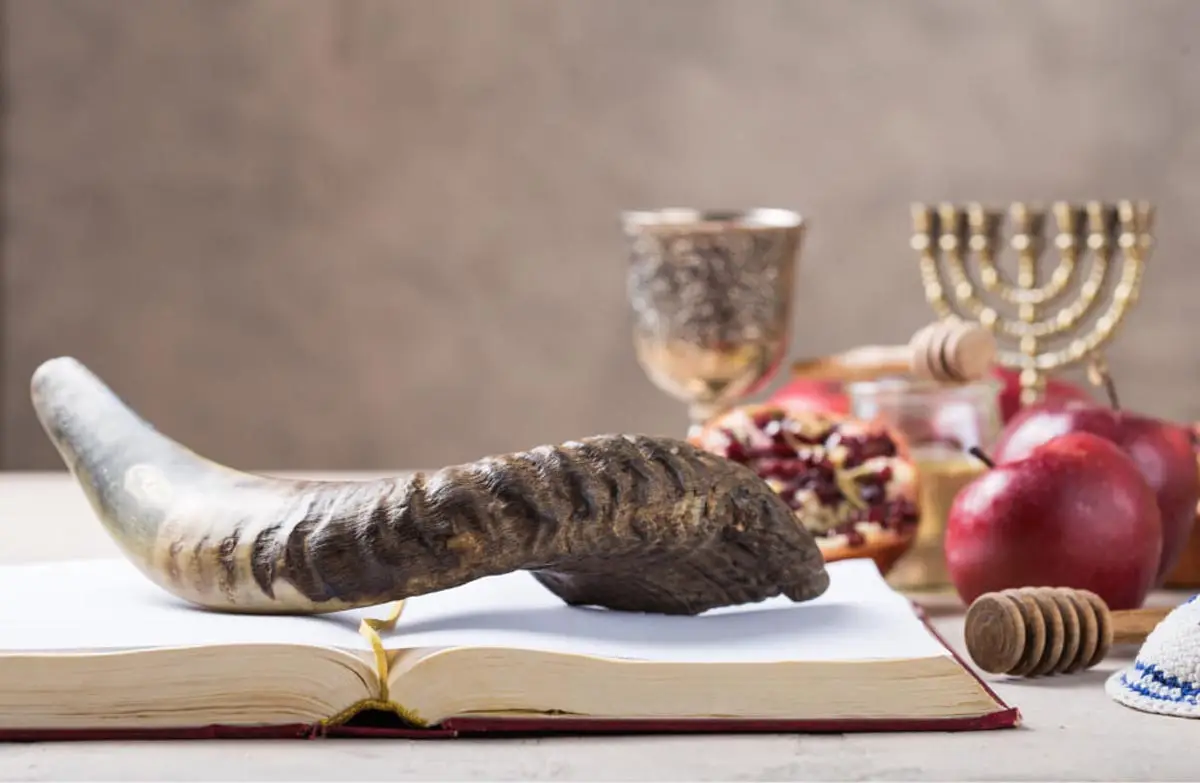

Tishrei
Tishrei is the first month in the Hebrew calendar, but it is also called “the seventh month” because it is the seventh month from Nisan, the first month in the Biblical sequence of months.
The name of Tishrei, like the names of the other Hebrew months, originated in the Babylonian exile. It denotes a “beginning.”
The month of Tishrei contains more festivals, Chol Hamoed (Intermediate) days, and fast days than any other month.
- The Days of Awe consist of the two days of Rosh Hashanah, the Fast of Gedaliah, the Ten Days of Repentance, and Yom Kippur, the Day of Atonement.
- The festivals are the holiday of Sukkot, Hoshana Rabbah, and the holidays of Shemini Atzeret and Simchat Torah.
Rosh Hashanah – What the Day Is About
Rosh Hashanah is a two-day holiday that takes place on the first and second of Tishrei.
The Names of the Holiday
The holiday of Rosh Hashanah has several names, each one indicating a different perspective on the holiday:
Rosh Hashanah: The head (“rosh” in Hebrew) controls and guides the other limbs of the body. Similarly, the spiritual state of a Jew on Rosh Hashanah, the “head” of the year, has a tremendous impact on his behavior throughout the year.
Yom Hadin (Day of Judgment): Rosh Hashanah is the day when G-d judges every human being and examines all of his deeds. On this day, G-d decides everything that will happen to every person throughout the coming year, until the following Rosh Hashanah. On this day, G-d decrees how much of a livelihood every person will earn, who will be wealthy and who will be poor, who will live and who, Heaven forbid, will not.
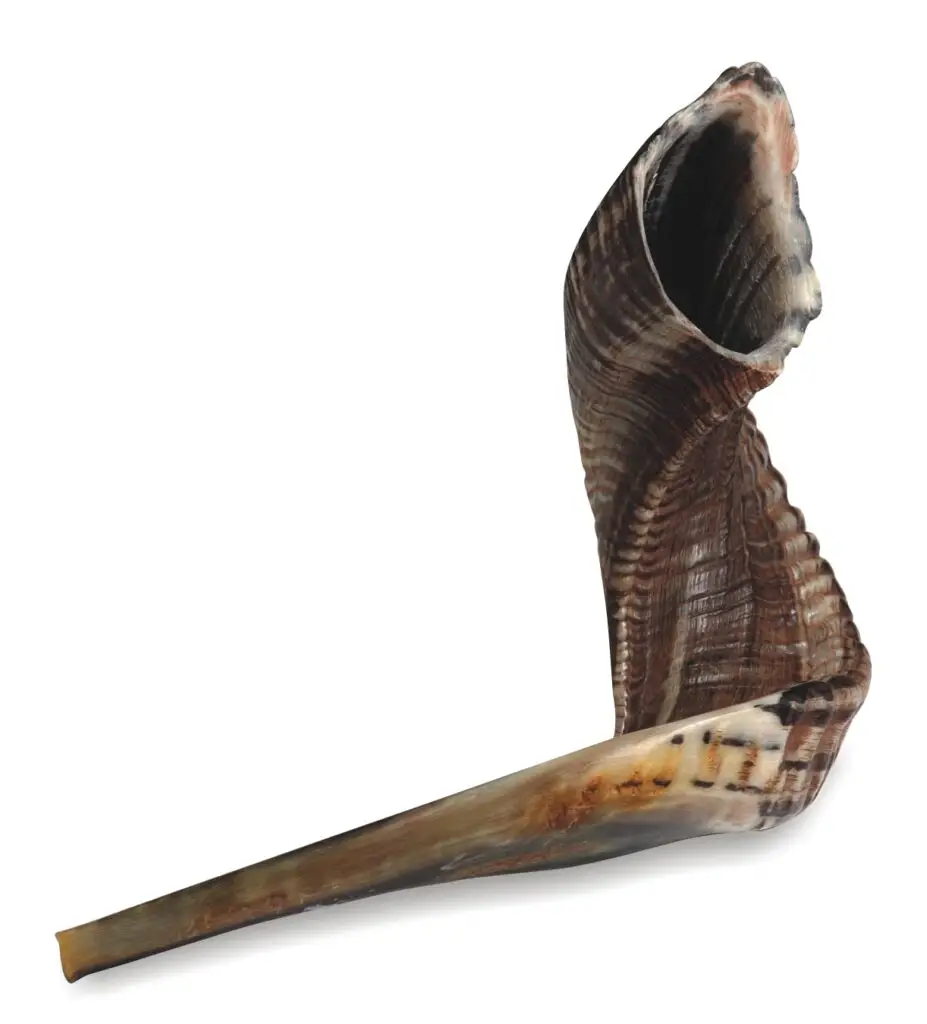
Yom Teruah (Day of the Shofar Blast): This name of the holiday refers to the many blasts that we sound on the shofar on this day.
Yom Hazikaron (Day of Remembrance): This name indicates the fact that G-d “remembers” all of His creations on this day.
The Essence of the Holiday
The name “Rosh Hashanah” (literally, “the head of the year”) reveals a good deal about the nature of this day. Rosh Hashanah is not merely the first day of the new year but actually the “head” of the entire year. What does it mean for a year to have a “head”? The head of a human body controls all of the body’s limbs and is responsible for the body’s proper functioning. Similarly, Rosh Hashanah is called the “head” of the year because it is on Rosh Hashanah that every person’s fate is decided for the course of the coming year.
Even though the Torah considers the month of Nisan, not Tishrei, to be the first month of the year, the first day of Tishrei marked the conclusion of the creation of the world (which began on the twenty-fifth of Elul) with the creation of Adam and Eve, and this day is therefore dubbed Rosh Hashanah, the beginning of the year. The first of Tishrei in that very first year was the first day of the new year in the world that had just been created, now that all of G-d’s creations were present in the world.
Judgment Day or Coronation?
On the surface, Rosh Hashanah is a day of judgment for everyone and everything in the world, a day when human beings are judged regarding all of their needs, both material and spiritual. In the judgment, all of a person’s actions, words, and thoughts are reviewed. He is judged on whether he followed the Torah and its commandments and served G-d or whether, Heaven forbid, he sinned and did not live up to his task as a Jew in this world.
But there is a deeper significance to Rosh Hashanah. The true essence of Rosh Hashanah is that it is a day when G-d’s sovereignty as the King of the entire universe is recognized anew.
Once a year, G-d asks us to recognize Him and to “coronate” Him as our King.
The motif of G-d’s Kingship is repeated time and again over the course of the prayers of Rosh Hashanah. We read of G-d’s instruction to “make Me King over yourselves,” and we beseech Him, “Rule over the entire world with Your honor,” “Rule over the entire land,” and so forth.
One of the themes of Rosh Hashanah is G-d’s coronation, as it were, as the King of the world. This does not mean that we simply acknowledge or recognize His existing sovereignty. The concept of coronation denotes establishing a new kingship over people or places that were not previously subject to that ruler’s sovereignty. But how can this be possible? Is there any place in the world that is not subject to G-d’s control?
The Talmud teaches us, “Everything is in the hands of G-d other than the fear of G-d.” Fear of G-d is the only area in which G-d limits Himself, so to speak, and does not exercise His authority. G-d gives human beings the ability to choose their thoughts and actions, rather than ordaining everything that every person will do or say.
On Rosh Hashanah, we declare that we are accepting G-d’s sovereignty even over the “neutral zone” over which He has chosen not to rule—our fear of Heaven. We announce that we mean it, truly and sincerely, and we direct all of our actions, words, and thoughts to comply with G-d’s Will as the Torah teaches us.
The 29th of Elul – Erev Rosh Hashanah
The 29th of Elul, Erev Rosh Hashanah, is the final day of the year and has special significance with respect to repentance and self-improvement. Teshuvah, repentance, has the ability to rectify the sins of the past, and if we take advantage of that opportunity, we can conclude the year with spiritual growth and renewed closeness to G-d. This will serve as an appropriate preparation for the impending days of Rosh Hashanah and the Ten Days of Repentance.
On this day:
- One should distribute charity generously and should increase one’s Torah study.
- A much lengthier Selichot service is recited before the morning prayers.
- Tachanun is not recited during the morning or afternoon prayers.
- A person should conduct an inner reckoning of his deeds during the past year and ask his friends or acquaintances for forgiveness in case he has wronged them in any way. This will enable us to come to the nighttime prayers of Rosh Hashanah in a state of spiritual cleanliness and purity.
- It is customary to commit to enhancing one’s observance of a particular mitzvah in some small way during the coming year.
- It is customary to pray at the graves of the righteous on Erev Rosh Hashanah. The gravesite of a righteous man is considered a sacred place, and it is easier for a prayer uttered there to be accepted. It is also customary to distribute charity to the poor and to ask the souls of the departed righteous men to act as our “defenders” before G-d, so that He will be kind to us in their merit.
The only day in the month of Elul, other than Shabbat, when we do not sound the shofar is Erev Rosh Hashanah, the twenty-ninth of Elul. The purpose of this is to confuse the Satan so that he will think that Rosh Hashanah has already passed and will stop attempting to prosecute the Jewish people. Another purpose for this cessation is to make a clear distinction between the “optional” shofar blasts (the blasts sounded during the month of Elul, which are merely a custom and are not a Biblical obligation) and the “mandatory” shofar blasts sounded on Rosh Hashanah in fulfillment of the Biblical commandment.
Annulment of Vows
On Erev Rosh Hashanah, we perform a brief ceremony known as hatarat nedarim, the annulment of vows. In this ceremony, we cancel any vows that we may have unthinkingly taken over the course of the past year, as well as any vows that we might take in the future.
Jewish law provides for the possibility of “annulling” a vow and canceling it by appearing before a rabbinic court and asking the judges to “permit” whatever the vow prohibited.
What Is a Vow?
A neder (vow), in Jewish law, is an obligation that a person assumes, usually relating to matters of religious observance, through the utterance of a specific formula that our Sages have enacted. There is an entire tractate of the Talmud, entitled Nedarim, that deals with this concept.
Judaism takes the power of speech very seriously; we believe that the human mouth is invested with tremendous power. Through a simple statement or a specific series of words, we have the ability to create binding obligations or prohibitions.
A neder is problematic because we do not always succeed in living up to the obligations we assume, and the violation of a vow represents a grave sin. It has always been common practice among Jews to refrain from making vows at all. Today, it is customary to add the words bli neder, “without a promise,” whenever we commit to something.
We perform this ceremony specifically at the beginning of the new year, before the Day of Judgment, so that we can come to the judgment cleansed of any vows or oaths we may have uttered but not fulfilled.
The Hatarat Nedarim Ceremony
- After the morning prayers on Erev Rosh Hashanah, a minimum of ten men should gather together so that the group will have the power of a beit din, a rabbinic court, which has the ability to annul vows.
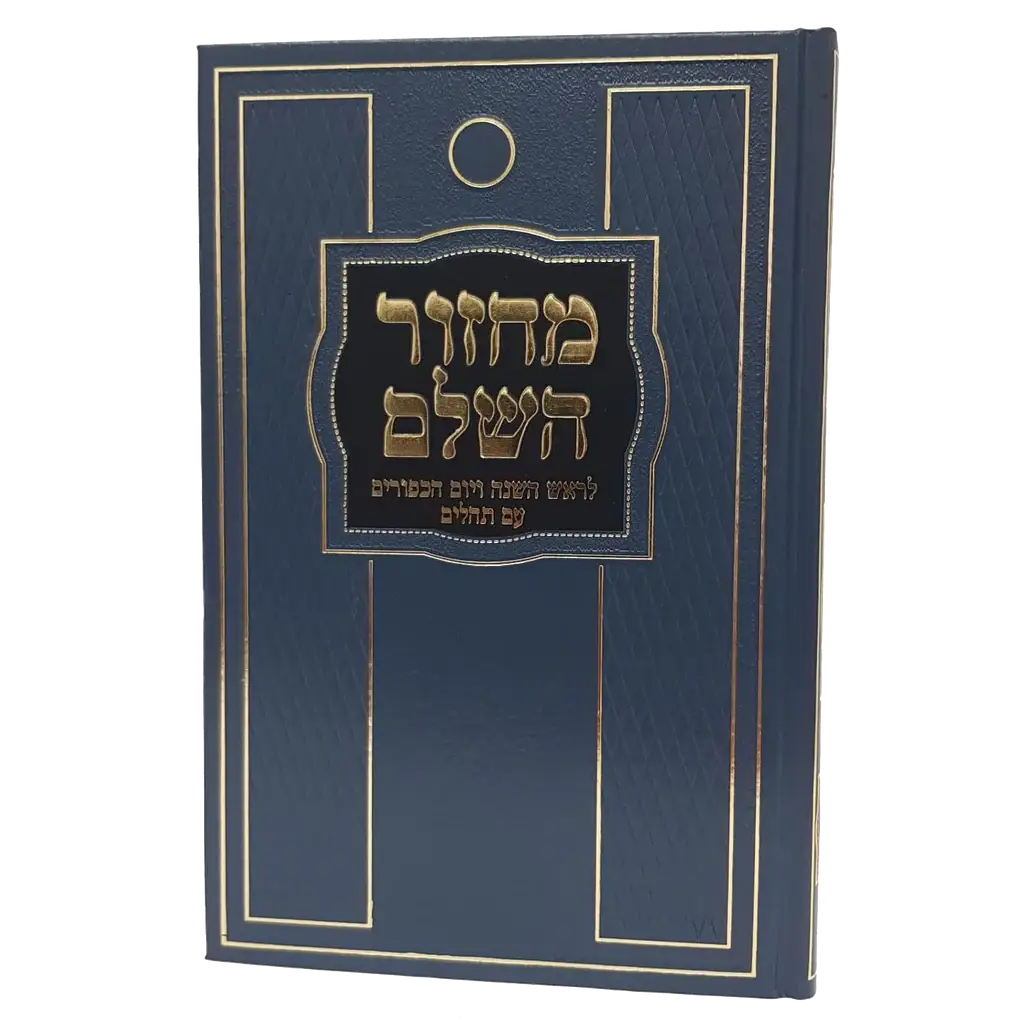
- It is customary for the entire group to sit and for each man to stand up in turn and recite the formula beginning with the words, “Listen, please, my masters, expert judges,” as it appears in the siddur.
- After the person requesting the annulment of vows has completed the first passage, the makeshift “court” responds by reading aloud three times from the words, “They should all be permitted to you,” until the words, “in the Heavenly Court.”
- The person then recites an additional passage, “I am hereby delivering notice before you…” The three “judges” respond, this time only once, “They shall all be permitted to you…for G-d, your L-rd, loves you.”
- If a person was unable to perform this ceremony on Erev Rosh Hashanah, he may do so until Erev Yom Kippur.
- When it is not possible to arrange for a group of ten men to be present, a group of three men can also serve as a “minor beit din” to annul a vow.
Customs of Rosh Hashanah
Over the generations, the Jewish people have developed a wide variety of customs that, in various ways, give expression to the value and meaning of their festivals. The following are some of the customs associated with Rosh Hashanah:
- We refrain from eating sour, bitter, or sharp foods over the course of Rosh Hashanah, so that we can have a good, sweet new year.
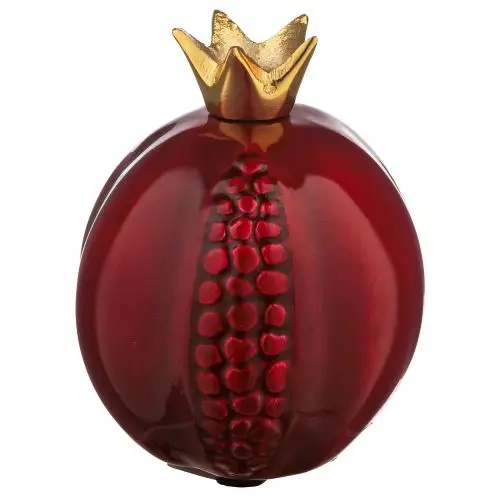
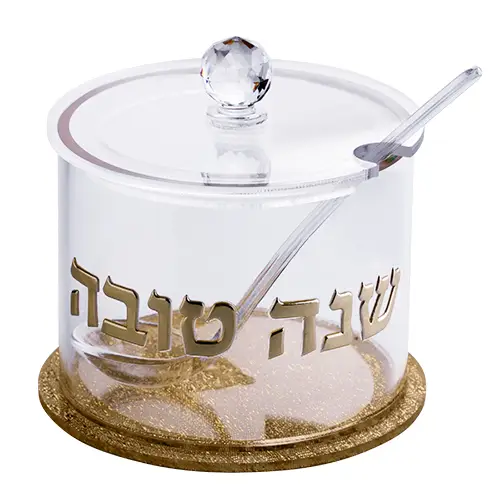
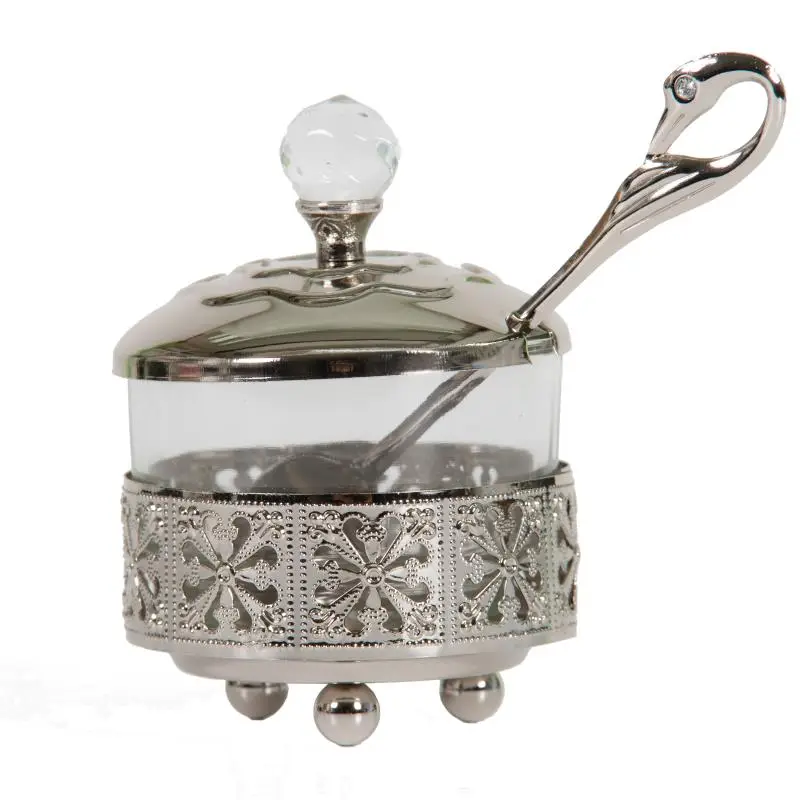
- We eat foods whose names or shapes are symbolic. Examples include an apple dipped in honey, which is symbolic of sweetness, or the head of a fish, which symbolizes the start of the year and our prayer that “we should be the head and not the tail.”
- We do not engage in excessive sleep during the two nights of Rosh Hashanah, and we also do not sleep at all during the daytime on Rosh Hashanah. The purpose of this is to prevent our good fortune from being “sleepy” during the coming year. In addition, on Rosh Hashanah we are “on trial” and being judged regarding what type of year the new year will be; it would not be appropriate to sleep at such a critical time.
- We make an effort not to become angry or to cry over minor matters on Rosh Hashanah, since every action we perform on this day will have an impact for a very long time, throughout the coming year.
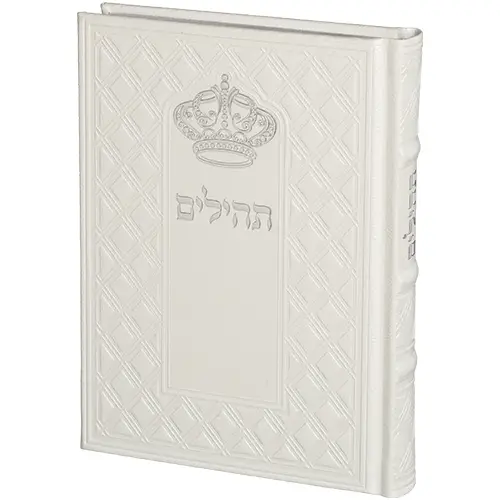
- During the 48 hours of Rosh Hashanah, we recite Psalms constantly and attempt to minimize our speech in areas not concerning the holiday itself.
- It is customary not to smoke on Rosh Hashanah, despite the fact that Jewish law permits smoking on a festival.
Preparing for the Holiday
- On the day before Rosh Hashanah, the house should be cleaned and prepared for the festival.
- It is customary to take a haircut and bathe on Erev Rosh Hashanah, in order to demonstrate our conviction that G-d will judge us favorably.
- It is customary to immerse in a mikveh in order to enter the Day of Judgment in a state of purity and sanctity.
- One should attempt to donate food items or money to the poor on Erev Rosh Hashanah.
On a festival, as on Shabbat, it is forbidden to kindle a new fire. However, since it is permissible to cook or to light a flame from a fire that is already lit (both of which are forbidden on Shabbat!), it is a good idea to leave a flame lit before the festival, either by leaving a burner on the stovetop lit or by lighting a candle that will burn for a long time, in order to use it to kindle additional flames on Rosh Hashanah.
Eiruv Tavshilin
When Rosh Hashanah falls on a Thursday and Friday, one should prepare a loaf of bread (either challah or matzah) and a cooked food before the holiday. These items should be designated for consumption on Shabbat, so that when we cook on Rosh Hashanah in order to prepare other foods for Shabbat, our actions will be defined as the conclusion of our Shabbat preparations, rather than being considered an entirely new act of preparing for Shabbat on the festival day. This halachic device is known as Eiruv Tavshilin.
In general, it is prohibited on a festival day to cook or do anything else not for the sake of the holiday itself. Once an Eiruv Tavshilin has been made, however, it becomes permissible to cook for Shabbat on the second day of Rosh Hashanah, which immediately precedes Shabbat.
The Eiruv Tavshilin also makes it possible for us to light candles in honor of Shabbat during the festival itself. Of course, these candles should be lit by transferring an already existing flame from another source, not by ligniting a new flame.
The Eiruv Tavshilin Procedure
Before the candles are lit at the beginning of the festival, one should hold in one’s hand a loaf of bread and a cooked food of importance, such as a piece of fish or a hardboiled egg.
- The items are handed to someone else, who then makes the declaration, “I am taking possession of this on behalf of anyone who wishes to acquire possession and to rely on this Eiruv”.
- The person holding the Eiruv foods lifts them in his hands slightly. We then take the foods back from him and recite the blessing, “Blessed are You…Who sanctified us with His commandments, and commanded us regarding the precept of Eiruv.”
- After the blessing, one should say the following formula: “Let it be permissible for us, as a result of this, to bake, to cook, to insulate, and to light candles, and to do everything we need on the holiday for Shabbat, for us and for all the Jews who live in this city.”
- The Eiruv Tavshilin may be performed by men or by women.
- Did you forget to make an Eiruv Tavshilin? The rabbi of your city may have performed one on behalf of all the residents of the city; you can ask him in order to find out.
Candle Lighting
Our Sages decreed that women should light candles in every home on Shabbat and on holidays, in order to honor the festive days and to make sure that the home is properly illuminated so that an atmosphere of serenity and calm will prevail.
- Before lighting the candles, a woman should recite the afternoon prayers and place a coin in a charity box.
- As soon as a girl becomes old enough to talk, she begins lighting one candle on every Shabbat or holiday. She continues doing so until she gets married.
- A married woman lights two candles, plus one additional candle for each of her children.
The candles should be lit before sunset, despite the fact that it is permissible on a holiday to light a flame from an already existing one. One should ascertain beforehand the appropriate time to light the candles. These times are listed on Jewish calendars, on the Internet, and on our website.
- After lighting the candles, a woman should place her hands over her eyes and recite two blessings:
- “Blessed are You … Who has sanctified us with His commandments and has commanded us to light the candle of the Day of Remembrance.”
- “Blessed are You … Who has kept us alive, sustained us, and brought us to this time.”
- After lighting the candles, a woman is considered to have “accepted” the sanctity of the Yom Tov (holiday) upon herself. As on Shabbat, she should refrain from any forbidden labors after she has lit the candles.
For a detailed discussion of the mitzvah of lighting candles, why we light, what candles should be used, how many of them, who should do so, and why this ritual is performed specifically by women, see Yahaduton—Shabbat.
Shabbat vs. Yom Tov—the Main Distinctions
- On Shabbat, it is forbidden to cook. On Yom Tov, however, it is permissible to cook or fry food for consumption on the holiday itself. The only limitation is that it is forbidden to create a new flame; one must use a flame that was lit before the holiday began.
- It is permissible to raise the flame on a gas stove that was lit before the holiday, but it is prohibited to lower the flame. It is also prohibited to extinguish a lit fire, just as on Shabbat.
- One is permitted to carry items outdoors if they are needed for the holiday itself, even if there is no Eiruv. For instance, one may bring a prayer book to the synagogue or push a baby carriage or stroller in order to attend a holiday meal at someone else’s home.


