








Background
One of the prohibitions that appears in the Torah is the prohibition not to drink blood. Does it make you shudder? So that’s it, once it was very common and accepted throughout the world. But even today the prohibition is current and practical and has implications for our daily life.
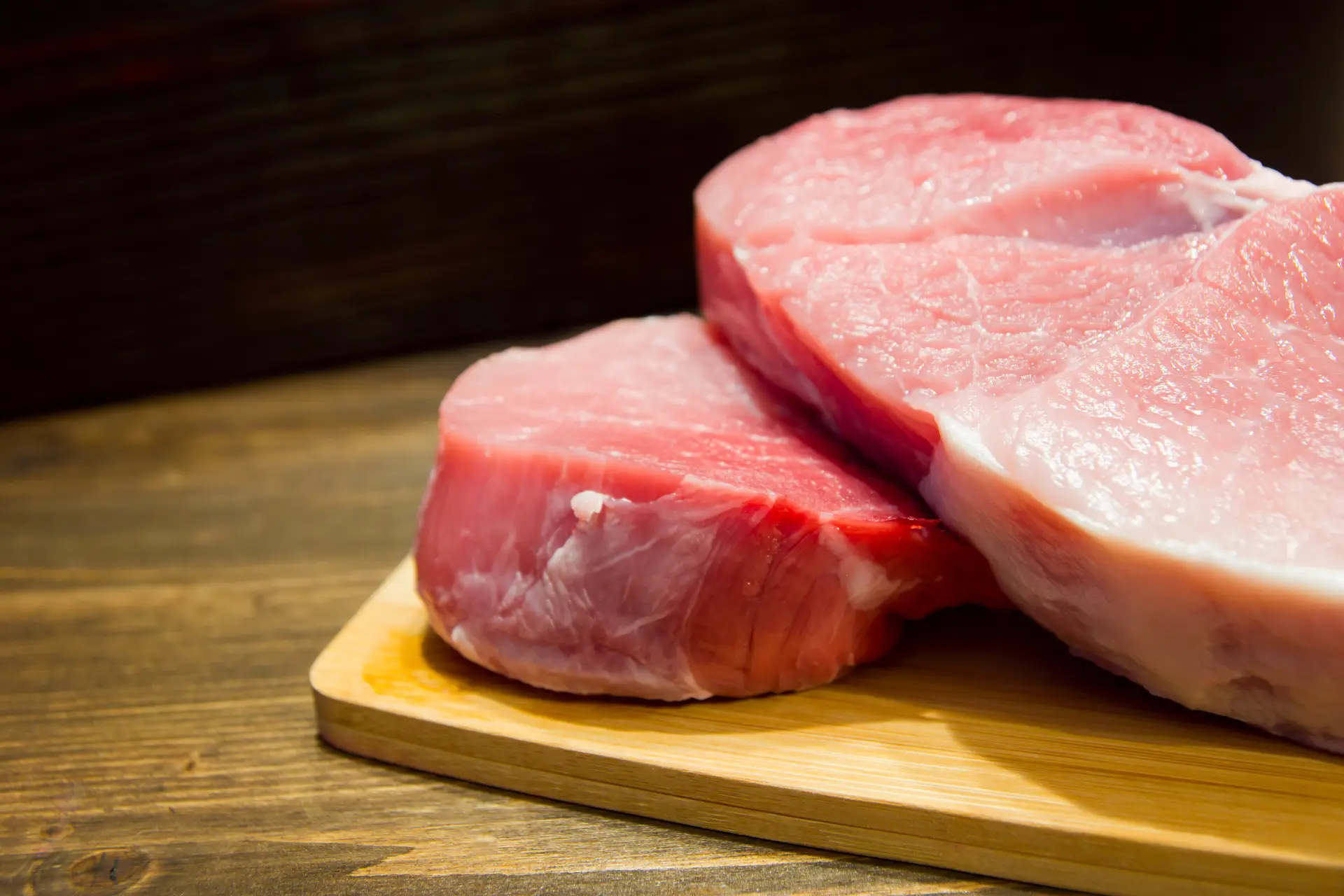
An example? Of course: Salting meat before eating it. After a kosher animal has been slaughtered by an expert butcher, it is still forbidden to eat the meat. It is full of blood. Therefore it needs to be salted: a process in which coarse salt is poured on the meat on all sides for a certain period of time so that it absorbs all the blood in it. This process is carried out inside the slaughterhouses, and the salt absorbs all the blood into it. The salt is then washed off with water and the meat is soaked in a pool of water, and the meat is then permissible to eat. Today, when we all buy meat that has already been salted (what is called today ‘kosher meat’ – this can be seen written on the labels on the meat packaging), we do not have a practical need for this knowledge, but it is still current today in butcher shops and for those who prepare the meat at home.
Why is it forbidden?
- When the Temple was standing, they ‘sprinkled’ the blood of the sacrifices on the altar. Therefore, God forbade it because it is ‘sanctified’ for offering on the altar.
- Drinking the blood of an animal can affect the blood of a person and has the power to slightly alter his nature to the nature of the beast – to be more crude and materialistic.
Details of the prohibition
- Fish blood is permissible to eat.
- If you slaughter a lamb and want to roast it on fire – there is no need to extract the blood from it. The fire will do that much better than you.
- If you cooked meat by mistake before koshering it by salting – it’s forbidden to eat it.
- You should not leave meat unsalted for three days after slaughter. After three days, the blood inside it dries up, and it will not be kosher afterwards.
- It is obligatory to check before buying meat whether it is ‘kosher’. Most of the meats available today in the market are ‘kosher’. But there are certain parts from the cow that are always sold not kosher and are permissible to eat only by roasting.
Blood in eggs
Who doesn’t eat an egg from time to time? But on the way to the frying pan, when breaking the egg, it’s good to check that there is no blood inside (which may have been created at the beginning of the chick’s development), by transferring the yolk between the halves of the shell, and checking it from all sides. If there’s nothing – you can eat it. If there is – see below how to proceed.
Details of the prohibition:
- If blood is found in the egg, it should not be used, and all the utensils that the egg touched should even be washed.
- If the egg was cooked in a pot and blood was found in it afterwards, the pot becomes forbidden for use and must undergo a koshering process.
- Blood in an egg, meaning any stain in red, anywhere in the egg – or even on the inner side of the shell.
Nowadays in the egg market there are two types: fertilized eggs and unfertilized eggs. The fertilized ones are those that are born in ‘coops’ where males and females are found – from such eggs there is a chance that chicks will come out once. The unfertilized ones are those born in ‘coops’ where there are only females – and from such eggs, chicks will never come out.
A stain found in an unfertilized egg is certainly not blood. But still, it is forbidden because of what is called “marit ayin” – it looks as if he is eating an egg with blood.
Therefore – due to the lighter attitude to such eggs – even if such an egg was cooked in a pot with other food and blood was found in it – it itself is forbidden to eat, but the dish is permissible.
Question : I really like to eat hard-boiled eggs. How can I cook and eat if I don’t open and check them?
Answer : When cooking hard-boiled eggs, the custom is to cook at least three eggs together, and then rely on the fact that even if one of them has blood – it is nullified by the majority, and there is no need for checking.


