










Background
A Bar Mitzvah is the day a child reaches the age of 13 (according to the Hebrew calendar). This is the day he becomes a “Bar Mitzvah” [a translation from Aramaic of the words Bar Mitzvah], the day he becomes connected and bound to the commandments, and God imposes on him the right and the obligation to fulfill His commandments.
This happens on the child’s 13th birthday, as this marks a pivotal stage in his physical and emotional development. At this point, the child becomes more mature and gains more understanding. He begins to become more aware of his actions and therefore is also responsible for them. Therefore, this is the time God chose to impose upon the boy the obligation to fulfill the commandments, because until now, there was no ‘one to talk to’….
As a result of all this, he also becomes an independent and important link in the glorious chain of Jewish generations. Until now, as a minor and not responsible for his actions, he was not considered an independent entity in Judaism, for better or worse. That is: if he did something not good, the punishment was that of his father who had to educate him (this is also the reason for the blessing ‘Blessed be He who has exempted us from this punishment’ that his father will bless upon his Aliyah to the Torah. See below), also he did not have the right and ability to fulfill the commandments of the Torah – he was not commanded in them, but only in the context of “education for commandments”, and he was not counted for the purpose of a ‘minyan’ as an independent entity.
Now, upon reaching this age, he comes to the commandments. He must begin to wear Tefillin and other commandments of the Torah, he can join a ‘minyan’ and he must pay attention to his actions, so as not to deviate from the rules.
When does the ‘Bar Mitzvah’ end? Never. Since it is not a ceremony but a personal state, the wheel never turns back…
- It should be noted that a Bar Mitzvah in its true sense, as we have defined it, is not at all dependent on whether the boy performs such or another ceremony, not a religious ceremony in the synagogue nor a ceremony in a banquet hall but depends only on the day he turns 13!
Question : I was born in a leap year, when is my Bar Mitzvah?
Answer: boy who was born in the month of Adar in a regular year and his Bar Mitzvah falls in a leap year, will celebrate in Adar II.
Preparations
The truth is that the best preparation is simply to learn and get to know Judaism and the commandments of the Torah, and since in Judaism there are 613 commandments that he is obligated to on this day, there is a lot of work ahead…
But today, in Israeli public practice, it is usually customary to perform two ceremonies for the Bar Mitzvah: the laying of the Tefillin and the Torah reading. The preparations for these ceremonies will be carried out under the guidance of a Rabbi who will teach your son to do it in the best possible way.
- It should be noted that these ceremonies do not have fixed names in ‘law’ and therefore everyone calls them differently. The principle of things, one day on weekdays (when they put on Tefillin) the boy comes to the synagogue, puts on Tefillin during the morning prayer and goes up to the Torah on this day. And one of the Sabbaths he fulfills the ‘Shabbat Chattan’, in which the boy goes up to the Torah and reads a portion of the weekly Torah portion.
Also, it is possible to combine everything together on the same day. On Monday or Thursday, when he will put on Tefillin and go up to the Torah and read in the Torah scroll. There is a great virtue in this, as this prevents the desecration of the Sabbath of the Bar Mitzvah guests who come on Sabbath to hear the boy’s reading in the synagogue.
It’s good to know:
Question : Why specifically on Mondays or Thursdays?
Answer : These are the established days of the week when we take out a Torah scroll from the Holy Ark in the synagogue for reading during the morning prayer (Shacharit).
- Sometimes we also take out the Torah scroll on special days such as: Rosh Chodesh (the start of a new Hebrew month), Hanukkah, and the like. On these days, it is also possible to hold a Bar Mitzvah ceremony. However, care should be taken that the celebration doesn’t overshadow the boy’s party due to the general festivities…
Question : Is it possible to advance the Bar Mitzvah ceremony before the 13th birthday?
Answer : No. Given that the day he becomes obligated in the commandments is his birthday, therefore, it cannot be brought forward. In very exceptional cases, it may be possible to advance when there is no other possibility and it is recommended to consult with a rabbi.
Question : Can it be postponed if it doesn’t work out?
Answer : Absolutely. And the reason doesn’t necessarily have to be a raging world war on the street, but even family inconveniences and the like. Afterwards, the ceremony should be held as soon as possible.
Question: Is it necessary to read from the Torah?
Answer : No. The Torah reading ceremony is significant for a maturing boy. However, keep in mind that in most cases, the synagogue is not his ‘home turf’ and the Torah scroll and the melody of the reading are not his ‘best friends’ at this time. Therefore, there are boys who are embarrassed or afraid of it, and if despite the explanations, he is not interested in reading from the Torah, he should be allowed to ascend [to the bimah] only, without reading.
Question : How long before the Bar Mitzvah should preparations begin?
Answer : Generally, 4 months is definitely enough time to calmly prepare. If the child has attention deficit disorders, or if he wants to expand his Jewish knowledge or increase the portion he will read from the Torah, it is advisable to start earlier. Consider also holidays or vacations that may fall in the middle of the learning period – which could extend it and should be taken into account.
Choosing the Teaching Rabbi
The Bar Mitzvah period is a very significant time in a Jewish boy’s life and his adolescence. Therefore, when looking for a Rabbi to teach him his Bar Mitzvah studies, it is essential to find a Rabbi who can provide him with a good Jewish experience that will connect him to Jewish tradition. A good Rabbi knows that he should give him an experience and teach, not force him to do one thing or another, so there is nothing to fear that he will repent during his Bar Mitzvah studies…
Additionally, reading from the Torah, while meaningful and illuminating, only applies on the day of the reading. After that, everything is forgotten and passes. What remains forever is the learning experience and the period. Therefore, it is important to pay attention and choose a Rabbi accordingly.
Tefillin and Tallit
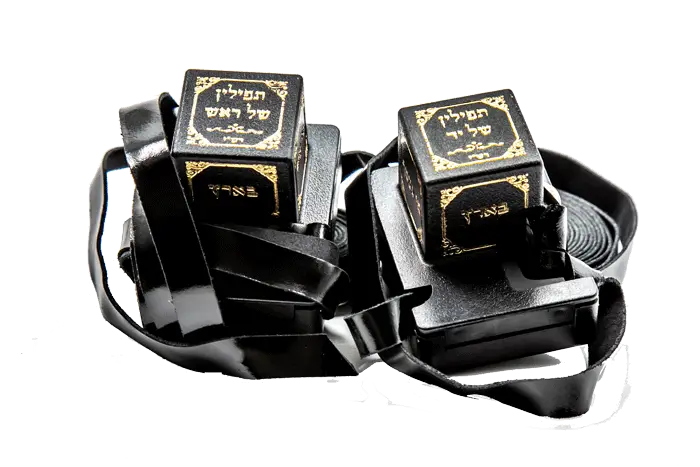
As part of the boy’s preparations for his Bar Mitzvah, he will learn how to wrap himself in a tallit and put on tefillin. It is advisable that already at the beginning of his studies, the boy has his own tallit and tefillin so that he can start learning about them long before and become familiar and comfortable with them.
Which Tallit to Buy and Where?
The Tallit is a garment made of fabric with ‘tzitzit’ – white strings – on its four corners. Generally, make sure that the tallit fits the boy’s size and that it was made by a reputable company in the field that holds a ‘Kashrut’ certificate from an ordained Rabbi.
There are several types of fabrics from which the tallit can be made, and any can be used. The best and most distinguished one is a tallit made of wool.
It is important to buy a tallit that covers the back and not just serves as a ‘scarf’.
Which Tefillin to Buy and Where?
Tefillin are essentially a type of b leather box containing parchments with sections of the Torah related to the commandments of the tefillin. As many problems can arise in this regard (most of which cannot be identified by the naked eye), you should only buy tefillin from a reliable and trustworthy person.
There are several levels of tefillin quality. Given that tefillin is a considerable investment that should last for years, it’s worth spending a little more to buy a beautiful set of tefillin, not just the simplest and cheapest.
How to put on Tefillin? See the ‘Judaism’ booklet – Synagogue and prayers on page .39.
The Ceremonies
When you carry out the Tefillin laying ceremony on a weekday (Monday or Thursday), remember that this is your opportunity to photograph the Bar Mitzvah event – an action prohibited on Shabbat. Remember, these pictures will accompany the boy throughout his life and serve as an eternal memento of a significant ceremony in the synagogue. You have a great influence on his connection to tradition throughout his life when he looks at these photos again.
Make sure not to enter the synagogue on Shabbat with a mobile phone in your possession. Also, to respect the place and the feelings of the synagogue’s congregants, walk there. It never hurts…
If you wish to honor some of your guests with an aliyah to the Torah, it is recommended:
- To coordinate in advance with the synagogue’s management.
- Know in advance who will go up on your behalf, make sure he is present at the time of the Torah reading, and it is even recommended to prepare a written list with the names of the people going up and their fathers’ names.
Bar Mitzvah ceremonies are both exciting and scary for the boy. Be aware of this, encourage him and give him the feeling that he will do it in the best way possible. It is important that he undergoes the process with confidence and joy – thus, he will remember it forever and his connection to what the Bar Mitzvah symbolizes will be enduring.
Preparation for reading the Torah
As part of the preparatory meetings, the boy will become familiar with his ‘weekly Torah portion’, which will be read in the Torah on the Sabbath following his 13th birthday – in which he will read from the Torah.
The weekly Torah portion is divided into seven parts, and it is up to him to choose his preferred part, in consultation with the teaching Rabbi who will guide him on what to choose. You can choose to make a Torah Aliyah with the ‘Maftir’ – the last part of the Torah portion, read for the first time at the end of the seventh Aliyah, and called ‘second’ for the Aliyah reading the ‘Haftarah’ – the part from the prophets read after the weekly Torah portion and dealing with similar topics. On holidays, this part of the ‘Maftir’ is read from a different Torah scroll.
- On Mondays and Thursdays, the Torah is read with the first section of the weekly Torah portion, but it is divided into short sections called Aliyot, usually for three people: Kohen, Levi, and Israel.
- Before the boy chooses the part he will read, you need to inform the Rabbi if the boy is a Kohen, Levi, or Israel – which directly influences the part he will read from the Torah.
Usually, the Rabbi will take the boy for an early tour of the synagogue to see the place where he will make a Torah Aliyah and ‘star’ so that he can get used to and feel at home in real time. If the Rabbi has not done this, it is recommended to do it with the boy yourselves.
The Torah Aliyah
The Torah Aliyah takes place in the middle of the morning prayer, about twenty minutes after the start of the prayer.
A Torah scroll is removed from the Holy Ark, after the Chazzan has placed the Torah on the reading platform, the Gabbai calls people to make a Torah Aliyah:
For the first Aliyah – “First”, he calls the Kohen. For the second – “Second”, he calls the Levi, and for the third Aliyah – “Third”, the Israelite goes up (the term for most of the people in the nation of Israel, who are neither Kohanim nor Levites).
The first three Aliyah representatives actually represent the three different types in the nation of Israel, and hint to us that only in a complete composition are we considered a “Kli” (vessel) that can contain a blessing within it: “Kli” is an acronym for Kohen, Levi, Israel.
The Gabbai calls the Aliyah to the Torah by calling his first name and his father’s name, for example: “Ya’amod Yosef ben Elazar.” (In Sephardic communities it is customary not to call a person by their first name but: “Ya’amod Kohen”, “Ya’amod Levi” and so on without the person’s first name and the name of the Aliyah’s father).
The person called to make a Torah Aliyah should approach the reading platform in the shortest way possible from his seat in the synagogue to the reading platform. By doing this, he shows that he loves the Torah and does not want to lose even a few seconds without it.
The Blessings
The person making the Torah Aliyah stands to the right of the reader, and he shows him where the reading begins, so he knows what he is blessing. The Aliyah kisses his Tallit (or the belt of the Torah scroll) at the place where his ‘personal’ reading begins and ends, and he closes the Torah scroll.
In the Torah scroll of Ashkenazi Jews, the person called up for the reading (the oleh) holds the wooden handles of the Torah scroll, “atzei chayim” (trees of life). In the Sephardic tradition, he places his hands on the closed scroll itself.
- The person called up for the reading (the oleh) blesses: “Bless the Lord who is blessed,” and the congregation responds: “Blessed is the Lord who is blessed forever and ever.”
- The oleh then repeats: “Blessed is the Lord who is blessed forever and ever.”
- Afterward, the oleh recites the “Blessing of the Torah”: “Blessed are You, Lord our God, King of the universe, who has chosen us from all the nations and has given us His Torah. Blessed are You, Lord, giver of the Torah,” and the congregation responds: “Amen.”
The Reading
After the congregation finishes responding “Amen” to the blessing, the Torah reader (or Bar Mitzvah boy) begins reading the verses from the Torah scroll. During the reading, the oleh quietly reads along from the scroll.
- During the reading, both the Torah reader and the oleh hold the “atzei chayim” (trees of life) handles of the Torah scroll.
At the conclusion of the reading portion, the oleh kisses the Torah scroll with his tallit (or belt) at the place where the reading ended, closes the Torah scroll, and blesses: “Blessed are You, Lord our God, King of the universe, who gave us the Torah of truth, and planted eternal life within us. Blessed are You, Lord, giver of the Torah.“ The congregation responds: “Amen.”
After the reading, the oleh remains standing to the right side of the bimah, next to the Torah scroll, and does not descend from it until the end of the next reading portion.
Choosing the Synagogue
The synagogue in which your son will have his Bar Mitzvah is important for the nature of the event and the atmosphere of the ceremony, so you should consider several significant details: whether the synagogue is welcoming to guests who are not its regular attendees; if its size is suitable for the number of guests arriving; the distance from your and your guests’ residence; whether there is another event happening at the same place on that Shabbat – which could sometimes interfere with your event; whether the women’s section of the synagogue meets your needs; if you will be able to honor additional people from among your guests by calling them up to the Torah; whether there is room for a small party for those coming to celebrate with you; and more.
After you have chosen your synagogue, make sure to coordinate your event date with the person in charge as early as possible.
In the process of choosing the synagogue and coordinating with those in charge, you can usually seek help from your rabbi.
The Kiddush
When called up to the Torah on Shabbat, it is customary to sponsor a Kiddush in honor of the Bar Mitzvah boy and his family.
Many synagogues have a set list of refreshments for a ‘Kiddush’ on Shabbat after prayer. Of course, this is only a recommended list to assist you in choosing the products, types of kashrut, and appropriate quantities.
Blessing of “Baruch Sheptarani”
This blessing, which is recited when the boy reaches the age of commandments, next to the Torah scroll, expresses the father’s joy that he is no longer responsible for punishments incurred by the child’s inappropriate actions. From this moment onwards, the boy opens an ‘independent bank account’ in heaven, and all his actions are recorded there, both positive and negative.
The Day of the Bar Mitzvah
Sometimes, due to all the preparations for the Bar Mitzvah ceremonies, the 13th birthday can be overlooked. This day, on which the boy becomes a grown-up and a son of the commandments, is a very significant day in his life and should be paid attention to.
On this day, one must ensure that the boy performs more good deeds, fulfills more commandments, such as laying tefillin, giving charity (not on Shabbat), helping others, and the like. It is also recommended for you, the parents, to perform a few commandments on this day on his behalf…
Even if the big celebration is not on the Bar Mitzvah day itself, it is very worthwhile to celebrate with at least a small meal with family and friends on the Bar Mitzvah day. During this meal, one should give thanks to the Creator of the world who brought the boy to this day, and it is advisable that some Torah discourse or spiritual concept should be spoken.


