











Introduction
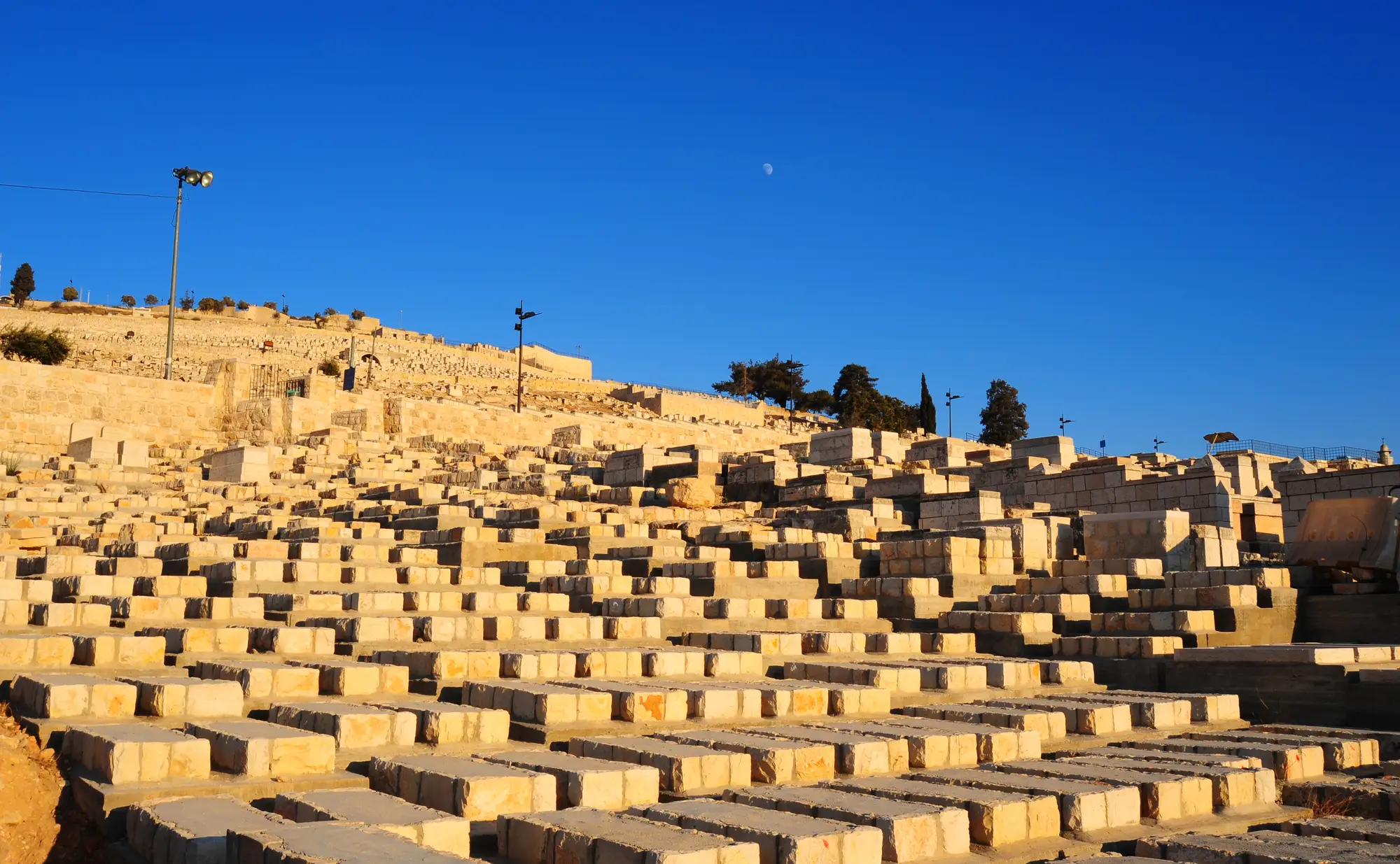
You should occasionally visit the graves of family members (except in the first year, see below). It gives them pleasure that you pray for their souls, and it is also a good place for relatives to pray for their requests near the soul of the deceased, to ask for them from our Father in Heaven.
- Do not visit the cemetery on Shabbat and holidays.
If you have not visited a Jewish cemetery in the last 30 days, you should say this blessing before entering the cemetery:
“Blessed are you, Lord our God, King of the Universe, who created you in judgment, and nourished you in judgment, and provides for you in judgment, and will someday take you in judgment, and knows the count of all of you, and He will later revive you and sustain you in judgment. Blessed are you, Lord, who revives the dead.”
When do we visit the cemetery?
On the seventh day, the thirtieth day, at the end of 12 months, and every year on the day of death according to the Hebrew calendar.
In the first year after burial, it is not advisable to go to the grave except at these times, as the soul is still undergoing a process. In subsequent years, you may visit without restrictions.
- The subject of going up to the grave can be sensitive to some family members, especially in the first year. There can always be family members who say that on a certain day it is good to go up to the grave together, for a certain reason, even if it is during the first year. There is no need to insist on not going up. If it is important and relevant to any of the family members, consider their feelings and go up even during the year.
What to arrange before leaving?
On the seventh day, the thirtieth day, and the annual remembrance, before you leave the house for the cemetery, take care of:
- Ten men above the age of 13 (a Minyan), so that you can say the Kaddish. If a Minyan is lacking at the cemetery, you can ask someone visiting the area to join for a few verses and
- Yarmulkes. Consider the possibility that some of the people who will come may not have yarmulkes available or they forgot them before coming to the cemetery.
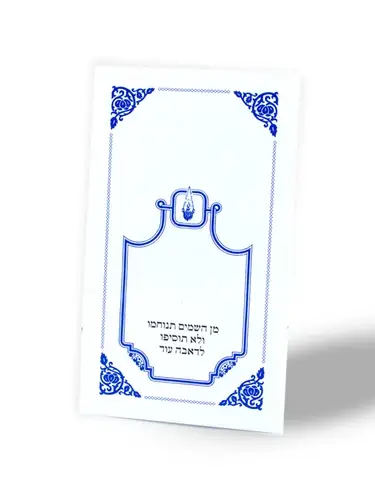
- Pages printed with chapters of Psalms that are customary to say when visiting a grave.
- The version of the Kaddish that you have to say after reciting the chapters of Psalms.the recitation of the Kaddish.
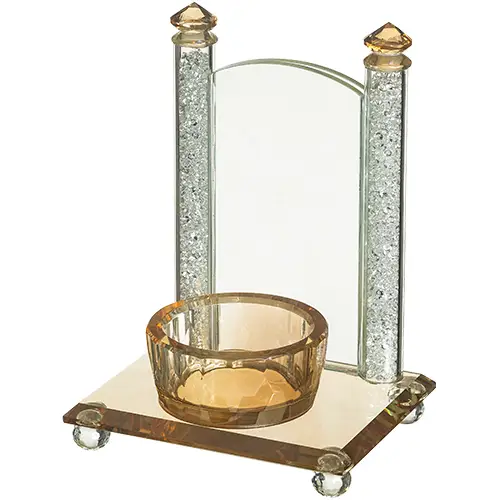
- Yahrzeit candle – if you wish to light it near the grave.
- It is recommended to coordinate in advance with a Rabbi or another person who is familiar with the ceremony and experienced in it, to conduct it properly and smoothly. Didn’t find one? No problem. You can manage excellently alone with the instructions in the booklet in your hands.
- Many cemeteries are locked for most of the day. Make sure it’s open before you leave!
Behavior in the cemetery:
The cemetery is a place where respect must be shown. Our respectful behavior in this place honors the deceased who are there and our loved ones buried there. It is not a place for secular conversations, nor for eating and drinking.
- If you are wearing a Tzitzit (small Tallit) on your body, be careful to tuck the fringes that come out from under your shirt into your trousers. The deceased, who are now unable to fulfill the commandment of Tzitzit, are envious of you when they see your fringes outside. Do not ‘poke their eyes out’.
- If you or one of your guests coming to the ceremony is a Cohen, make sure he stays outside the boundaries of the cemetery. A Cohen should not be in the vicinity of the dead, (see in detail page 98).
Don’t forget to wear a yarmulke before entering the place.
What do we say?
When you get to your loved one’s grave, wait until people gather and you have a Minyan, then read the chapters of Psalms that are customary to read during a grave visit. Even if you do not have a Minyan, you can read them, but then do not say Kaddish.
After all the family members and friends have gathered, everyone reads these chapters of Psalms:
Psalm 33, 16, 17, 72, 91, 104, 130 and afterwards, say the letters of his/her name according to the sections from Psalm 119. In this Psalm, there are eight consecutive verses starting with each of the Hebrew letters.
For example, if the deceased’s name was David, you should say the eight verses starting with the letter D, then the eight verses starting with the letter V, and then again the eight verses starting with the letter D.
All the Psalms and Kaddishes are found in the prayer booklets of the Chevra Kadisha that you will receive when entering the memorial.
Finally, you should say these verses that start with the letters that make up the word “soul.”
- At the end of the recitation of the Psalms, say the Mourner’s Kaddish – “Yeha Shlama” (when your body is facing Jerusalem).
- After the Kaddish, say the prayer “El Malei Rachamim.”
- After the end of the ‘official’ ceremony from a Jewish perspective, you can continue to pray or eulogize the deceased.
- Before you leave the gravesite, place a small stone with your left hand on the tombstone. This is an act of respect for the deceased, showing that you were at their grave.
- Upon leaving the cemetery, wash your hands three times, alternating between each hand.


