











Introduction
There is a great commandment to bury the deceased in the ground – from which he was created at the beginning of the world and to which he is to return.
A Jewish burial is very important for the deceased and his soul, and it has important rules where the respect for the deceased is a fundamental line.
What is a Jewish funeral?
A Jewish burial has several important elements:
- The full body of the deceased is buried.
- Burial after the ‘purification’ process.
- Burial in ‘shrouds’.
The full body of the deceased is buried
The entire body of the deceased should be buried exactly as it was at the moment of death. It is forbidden to remove body parts, even for research purposes and the like. Also, one should not cut or damage the body.
If the cause of death was a road accident or similar, where blood was spilled from the body after death, the blood should be absorbed from where it was spilled and discarded (together with what absorbed it) to be buried together with the body.
Due to the increasing density in cemeteries in Israel, burials are also being carried out in multi-story burials today.
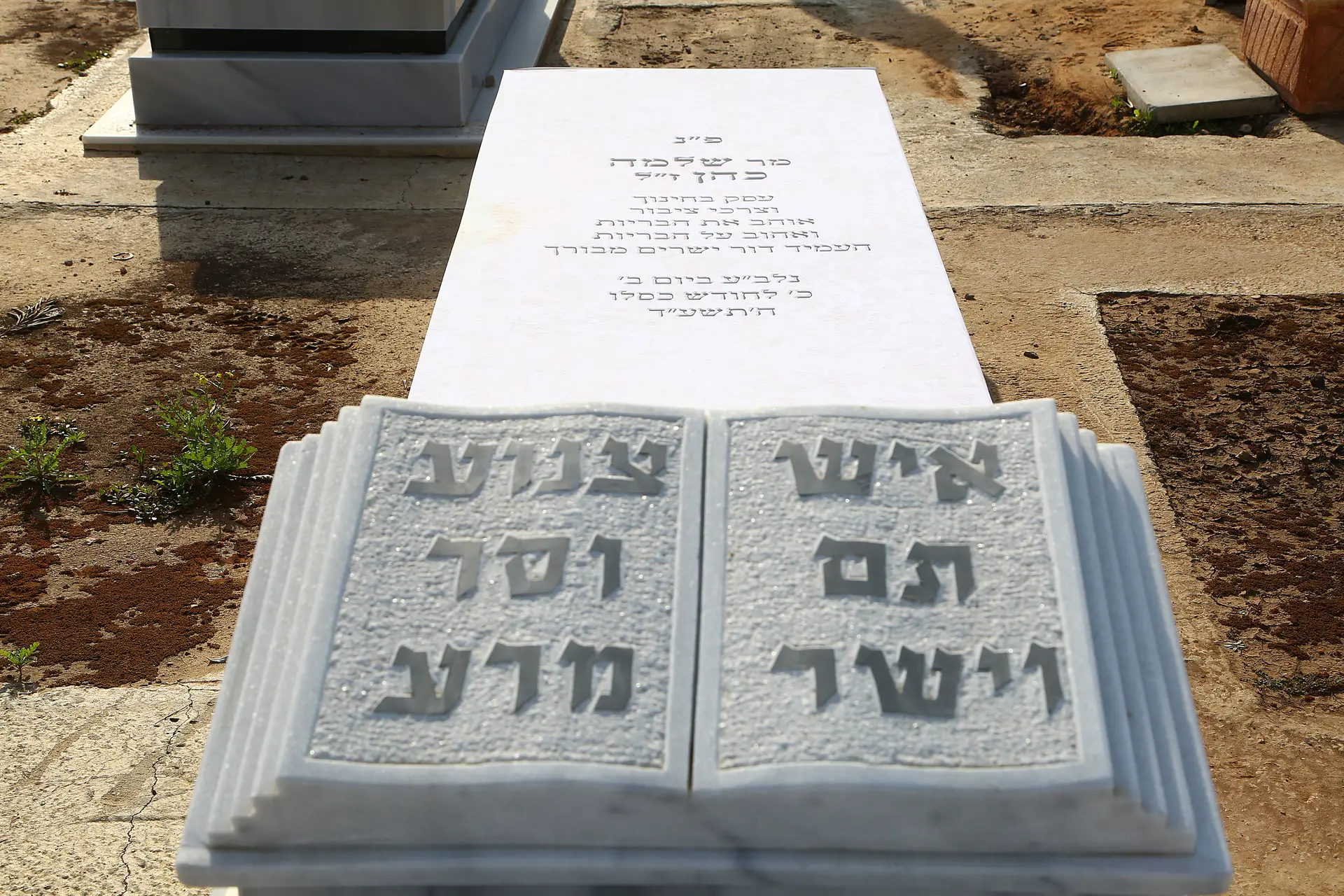
This type of burial is carried out inside burial halls that have been built according to all the rules of Jewish law. The deceased is inserted by a special bed into a niche similar to the “Sanhedrin burial“ discovered in Jerusalem and other places throughout the country. The gravestone (marble slab) is erected at the entrance to the niche. Usually, this type of burial is cheaper than a regular burial and is mainly offered in cemeteries in the center of the country.
Body Cremation
Body cremation, severe as it is from a Jewish perspective: beyond the fact that through body cremation, we do not fulfill the commandment of burial, it also poses additional problems:
- It does not honor the deceased.
- The body of a Jew is holy. It was chosen by God to be the dwelling place of the divine soul that resides in a person, and it is the one that performed good deeds and many commandments in the world. The holiness influences it and we should preserve its honor and integrity.
- Distress to the departed soul.
- Burial of ashes of a body that was burned, is not considered a burial!
Burial in the Ground
Judaism stipulates that the deceased should be buried in the ground so that the deceased will return to their dust, “for dust thou art, and unto dust shalt thou return” – God said to the first man who was created.
- It is very advisable that any process involving contact with the deceased’s body should be done by a Jew: caring for the body, carrying the body in the funeral, and burying the deceased.
Purification of the body – Tahara
‘Tahara’ is washing the body of the deceased and preparing it for burial. The purity of the deceased is important and is performed by the ‘Chevra Kadisha’. Only after it can he be taken for burial. After cleaning the body, it is dressed in ‘shrouds’ with which he descends to the grave for eternal rest.
Shrouds are the clothing in which the deceased is dressed when preparing for burial, it is called so from the word ‘wrapping’, as the body of the deceased is wrapped in them (the meticulous dress it in linen shrouds).
Burial in ‘Shrouds’
Burial in shrouds (made of fabric with a preference for linen) is an ancient Jewish custom and is an inseparable part of Jewish burial.
- It is important to insist on burying the deceased in shrouds when there is no other clothing on his body or on the shrouds.
What is ‘Chevra Kadisha’?
Chevra Kadisha is a ‘holy society’ in the ancient Aramaic language. These are groups of men (for men) and women (for women) who care for the body of the deceased and prepare it for burial according to the requirements of Judaism.
Their deeds are sometimes called “acts of true kindness”. The reason for this is that, unlike kindness that a person does for a friend – who will certainly return a favor for it when possible, doing kindness with the deceased is true kindness. The deceased does not have the ability to repay a favor to those who were involved in his burial…
Today, in most Jewish communities around the world, people are qualified to be the local ‘Chevra Kadisha’, and they are the ones who are familiar with the subject from a practical aspect and from the requirements of Judaism.
These good people receive their reward from the authorized bodies. There is no need to pay for the service provided at the funeral.


