









The Ten Days of Repentance
The first ten days of the year, from Rosh Hashanah until Yom Kippur, are special days that are primarily designated as a time for repentance.
The obligation to repent exists throughout the year, but during these days, G-d is particularly close to us, as we learn from the verse, “Seek G-d when He is found; call out to Him when He is nearby.” As a result, when a person repents during this time of year, his repentance is accepted immediately.
The seven days of the week between Rosh Hashanah and Yom Kippur correspond to the seven days of every week of the previous year, such that one should repent each day for his deeds on that day of the week throughout the year. For instance, Sunday should be dedicated to repentance for every Sunday of the past year, Monday for every Monday, and so forth.
During the Ten Days of Repentance, one should engage in much Torah study, perform many mitzvot, and give much charity. It is also advisable to study books on the subject of repentance, which can help one achieve perfect repentance and atone for one’s sins of the past.
Regarding the precept of teshuvah, repentance, and how to perform it, see above for a detailed explanation.
The Prayers
During the Ten Days of Repentance (which include the two days of Rosh Hashanah, as well as Yom Kippur), several changes are made to the standard text of Shemoneh Esrei during every prayer service:
- In the first blessing, we add the line, “Remember us for life, O King Who desires life, and inscribe us in the book of life, for Your sake, G-d of life.”
- In the second blessing, we add the line, “Who is like You, merciful Father, Who remembers His creations for life with mercy?”
- In the third blessing, the words “the holy King” are substituted for the usual ending of the blessing, “the holy G-d.”
- The end of the blessing “Return our judges,” is changed from “the King Who loves charity and judgment” to “the King of judgment.”
- At the end of the blessing of Modim, we add the line, “Inscribe for a good life all of the people of Your covenant.”
- At the end of the final blessing of the Shemoneh Esrei, we add, “And in the book of life, blessing, peace, and proper sustenance, let us be remembered and inscribed, us and Your entire nation, the House of Israel, for a good life and for peace.”
- At the conclusion of the Shemoneh Esrei, as well as at the conclusion of each Kaddish, the words oseh shalom,
“He Who makes peace,” are changed to oseh ha-shalom, “He Who makes the peace.”
The exact text of each of these insertions appears in the siddur, alongside the abbreviations ת”עשי, for Aseres Yemei Teshuvah (the Ten Days of Repentance), or ת”ש, for Shabbat Teshuvah.
- Two other passages are added to the prayer services outside the context of the Shemoneh Esrei:
- During the morning prayers, we recite Psalm 130 before Barchu.
- Avinu Malkeinu is recited at both the morning and afternoon services, following the Shemoneh Esrei and at the conclusion of Tachanun.
Shabbat Teshuvah
The Shabbat that takes place during the Ten Days of Repentance is named for this period of the year and is called either Shabbat Teshuvah or Shabbat Shuvah. On this Shabbat, we read a Haftarah that begins with the word shuvah in the verse, “Return, Israel, to G-d, your L-rd, for you have stumbled with your sins.” This passage is taken from the Book of Hosea.
- It is customary for the head of each family to light a large candle, preferably made of wax, before Shabbat begins. This candle should burn throughout the day and is known as the “light of repentance.”
- It is important to remember the special additions in the prayer services for the Ten Days of Repentance.
- During the prayer of Magen Avot, “Shield of the forefathers,” on Friday night, the words “the holy G-d” are replaced with the words “the holy King.”
- During this Shabbat, the rabbi delivers a public address in the synagogue in which he calls upon the congregation to repent and intensify their service of G-d.
Asking for Forgiveness
We are taught that even Yom Kippur does not atone for sins committed against other people unless one appeases them and secures their forgiveness first.
During the Ten Days of Repentance, it is important to make sure that our relationships with all our friends and acquaintances are in order and that none of them harbor any resentment or ill will toward us. Every person should seek the forgiveness of anyone he might have offended or wronged over the course of the year.
A person who is approached by someone seeking forgiveness should make every effort to forgive him and not to refuse the request.
Kapparot
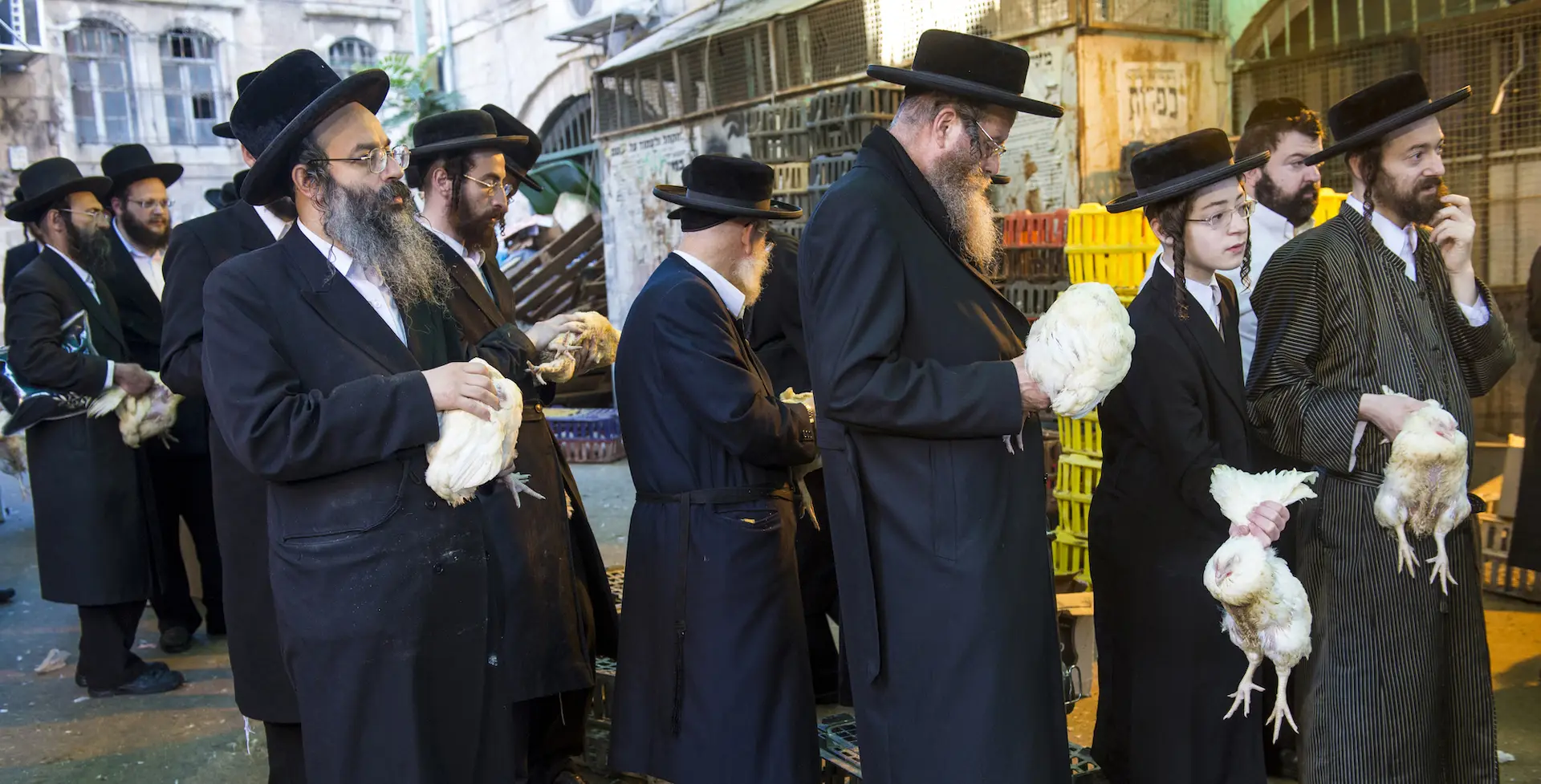
During the Ten Days of Repentance, it is customary to perform a ritual known as Kaparot. This ritual demonstrates our desire to obtain forgiveness from G-d for all of our sins and to be cleansed of iniquity. We offer money or a chicken to “take our place” and serve as an “atonement” for us.
- Kaparot can be performed at any time over the course of the Ten Days of Repentance, but the ideal time is on the morning of the ninth of Tishrei, the day before Yom Kippur.
According to Kabbalah, the early morning is the most auspicious time because “the strand of [G-d’s] kindness is dominant in the world.”
The Kaparot Procedure
One chicken is used for each member of the family. Each chicken should be of the same gender as the person for whom it is used.
- A pregnant woman must use three chickens for Kaparot, two females and one male. One of the female chickens is for her, and she must use both a male and a female chicken for her unborn child, since its gender is not known.
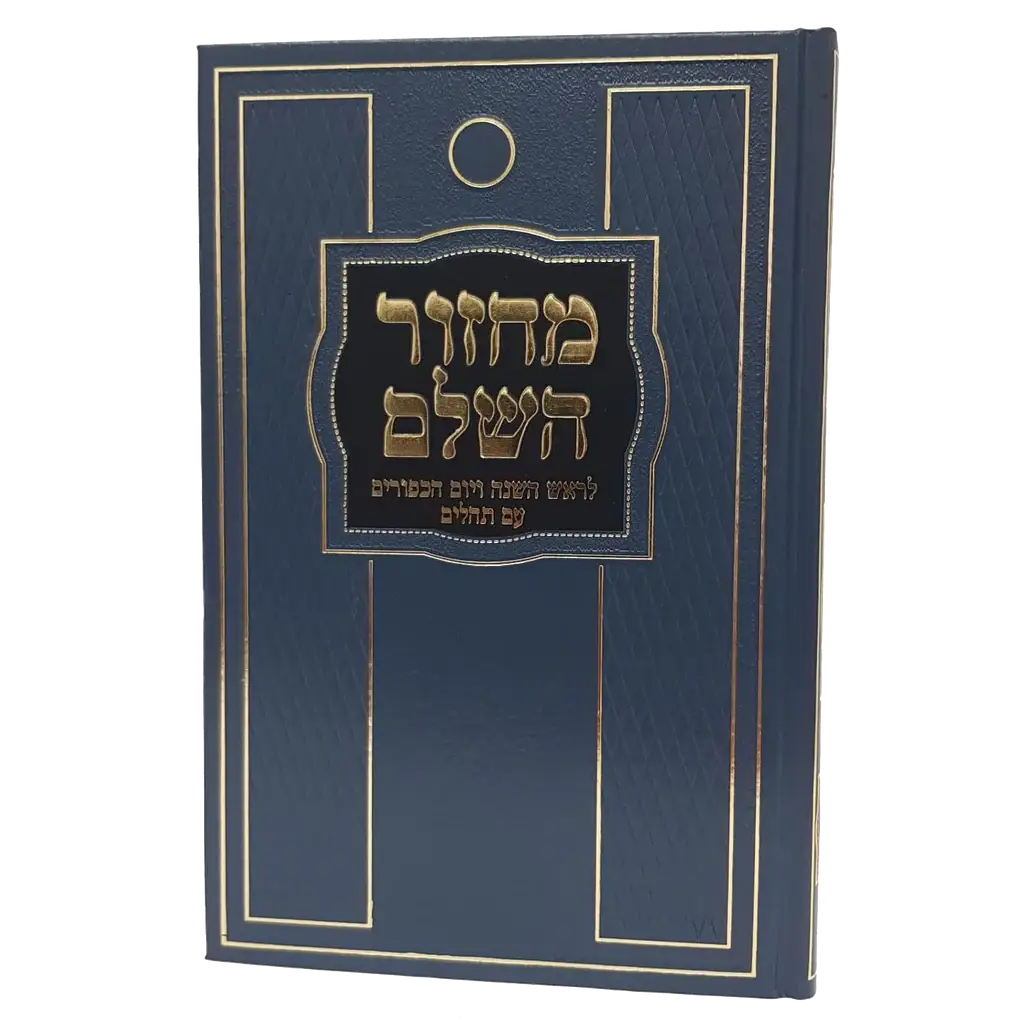
The chicken is held in the right hand while one recites the verses of Kaparot that begin with the words, “Sons of man, who dwell in darkness and gloom.” These verses can be found in a siddur or at the beginning of a Yom Kippur machzor.
After the verses have been recited, one revolves the chicken around one’s head three times while reciting the declaration, “This is my exchange, this is my substitute, this is my atonement.” One then continues with the words, “This chicken shall go to its death, and I shall go on to a good, long life and to peace.”
The entire procedure, beginning with the initial verses, is then repeated two more times, for a total of nine revolutions of the chicken altogether.
- It is not necessary to revolve the chicken around the head on one’s own. Another person can do it on anyone’s behalf.
In many communities, it is customary for the chickens to be slaughtered immediately after the Kaparot, under the supervision of a qualified ritual slaughterer. As is required by a Biblical precept, the blood of the chicken is covered with dirt. Before doing so, one recites the blessing, “Blessed are You…Who sanctified us with His commandments and commanded us regarding covering the blood with dirt.”
The chickens are then cleaned, kashered, and given to needy families.
Nowadays, the custom of Kaparot is observed throughout the world, and many synagogues organize a community Kaparot in order to minimize the expense and exertion entailed.
Kaparot with Money
The Kaparot custom can be performed with money, as well. The same verses are recited, and the money, instead of a chicken, is revolved around the head. In place of the words, “This chicken shall go to its death,” one should recite the declaration, “This money shall go to charity.”
After the Kaparot, the money is given to the poor or to charitable organizations.


