










The Shacharit Service
After arising in the morning and reciting Modeh Ani, we recite the Morning Blessings as usual.
- One should not eat in the morning before the prayer services until after hearing the shofar blasts, but it is permissible to drink.
- It is customary for men to immerse themselves in a mikveh before the morning prayers, in order to enhance their sanctity and purity on this holy day.
The Shacharit Service
The Shacharit prayers of the second day of Rosh Hashanah are similar to those of the first day. The only difference is a couple of passages added to the chazzan’s repetition of the Shemoneh Esrei:
- Melech Elyon, “Supreme King”: This passage follows an intermittent alphabetical sequence, with each line beginning with every other letter of the Hebrew alphabet (i.e., aleph, gimmel, heh, etc.). It describes the greatness of G-d and His control over all of creation.
- “God is the King; G-d has reigned; G-d will reign for all eternity.” This passage follows an alphabetical acrostic and is reminiscent of its “twin,” the corresponding passage of the same name that was recited on the first day. Here, as well, the passage speaks of the legions of angels who sing, bless, exalt, and praise G-d’s Kingship over them.
After the chazzan’s repetition, the Ark is opened, and the congregation recites the prayer of Avinu Malkeinu in unison, while standing.
The Song of the Day for the day of the week is then recited, followed by Psalm 27.
The Torah Reading
The Ark is opened and the congregation recites “When the Ark traveled,” along with the special prayer for festivals, “Master of the Universe,” as on the first day of Rosh Hashanah. Two Torah scrolls are removed from the Ark. The Torah reading in the first scroll is divided among five honorees, and the portion describing the Binding of Isaac, from the Torah portion Vayeira in the Book of Genesis, is read. The purpose of reading this section of the Torah is to recall the merit of our forefather Abraham, who did not hesitate even for one moment and was fully prepared to sacrifice his beloved son due to his great love for G-d.
The second Torah scroll is used for the reading of Maftir, for which one honoree is called up. The reading is taken from the Torah portion of Pinchas, in the Book of Numbers, and describes the sacrificial offerings of Rosh Hashanah.
The Haftarah for the second day of Rosh Hashanah comes from the Book of Jeremiah. In this passage, the prophet Jeremiah describes the end of days, when G-d will gather in the Jewish exiles from throughout the Diaspora. This Haftarah contains the verses in which G-d consoles our matriarch Rachel with the words, “Hold back your voice from crying and your eyes from tears… There is hope for your end… The children will return to their border.”
After the Haftarah, the honoree who received Maftir recites the blessings over the Haftarah, including a special blessing, “On the Torah and on the service,” which mentions Rosh Hashanah as “this Day of Remembrance.”
Sounding the Shofar
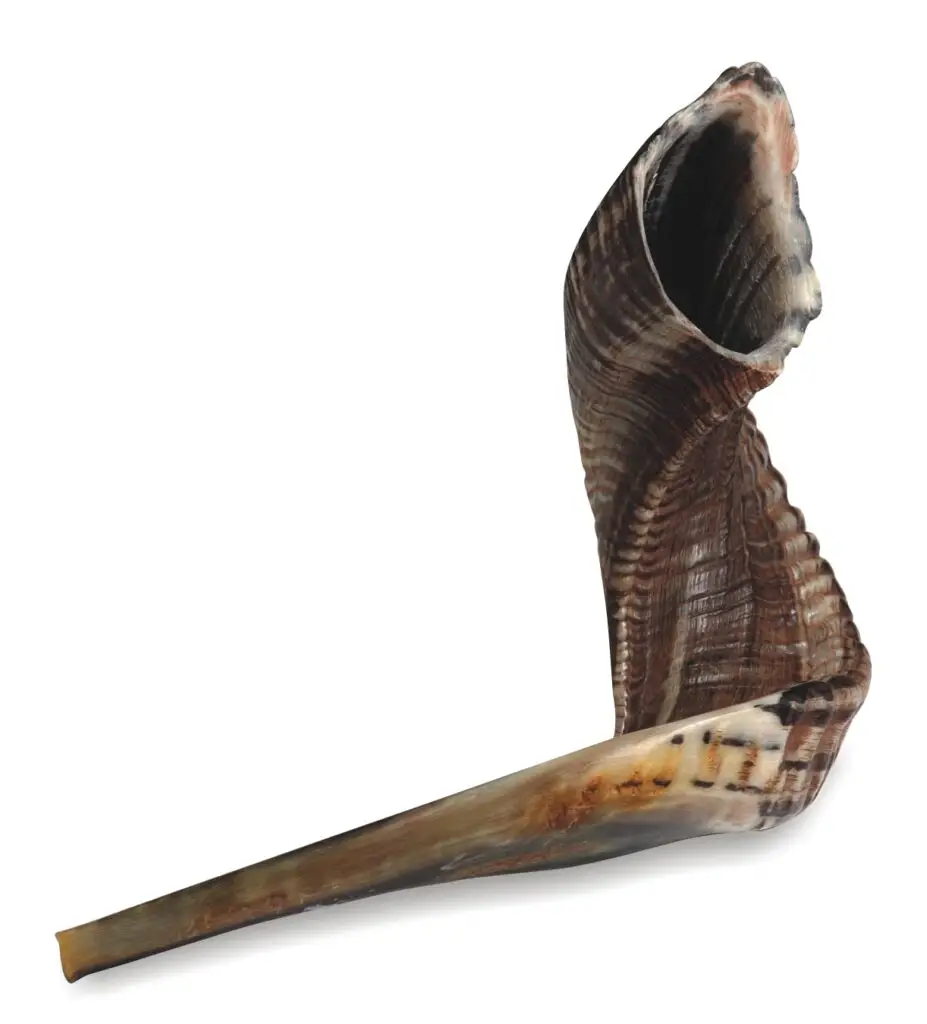
The shofar is sounded, following the exact same procedure that was used on the first day. We recite Psalm 47, followed by the other verses, then the two blessings, and then we sound the thirty blasts. These are followed by the same special prayer and additional verses. While the blessings are recited, each of the congregants should have in mind that the shofar blasts and blessings are essentially on his behalf, so that he can fulfill his own obligation.
- Once the blessings have been said, one should not speak at all until after the final shofar blasts sounded at the end of the chazzan’s repetition of Mussaf.
After the shofar has been sounded, the Torah scroll is returned to the Ark and the Mussaf service begins.
The Mussaf Service
The Mussaf service of the second day of Rosh Hashanah is nearly identical to that of the first. The only difference is a new passage added to the chazzan’s repetition of the Shemoneh Esrei: “To the G-d Who arranges judgment,” which describes G-d’s actions on the Day of Judgment, as He remembers the deeds of His nation Israel and grants them forgiveness and atonement.
During the Mussaf service, the Kohanim bless the people. The special prayer for good dreams is recited during this service.
When the chazzan concludes his repetition of the Shemoneh Esrei, he begins the Full Kaddish. Halfway through the Kaddish, the chazzan pauses for another series of ten shofar blasts, in order to complete the sum of one hundred blasts.
We then recite Ein K’Elokeinu and Aleinu, as well as the chapters of Psalms for the second day of the month and three additional chapters (Psalms 91, 92, and 93), as part of the regular recitation of Psalms that we began on the first day of Elul.
At the conclusion of the services, we sound another series of thirty shofar blasts, in order to “confuse” the accusing Satan. We then recite the Six Remembrances, as we do on any other day, and the prayer service concludes.
The procedure for Kiddush and the holiday meal, as well as the Minchah service, is described in detail in our discussion of the first day of Rosh Hashanah.
The Night After Rosh Hashanah
At the conclusion of Rosh Hashanah, we recite the weekday Maariv service. It is important to remember the special insertions in the Shemoneh Esrei that are added throughout the period between Rosh Hashanah and Yom Kippur known as the Ten Days of Repentance. See below.
Havdalah
We recite Havdalah over wine, just as we do at the conclusion of every Shabbat or holiday, but no blessing is recited over fragrant spices or a lit candle.
We also do not recite the passages beginning with V’yitein lecha after Havdalah.


