








The Machzor
- In many synagogues, seats are sold in advance of the holidays so that the congregants can be sure to have a seat near the chazzan, where they will be able to hear the prayers.
- In most synagogues, a special white curtain is placed on the Ark in honor of the Days of Awe.
The Machzor
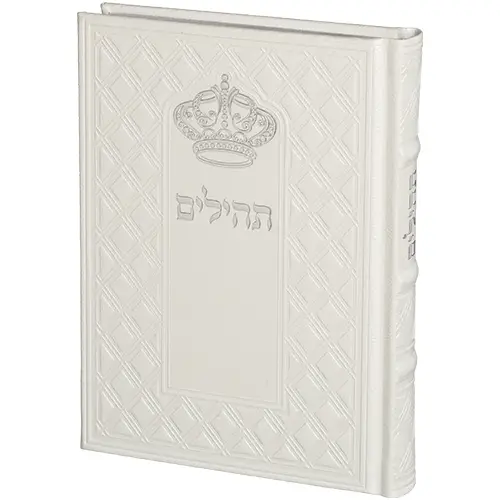
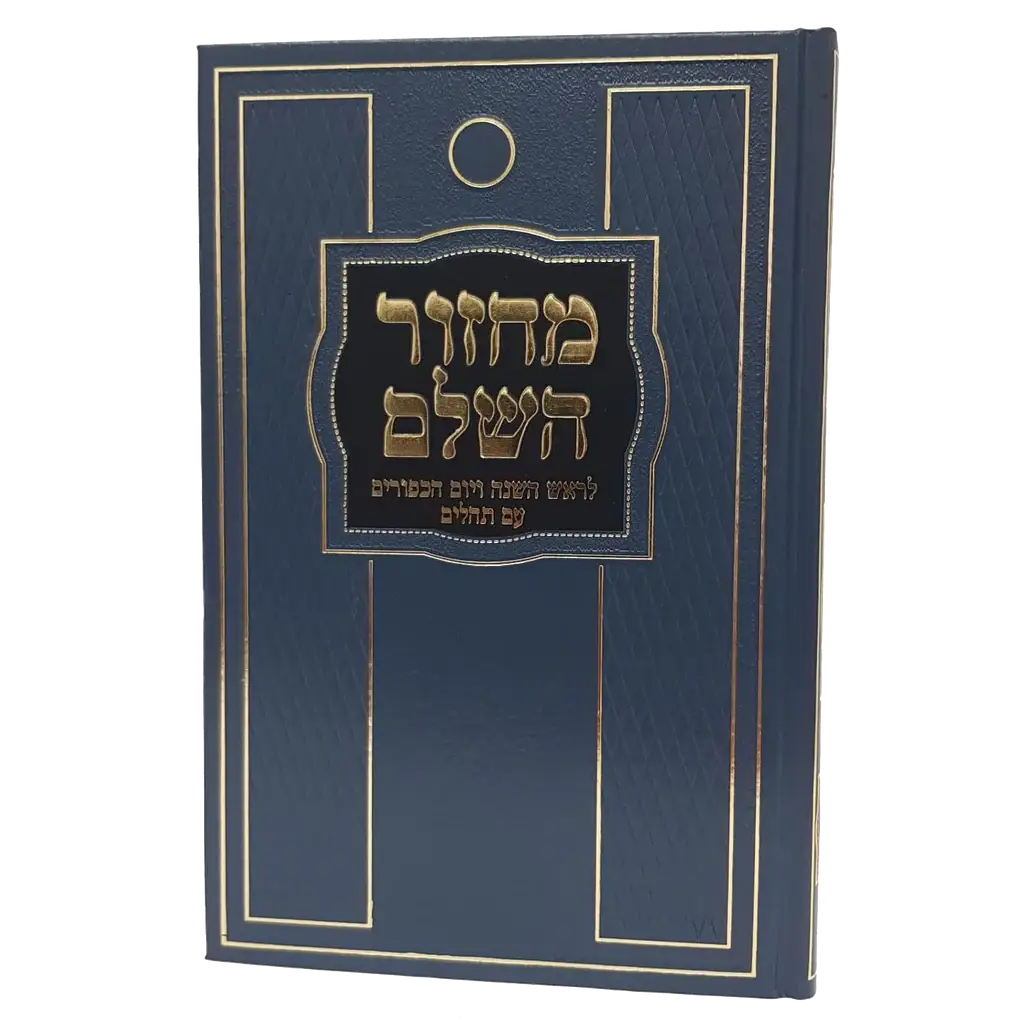
The special prayer book used during the Days of Awe is known as a machzor. The Hebrew word machzor literally means “cycle,” and this name indicates that the prayers are an annual feature of our religious observance.
The Afternoon Service
On Erev Rosh Hashanah, we recite the regular Minchah (afternoon service) but omit Tachanun.
Minchah begins with Korbanot, followed by Ashrei, the Shemoneh Esrei, Psalm 27, Aleinu, and Al Tira.
It is proper to spend a little extra time on this prayer, to contemplate the words and to consider the fact that this is the final prayer of the year and, consequently, it should be recited in an appropriate fashion.
Between Minchah and Maariv
At this special time, as the year is drawing to a close, a person should recite additional chapters of Psalms and repent for all of his misdeeds over the course of the year. This will help him to approach the evening prayers of Rosh Hashanah in a state of greater purity, and thereby be prepared for the new year.
Maariv
We begin the evening service with “A Song of Ascents,” followed by Barchu.
When Rosh Hashanah falls on Shabbat, we begin with “A Song for David,” Lecha Dodi, and the other passages recited at the beginning of Shabbat.
We then recite the Shema and its blessings, and we move on to the Shemoneh Esrei.
Like the Shemoneh Esrei of Friday night, this prayer consists of seven blessings. The third blessing, however, is longer and contains additional requests. We pray for an increase in G-d’s honor and the honor of the Jewish people among the nations of the world, and we beseech G-d to rule over us and over all of His creations. The blessing concludes with the words “the holy King,” unlike during the rest of the year, when it concludes with the words “the holy G-d.”
The fourth and middle blessing of the Shemoneh Esrei begins with the words “You have chosen us from all the nations.” It states that G-d is the King of the entire world and that Rosh Hashanah is the day when the human race was created, and we, as human beings, must commit ourselves to accepting G-d’s sovereignty anew. This blessing concludes with the words, “Who sanctifies Israel and the Day of Remembrance.”
Psalm 24
After the Shemoneh Esrei, the chazzan begins to recite aloud Psalm 24, “For David a song; the land and its fullness are G-d’s.” The congregation then recites the entire Psalm in unison, from beginning to end.
One should think carefully about the meaning and implication of the words of this Psalm, since it is the source of all of the material blessing we will receive over the course of the year. In many communities, this Psalm is known as the “blessing of sustenance.” Tradition teaches us that if the Psalm is recited with the proper intent, the “pipelines of sustenance and plenty” are opened in Heaven.
When Rosh Hashanah falls on Shabbat, Psalm 24 is preceded by the usual passages recited during the Friday night prayer: the passage of Vayechulu and the Seven-Faceted Blessing, beginning with “Blessed are You…Who owns heaven and earth” and the passage of “Shield of our forefathers.” This Psalm is also followed by Psalm 23, “A song for David, G-d is my Shepherd; I shall not lack.”
The service concludes with Aleinu and Al Tira. We then greet each other with the blessing, “May you be inscribed and sealed for a good year.” When this traditional blessing is said in Hebrew, one should note the different versions used for members of each gender.
The Holiday Meal
When we return from the synagogue, the table should already be set for the meal so that we can begin Kiddush immediately.
- When Rosh Hashanah falls on Shabbat, we softly recite the usual passages at the beginning of the meal—Shalom Aleichem, Eshet Chayil, and Psalm 23.
Kiddush
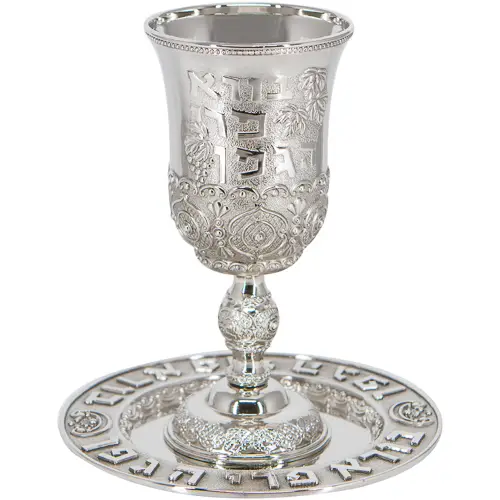
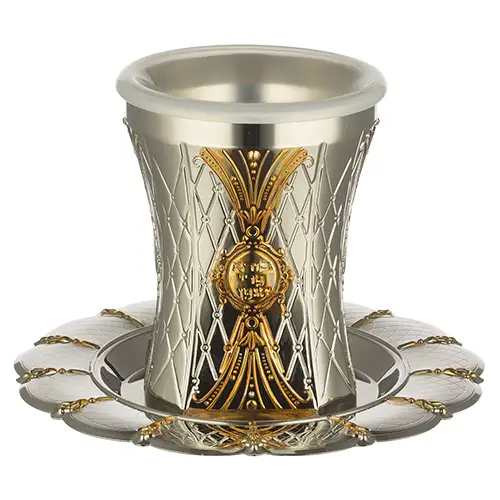
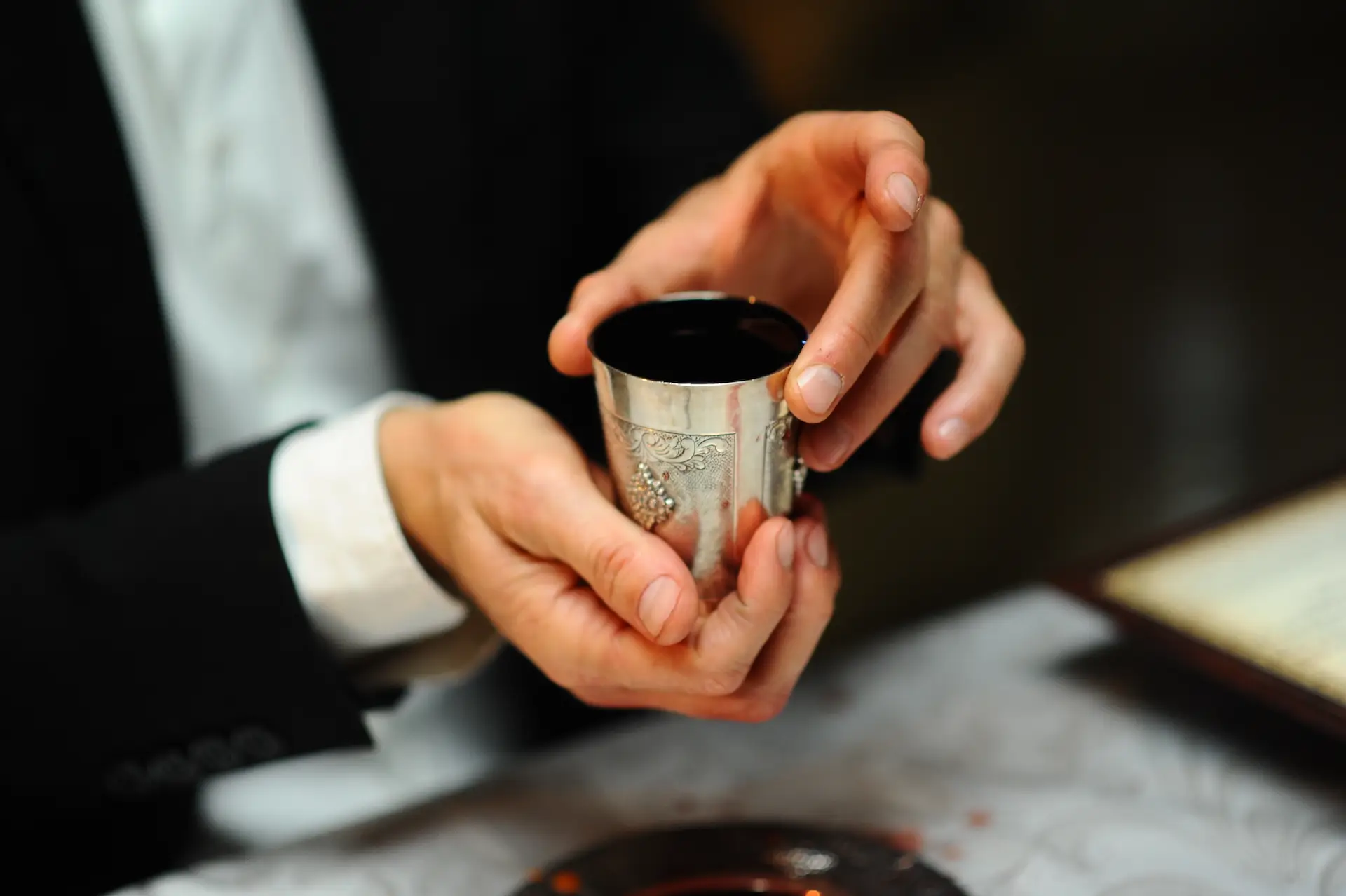
- The family should stand for Kiddush, and the head of household should recite Kiddush in order for the entire family to fulfill their obligations.
- The cup is lifted in the right hand and then transferred to the left. In the left hand, it should be held in the center of the palm, with the four fingers curled upward to enclose it and the thumb resting at the side of the hand. The cup should be held at least 24 centimeters above the tabletop.
- Before Kiddush, one should gaze at the lit candles on the table. While reciting the blessing of “Who creates the fruit of the vine,” one should gaze at the wine in the cup.
Kiddush on the night of Rosh Hashanah consists of three blessings:
- “Savri maranan” followed by the blessing of borei pri hagofen, “Who creates the fruit of the vine.”
- The blessing of “Who has chosen us from every nation…Who sanctifies Israel and the Day of Remembrance.”
- The blessing of shehecheyanu: “Blessed are You … Who has kept us alive, sustained us, and brought us to this time.”
- The person who recited Kiddush should drink a minimum of a reviit (86 ml.) from the cup and pour wine from the cup to distribute to the rest of those present.
- After the head of the household has recited Kiddush, every male from the age of thirteen and up may recite his own Kiddush.
- When Rosh Hashanah falls on Shabbat, there are certain differences and additions in the text of Kiddush. These textual differences appear in the machzor.
The Holiday Meal
After Kiddush, everyone must perform Netilat Yadayim, the ritual washing of the hands, in preparation for the festive holiday meal. The procedure for Netilat Yadayim is as follows: Lift the cup in the right hand and fill it with water. Transfer it to the left hand and pour water on the right hand three times in a row. Then return the cup to the right hand and pour the water three times on the left hand.
After this procedure has been followed, the hands should be dried well and one should recite the blessing, “Blessed are You … Who has sanctified us with His commandments and has commanded us about the washing of the hands.” Once the blessing has been recited, it is prohibited to speak until after one has recited the blessing of hamotzi and eaten a bite of challah.
The head of the household should grasp both loaves of challah in his hands and recite the blessing of hamotzi: “Blessed are You…Who produces bread from the land.”
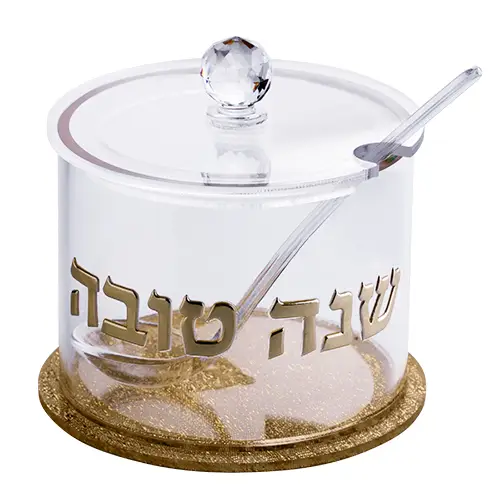
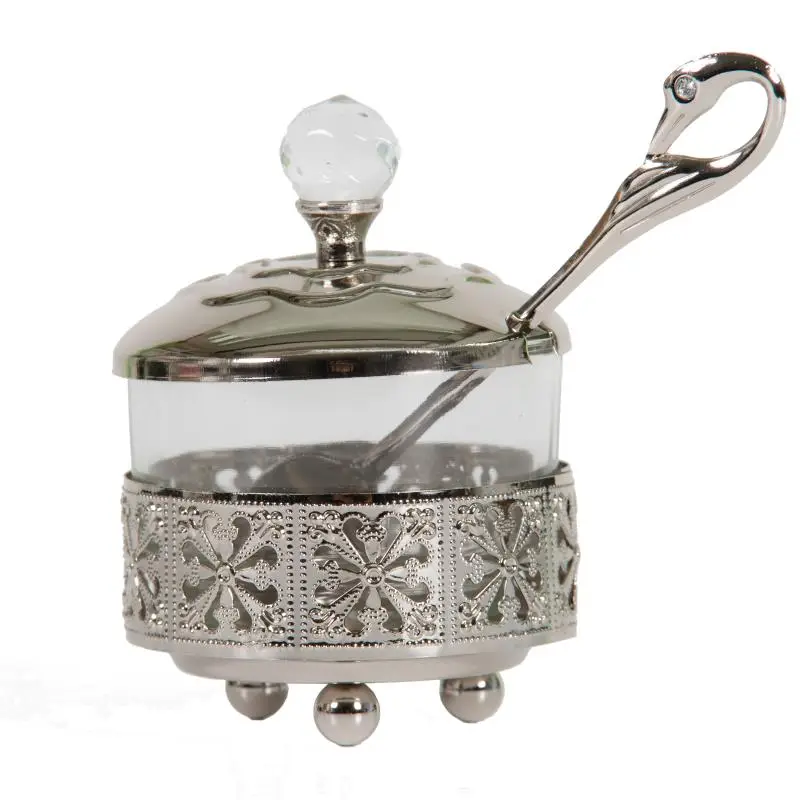
- On the night of Rosh Hashanah, the pieces of challah are dipped in honey after they are cut, in contrast to the Shabbat meals throughout the year, when the bead is dipped in salt. Honey is used at every meal on Rosh Hashanah, but salt should also be placed on the table, even though it is not being used.
On Rosh Hashanah, it is customary to use round loaves of challah made to resemble a crown, since Rosh Hashanah is the day we celebrate G-d’s “coronation” as the King of the universe. There is yet another layer of symbolism in the round shape of the loaves; they indicate the cyclical nature of the months of the year.
Special Foods
On the night of Rosh Hashanah, it is customary to partake of special foods that symbolize sweetness, goodness, prosperity and blessing, in honor of the new year. These foods are called simanim, “signs,” and are eaten after the first piece of bread of the meal.
Apple: An apple is dipped in honey, and we recite the blessing, “Blessed are You…Who creates the fruit of the tree.” Then, before eating the apple, we recite the formula, “May it be Your Will that we should have a sweet new year.”
- It is customary to recite the blessing only on the apple. No blessing is recited over the other symbolic foods, but each is accompanied by a similar brief prayer.
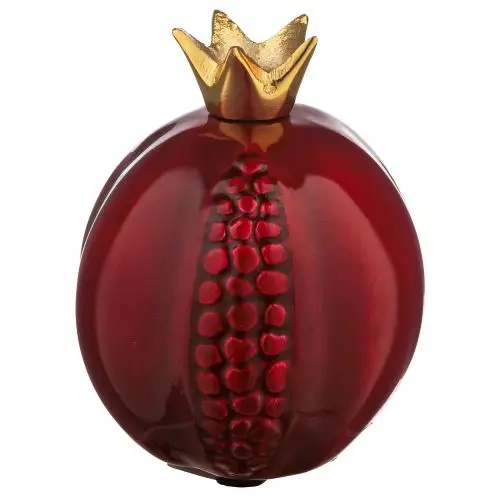
Pomegranate: It is customary to eat a pomegranate at this meal. A pomegranate contains a plethora of seeds, and we ask G-d to make our merits “as many as [the seeds of] a pomegranate.”
Ram’s Head: It is also customary to eat the head of a ram in order to allude to the ram that our patriarch Abraham sacrificed on the altar after G-d told him not to sacrifice his son Isaac.
- When a ram’s head is not available, some have the custom of eating the head of a sheep or a fish. The fish symbolizes bounty and productivity, and the consumption of a head alludes to our prayer “that we should be the head and not the tail.”
Foods with Symbolic Names
Dates: The Hebrew word for date is tamar. In a play on words, we eat a date and pray to G-d that our enemies should cease to exist (yitamu).
Beets: The Hebrew word for beet, selek, is similar to the Hebrew word yistalku, “let them be removed.” We pray to G-d that our enemies be removed.
Beans: This word alludes to the downfall of our enemies; the Hebrew word for beans, polim, is close to the word yipolu, “let them fall.”
- There are many other foods that are eaten for their symbolic value, as well.
- On Rosh Hashanah, we refrain from eating foods containing vinegar or foods that are sour (such as pickles), bitter, or sharp.
Grace After Meals
- Before reciting the Grace After Meals, we wet the tips of our fingers with water and touch them to our lips. This custom is known as mayim acharonim, literally “the final waters.”
- If there are three adult males (thirteen years of age or more) at the table, the zimun, which appears before the Grace After Meals, is recited. The zimun is essentially an introduction to this series of blessings.
- In the Grace After Meals, we give thanks to G-d for the delicious food that we have eaten. The text of the Grace After Meals appears both in the siddur and in the machzor.
- On Rosh Hashanah, we add the passage of Yaaleh V’Yavo, in which we refer to the holiday as “this Day of Remembrance.” At the end of the Grace After Meals, we add the line, “May the Merciful One renew this year upon us for goodness and for blessing.”
The Shema
We recite the bedtime Shema on Rosh Hashanah just as we do on Friday nights. We begin with the blessing of Hashkiveinu (“Lay us down”), followed by the paragraphs of the Shema, “Let the pious ones rejoice,” “The Supreme One Who dwells in secret,” “Please, with Your might,” “A Song of Ascents,” and Gad Gedud.
Minimizing Sleep
Many have the custom of minimizing their sleep over the days of Rosh Hashanah, especially on the first day of the holiday, in order to prevent their fortune from being “sleepy” during the coming year. Or, as some Jews explain it, “How could it be that a trial is in progress and the defendant is sleeping contentedly?”


