









Psalm 27
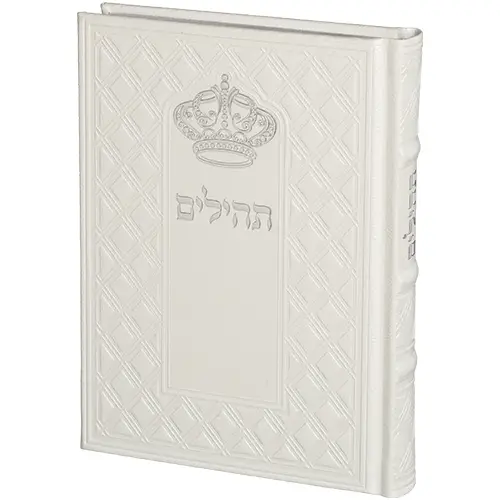
From the first day of Rosh Chodesh Elul until the end of the holiday of Sukkot (Hoshana Rabbah, the 21st of Tishrei), we recite Psalm 27, “To David, G-d is my Light and my Salvation,” both at the conclusion of the daily morning services (after the Song of the Day) and at the conclusion of the afternoon prayers (before Aleinu).
The verses in this Psalm express a powerful faith in G-d and love for the Creator of the universe, and they describe the kindness that He displays toward His creations. These words are particularly fitting for this season, in which we take our leave of the previous year and prepare for the beginning of a new year.
We are also taught that this Psalm alludes to the various holidays we celebrate during the month of Tishrei. The phrase “G-d is my Light” refers to Rosh Hashanah, while “my Salvation” is a reference to Yom Kippur. Later in the Psalm, the words “He will shelter me in His sukkah” are an allusion to the festival of Sukkot.
Checking Tefillin and Mezuzot
The month of Elul is an appropriate time to do a brief “round of checking” and make sure that one’s tefillin and mezuzot are still valid.
Even if you bought your tefillin or mezuzot in perfect condition, there is always the chance that they have become invalidated. Both tefillin and mezuzot contain small parchment scrolls, with sections of the Torah written on them in ink, and over time the letters may run into each other or become smudged or erased due to the heat of the sun or other environmental factors, which would invalidate these ritual objects.
While it is possible to have one’s tefillin and mezuzot inspected once every few years, ideally one should bring them to a qualified, G-d-fearing scribe for examination every year during the month of Elul.
Do you need help finding a scribe? Our website, www.yahaduton.com, contains information about Chabad headquarters and stores selling religious items throughout the world.
Blowing the Shofar
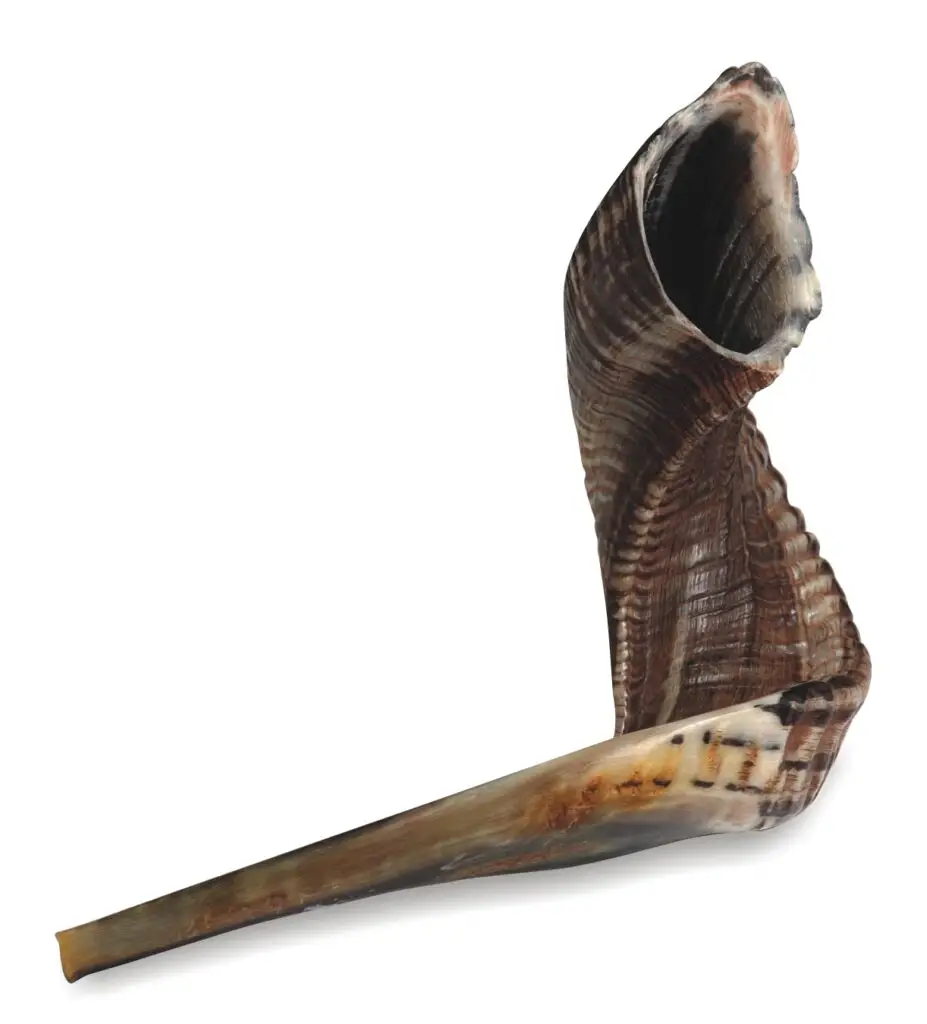
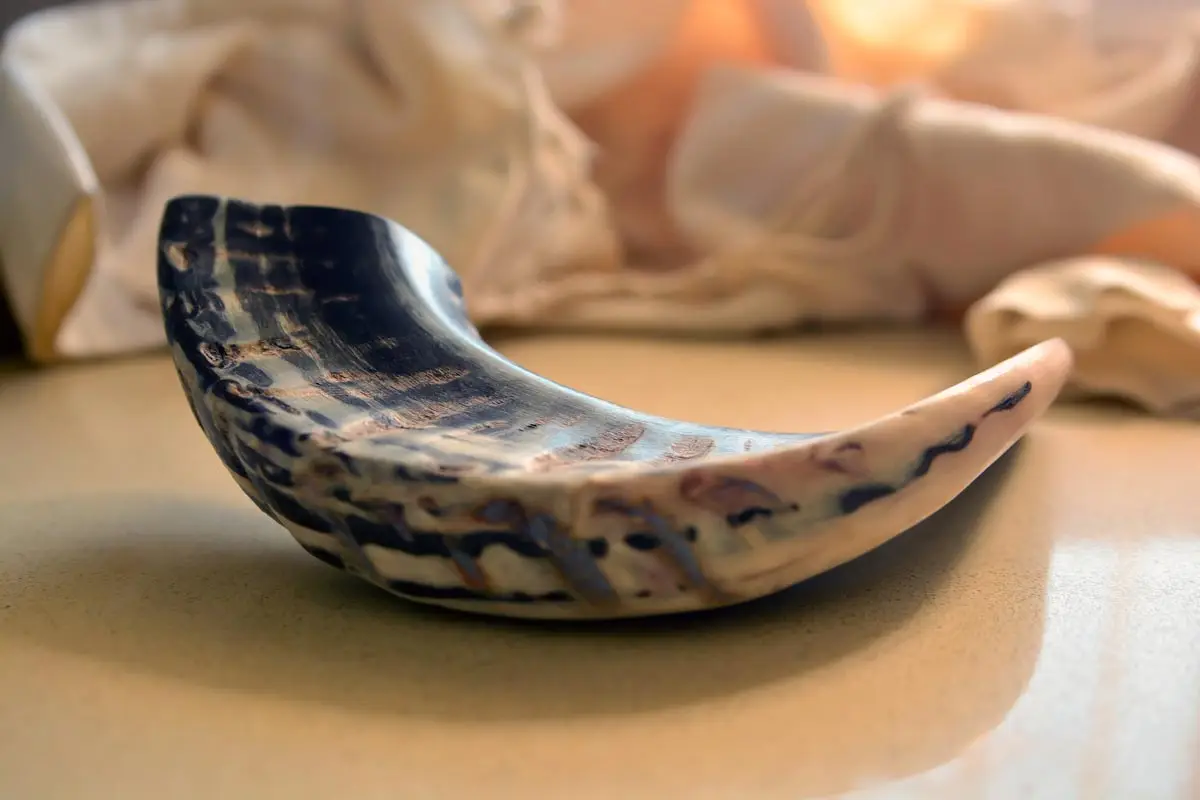
It is customary to sound the shofar after the morning prayers every day from Rosh Chodesh Elul until Erev Rosh Hashanah.
A shofar is a sort of musical instrument that is generally made out of a hollowed-out ram’s horn. The shofar has served the Jewish people from the very beginning of their history, with its sound serving as a sort of “alarm” alerting them that the time has come to go out to battle, to convene for an emergency assembly, and so forth.
The sound of the shofar has the ability to awaken those who hear it and to cause them to tremble, making it only natural that the shofar is one of the main motifs of the period of Elul and the Days of Awe. The shofar blasts, in a sense, call upon us to take a recess from our preoccupation with our worldly pursuits, reminding us that we are in a special month when we must place special emphasis on our spiritual goals.
- Anyone from the age of thirteen and up may sound the shofar during the month of Elul.
- Every day, a series of ten blasts should be sounded on the shofar: tekiah, shevarim, teruah, tekiah; tekiah, shevarim, tekiah; tekiah, teruah, tekiah.
For an exact definition of each of the different sounds of the shofar, see below.
Ketivah v’Chatimah Tovah
From the middle of Av, the month before Elul, it is customary for Jews to wish each other a good new year—or, in Hebrew, a “ketivah vechatimah tovah—good writing and sealing.” This expression reminds us of the approach of Rosh Hashanah and the fact that we must prepare ourselves to be worthy of being “written” and “sealed” in the Book of Life on the Day of Judgment.
It is customary to include these good wishes in letters as well. When two people correspond, the phrase is traditionally used at the conclusion of every letter. Even today, when most correspondence is digital, the traditional words can and should be included at the end of every e-mail.
Three Chapters of Psalms
Rabbi Yisroel Baal Shem Tov, the founder of the Chassidut movement, called for the recitation of three chapters of Psalms, following the sequence of the Book of Psalms, every day from Rosh Chodesh Elul until Yom Kippur. On Yom Kippur, the final thirty-six chapters are recited, concluding the recitation of the entire Book of Psalms.
- On the first day of Elul, we recite Psalms 1, 2, and 3. On the second day, we recite Psalms 4, 5, and 6. We continue following this pattern throughout the remainder of this period.
- If one forgets to recite the Psalms of a particular day, he can still recite them over the coming days.
Did you forget which three Psalms should be said today?
Look at the end of the Ohel Yosef Yitzchak edition of Psalms for a chart of the chapters recited each day.
Internal Reckoning
During the year, we tend to conduct our service of G-d as if it were a “business.” As in any business, we must make set times to assess the way in which we handle our affairs, to calculate the cost and profitability of our methods and to determine whether we are truly living up to the correct standards. We must take time to evaluate our feelings and thoughts, our speech, and of course our actions, and to make whatever changes are necessary or appropriate for the future.
In Judaism, this type of reckoning is known as a cheshbon hanefesh, literally “an accounting of the soul.” Our religion designates specific times when it is proper to conduct such an accounting:
Once a day, when we recite the bedtime Shema, we should review the day that has passed, engaging in introspection and evaluating our words and deeds over the course of the day.
Once a week, on Thursday evening, we are to perform a reckoning of the week that has passed.
Once a month, on the day before Rosh Chodesh, we make a “general accounting” of the past month.
Finally, once a year, we dedicate an entire month—the month of Elul—to an accounting of our actions over the year that has passed, just as a business conducts a sweeping review of its inventory every year. During the month of Elul, we also review our spiritual “merchandise,” weighing our “profits” against our “losses” in order to plan our approach to the coming year, and we engage in teshuvah.
Teshuvah – What Is, How and When Do I Do?
What Is Teshuvah?
“Teshuvah” is a term for a process of “inner repair” in which a person experiences remorse for his past misdeeds and resolves to mend his ways.
The Hebrew word teshuvah is derived from the root word shav, which denotes a return. Teshuvah is a return to G-d, and it is also a return to ourselves, to who and what we truly are.
The letters of the Hebrew word teshuvah can also be read as “tashuv Hashem—return [to] G-d.”
The fact that teshuvah is a return to ourselves should bring us to recognize that even when we have done something improper, that lapse does not stem from our inner selves. A sin is the product of a temporary lapse of judgment, a spirit of frivolity that somehow managed to gain control of us for a brief period of time and cause us to do something incorrect.
In Judaism, a person who once engaged in sins and then repented from them and mended his ways is known as a “baal teshuvah,” literally “a master of teshuvah.” Our Sages have high words of praise for such a man: “In the place where a baal teshuvah stands, even the perfectly righteous cannot stand.”
How Do I Do Teshuvah?
The teshuvah process consists of the following steps:
- “Leaving” the sin. The first step is to take leave of the sin on a practical level. This means, quite simply, stopping the improper behavior or deed from which we wish to repent.
- Regret. The second step is to experience feelings of remorse and anguish over our past failures.
- Verbal confession. The third step is to verbalize (in private) the ways in which we have sinned.
- Commitment for the future. Finally, we must resolve firmly that we will not return to those sins again.
When Do We Do Teshuvah?
While it is possible to engage in teshuvah on any day, there is one period during the year when we place a special emphasis on it: the forty days from Rosh Chodesh Elul until Yom Kippur.
Even during this period of forty days, we progress through several levels in the process of repentance:
- The month of Elul as a whole is devoted to introspection and repentance, as we discussed earlier regarding the concept of an “annual inventory.”
- The eighteenth of Elul, known as “Chai Elul,” begins a period of increased intensity in our cheshbon hanefesh. Each of the days in this period is representative of an entire month from the previous year. On the eighteenth of Elul, we are charged with making a reckoning specifically regarding the month of Tishrei during the previous year. The nineteenth of Elul corresponds to the month of Cheshvan, and so forth. The twenty-eighth of Elul, then, corresponds to the month of Av, and the twenty-ninth is the day when we make an “accounting” of our actions during Elul itself.
- The Ten Days of Repentance are the days between Rosh Hashanah and Yom Kippur. We will discuss these days at length later in this book.
Shabbat Mevarchim for the Month of Tishrei
The Shabbat preceding every Rosh Chodesh is known as “Shabbat Mevarchim,” since it is the day when we receive the blessing (“brachah”) of the coming month and we recite a special prayer, known as the birchat hachodesh (blessing of the new month), in which we pray for the new month to be filled with health, happiness, and only good things.
The birchat hachodesh, however, is not recited on the Shabbat prior to the month of Tishrei—the Shabbat before Rosh Hashanah.
Tradition teaches us that the purpose of this omission is to “confuse” the Satan, the Heavenly accuser, so that he will not recall when Rosh Hashanah is to take place and he will not attempt to “prosecute” the Jewish people on the Day of Judgment.
Chassidut teaches us that we omit the birchat hachodesh because G-d Himself, as it were, blesses the month of Tishrei on this Shabbat, and G-d’s blessing of the month of Tishrei is what gives us the ability to “bless” the other eleven months over the course of the year.
- As is the case on every Shabbat Mevarchim, one should recite the entire Book of Psalms prior to the morning service on this Shabbat.
- We recite all of the usual Shabbat prayers: Kabbalat Shabbat at night, Shacharit and Mussaf in the morning, Minchah in the afternoon and Maariv at the end of Shabbat.
- At the Maariv service at the end of this Shabbat, we do not recite the passages of “V’yehi noam” and “V’atah kadosh” because the holiday of Rosh Hashanah will occur during the coming week, and these passages are not recited at the end of Shabbat when a festival takes place during the coming week.
Selichot
The custom of Ashkenazim is to begin reciting “Selichot” on the Motzaei Shabbat immediately prior to Rosh Hashanah and every morning thereafter until Rosh Hashanah itself.
Sephardim begin reciting Selichot on Rosh Chodesh Elul and continue until Yom Kippur.
“Selichot” is the name for a series of liturgical passages whose common denominator is a display of remorse and sorrow over the Destruction of the Temple and a prayer for the Redemption. These passages incorporate Biblical verses and Talmudic passages that convey the concept of teshuvah and the fact that the merits of our Patriarchs—Abraham, Isaac, and Jacob—continue to shield and support us.
During the recitation of Selichot, we quote the Thirteen Attributes of Mercy, as if to “remind” G-d, as it were, of His attributes of compassion, mercy, and forgiveness.
The recitation of Selichot is particularly fitting for the month of Elul and the days between Rosh Hashanah and Yom Kippur, since they are a time of special closeness to G-d, when it is particularly appropriate to engage in prayer and repentance.
The Procedure for the Recitation of Selichot
- The prayer leader should don a tallit for the recitation of Selichot, even when they are recited on Motzaei Shabbat.
Selichot begins with a recitation of Ashrei, followed by the various passages of Selichot themselves.
- “Shema Koleinu—Hear Our Voice”—For this passage, the Ark is opened and the congregation recites each of four lines aloud and in unison after the chazzan: “Hear our voice,” “Return us to You, G-d,” “Do not cast us away from You,” and “Do not cast us away in our old age.”
We then continue our recitation of Selichot and conclude with the passage that begins, “We do not know what we will do.”
- During the week, it is customary to recite Selichot early in the morning, before the morning prayer service. Kabbalah teaches us that the early morning hours possess a greater degree of cleanliness and purity, and G-d is then “closer” to everyone who calls out to Him.
The 25th of Elul – The Creation of the World
The Talmud teaches us that the first day of Creation, when G-d created light, was the twenty-fifth of Elul. The sixth day, on which Adam and Eve were created, was the first of Tishrei.
We do not celebrate Rosh Hashanah on the twenty-fifth of Elul, the day when the creation of the world began. Rather, we celebrate it on the first of Tishrei, the day when human beings were created. This is because the entire purpose of creation was for man to reveal the Divine energy in the world, to expose the tremendous power with which every element of creation—inanimate objects, plants and animals—is imbued.
This is the main mission of the human race, the highest level of living being in the world. Rosh Hashanah is the day on which man was created because it is man who is responsible for carrying out the ultimate purpose of the world’s creation.


