








Background
For hundreds of years, the center of the spiritual life of the Jewish people was the Holy Temple in Jerusalem (known in Hebrew as the Bais Hamikdash). Three times a year, the entire Jewish people gathered at the Temple to pray and serve G-d.
The Temple was destroyed two thousand years ago, and in the gaping spiritual void left in the wake of its destruction, it became necessary to develop a “house of prayer” that could serve as a central location for people to gather, to pray, and to study together. The synagogue came to serve this purpose. Also commonly known as a “shul,” the synagogue is called “beit knesset” in Hebrew, a term derived from the Hebrew root word meaning “to gather or congregate.”
In the Talmud and in Jewish tradition, the synagogue is also known as the “mikdash me’at-minor sanctuary” because it is considered to be infused with sanctity and, in a sense, equivalent to the Temple itself.
Due to the importance and special status of the synagogue in Jewish life, it is a common custom to adorn it with various forms of decoration in order to beautify it as much as possible. Many synagogues feature exquisite murals or engraved images of various Jewish symbols, such as the Star of David, the menorah of the Temple, the Two Tablets, or illustrations representing the Twelve Tribes. In many synagogues, the dŽcor is enhanced by eye-catching stained glass windows and elegant chandeliers suspended from the ceiling.
The Holy Ark
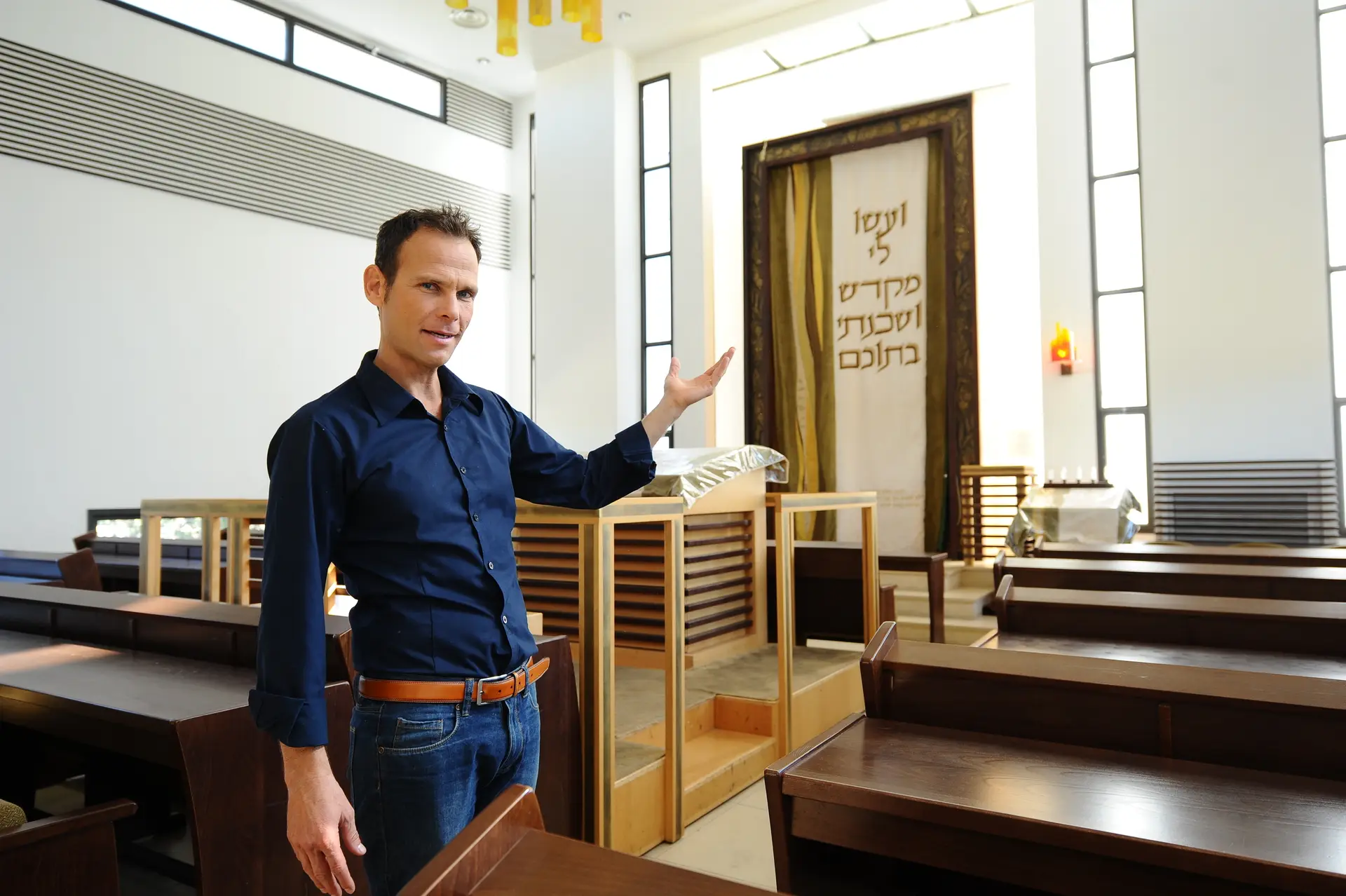
Upon entering a synagogue, the first item you will notice, in all likelihood, will be the “Aron Kodesh” – the Holy Ark. The Ark represents the heart of the synagogue and is the central focus of its sanctity. It is invariably located on the eastern wall and houses the Torah scrolls that belong to the synagogue.
In most synagogues, the Ark sits on a slightly elevated platform that sometimes resembles a stage. A few stairs leading up to the platform provide access to the Ark. This platform is also where the kohanim stand to bless the congregation on Festivals. (In Israel, this takes place on a daily basis.)
It is customary to surround the Ark, as well, with various forms of ornamentation, as an acknowledgment of its special status. In general, ornate wooden or marble pillars frame the Ark, bearing symbolic images and other forms of decoration.
The “Parochet”
In front of the doors of the Ark hangs an ornate curtain made of silk or velour and known as the “parochet,” an allusion to the curtain that separated the two sections of the Holy Temple and was known by the same name.
It is customary to beautify the parochet, just as the synagogue and the Ark are decorated. In general, gold and silver threads are woven into the parochet and it is adorned with embroidered images including the Tablets of the Covenant, the Star of David, a crown representing the “crown of the Torah,” or the text of various verses drawn from the Torah.
The parochet can come in a variety of colors, but every synagogue has a special white parochet that replaces the usual one during the period between Rosh Hashanah and Yom Kippur.
The Torah Scrolls
Inside the Ark are the Torah scrolls. A Torah scroll (“sefer Torah” in Hebrew) is the most sacred object in Judaism.
Each scroll contains the entire text of the Five Books of Moses, painstakingly handwritten on sheets of parchment made from the hide of a kosher animal.
Every Torah scroll is handwritten by a specially trained scribe known as a “sofer stam.” “Sofer” is the Hebrew word for a scribe, and the word “stam” is an acronym for “Sefer Torah, Tefillin, Mezuzah” three items that such a scribe produces. The tools of the scribe’s trade are a feather quill and a special black ink produced in exacting accordance with an ancient formula. The writing of a Torah scroll is governed by a complex set of rules, and it is essential for the scribe to maintain absolute allegiance to those rules. Every letter must be formed with the utmost precision. Even the divisions between the various sections of the Torah, as well as the spaces between letters, words, and lines, must be kept in accordance with the predetermined formula codified in Jewish law.
The Torah scroll consists of a series of parchment sheets sewn together with thread made from the sinews of a kosher animal. After the Torah scroll is completed, its two ends are attached to two wooden poles known as the atzei chayim (literally, “trees of life”). The scroll is rolled from right to left.
In Ashkenazic circles, it is customary to tie a special strap around a closed Torah scroll and then to cover the scroll with an ornate “garment” made of silk or velour. The Sephardic custom is to keep the scroll in a special case made of silver, gold, or quality wood.
It is also customary to honor the Torah scroll with various adornments. In many communities, an elegant gold or silver crown, decorated with engravings and small bells, is placed atop the Torah scroll. Many also have the custom of hanging on the Torah a silver plate with inscriptions or other forms of decoration, as well as a silver pointer in the shape of an arm ending in a hand with a pointing finger. The reader uses this silver pointer to point to the place during the public reading of the Torah scroll.
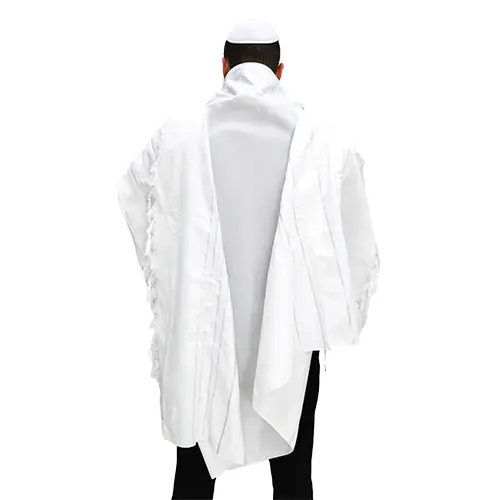
A Torah scroll must be treated with the utmost respect. It is forbidden to place any objects on top of the scroll. One may not touch the parchment with one’s bare hands; when it is necessary to touch the parchment, it is customary to cover one’s hand with the corner of a tallit or the like. It is also prohibited to leave a Torah scroll open when it is not in use.
The Bimah—The Reader’s Platform
At the center of the synagogue is an elevated platform made of wood or stone. This platform is known as the bimah among Ashkenazim, while Sephardim call it the teivah.
In most synagogues, the bimah is encircled by a railing and can be accessed by a couple of steps on both the right and left sides. The front portion of the bimah contains a large table covered with an ornate silk or velvet tablecloth. The Torah scroll is placed on this table when it is read.
The rabbi may also deliver his sermon from the bimah. Similarly, congregants occasionally make announcements of communal interest from the bimah.
In Sephardic synagogues, the leader of the prayers, known as the chazzan or shaliach tzibbur (emissary of the congregation), also stands on this platform
The Eastern Wall
The front of the synagogue and the location of the most significant seats in the synagogue is known as the “eastern wall.” In actuality, all synagogues outside of the Land of Israel are positioned so that they face Israel. Thus, in the United States and other countries that lie to the west of Israel, the front of every synagogue is, indeed, its eastern wall. In countries that are located to the north, east, or south of Israel, however, the front wall shifts accordingly.
Within Israel itself, all synagogues outside of Jerusalem are built to face Jerusalem. Within the city of Jerusalem, the synagogues are built with their front walls facing the location of the Temple.
The Ark is located on the eastern wall of the synagogue, as is the podium where the prayer leader stands (in Ashkenazic congregations). Prominent members of the community and distinguished guests are also seated there.
Ezrat Nashim—The Women’s Section
The internal structure of the synagogue is patterned after the Temple in another way, as well: rigid separation is maintained between men and women. The courtyard of the Temple was divided into several sections known as azarot. Separate sections were designated for men and women (with the men’s section being further divided into separate sections for kohanim and for other men).
Today’s synagogues continue to observe the ancient tradition of assigning separate seating areas to men and women during the services. The purpose of this separation is to maintain the level of sanctity and decorum that is appropriate for a synagogue. The mingling of men and women might create an atmosphere of frivolity that would not be befitting for the sacred confines of a synagogue. Thus, every synagogue contains a seating area for women, known in Hebrew as the “ezrat nashim.”
In some synagogues, the women’s section is located at the rear, with a separate entrance and a partition separating it from the men’s section. In other synagogues, the women’s section is a gallery overlooking the men’s section, affording the women a convenient vantage point from which they can view the proceedings in the sanctuary below.
The Amud—Prayer leader’s lectern
On the eastern wall of the synagogue, to the right of the Aron Kodesh, stands the amud, a tall lectern with a slightly inclined surface. The amud is used by the chazzan leading the congregation in prayer, who rests his siddur on its inclined surface.
Synagogue seats
By its very nature, a synagogue serves as a sort of “second home” for every Jew. Consequently, most of the congregants in a synagogue have their own “regular” seats where they customarily sit every time they attend services.
An interesting distinction between Ashkenazic and Sephardic synagogues lies in the seating arrangements of each. In Ashkenazic synagogues, the seats tend to be arranged in rows, all of them facing the eastern wall and the Aron Kodesh. In Sephardic synagogues, on the other hand, it is not unusual to find the seats arranged in the form of a U around the bimah.
The bookcases
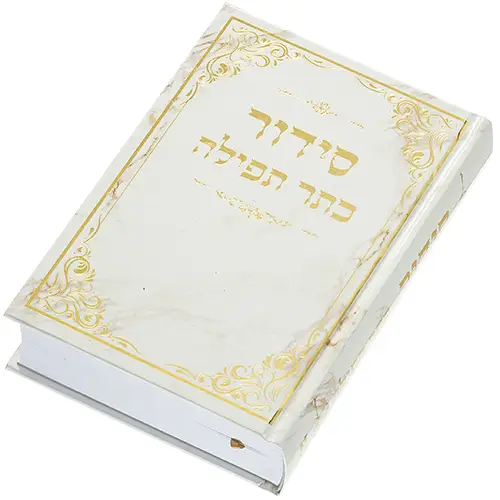
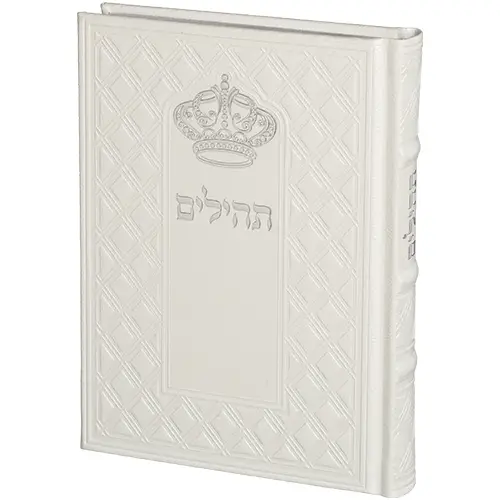
Every synagogue must have an ample supply of prayer books, which are generally kept on bookshelves somewhere inside the synagogue. The Jewish prayer book is known as a siddur and generally contains a comprehensive list of the prayers printed in it, along with the page numbers where they can be found. Another staple of the synagogue’s book collection is the chumash, a printed copy of one or all of the Five Books of the Torah, which congregants use to follow along during the reading of the Torah. Most synagogues also contain an assortment of other books with which the congregants can engage in Torah study.
The charity box
Every synagogue also contains a box where donations to charity can be deposited. This box is sometimes known by the Hebrew term kupat tzedakah. It is customary for congregants to place money in the charity box on weekdays before prayer services. The money that is collected can be put to various uses: defraying some of the many expenses of the synagogue itself, aiding needy families, or supporting various worthy organizations.


