







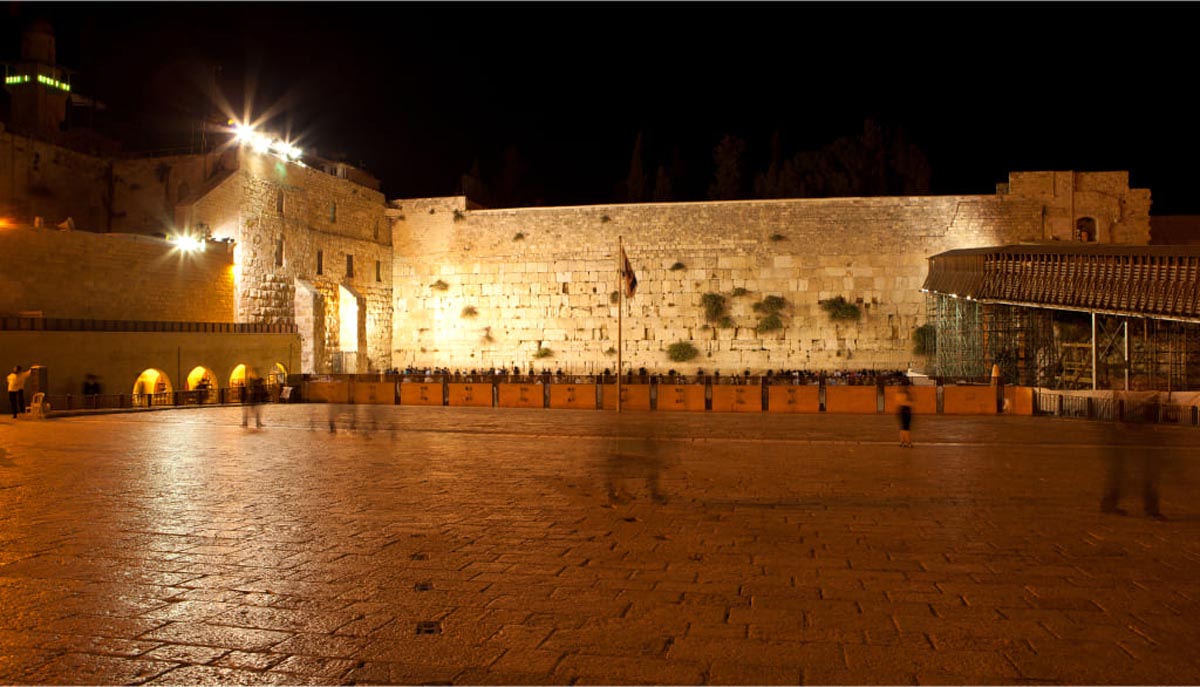

The time and preparation
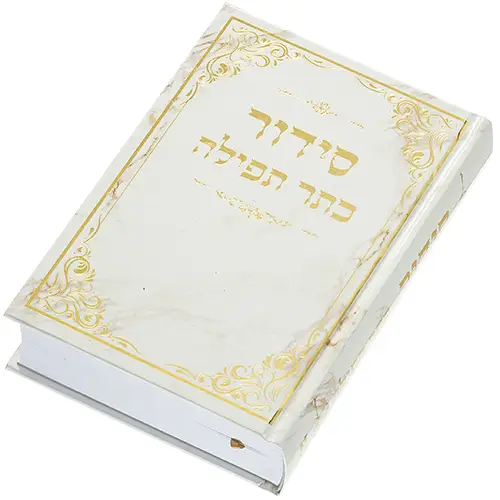
The Maariv service is also known as “Arvit.” It is the third and final prayer of the day and was composed by our patriarch Jacob. Its main components are the Shema and its blessings, and the Shemoneh Esrei.
The Time for Maariv
The time for the recitation of Maariv is anytime after nightfall (the emergence of three small stars) until dawn. The exact times vary on a daily basis, and one should consult the charts of times for prayer that appear in calendars or on the Internet.
Preparations for Prayer
One should not become involved in any activity that may take time—such as beginning a meal or going to sleep— during the half hour preceding nightfall. Instead, one should wait a bit, recite Maariv and the Shema in its proper time, and only then turn one’s attention to other activities. If one were to be permitted to begin a meal or other activity, there is a concern that the meal might become prolonged or the person might fall into a deep sleep and miss the time for reciting the Shema.
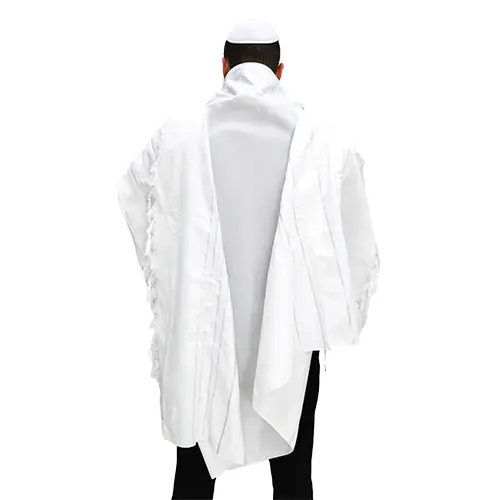
As for every prayer service, one must prepare for Maariv properly by ensuring that one’s body and clothes are clean and that one is dressed in a dignified fashion. A man should wear a jacket and two head coverings. Chassidim also have the custom of wearing a gartel.
- In contrast to Shacharit and Minchah, however, it is not customary to give money to charity before Maariv.
The order of prayers
V’Hu Rachum (“He Is Merciful”) and the Opening Paragraphs
The Maariv service begins with the passage of V’Hu Rachum—“He is merciful and atones for sin.” In this passage, we beseech G-d to have mercy on us, to forgive us and atone for all the undesirable things we have done over the course of the preceding day.
We use the term “merciful” in reference to G-d because even when we are punished for our sins, it results from G-d’s great mercy. G-d desires to remove the sin, not the sinner, from the world; He acts like a father who scrubs a young child in order to cleanse him of filth.
We go on to recite a series of verses from Psalms, beginning with Psalm 134, “A Song of Ascents.”
We conclude with three verses, each of which we recite three times: “G-d of Legions is with us; He is a support for us. G-d of Legions, fortunate is the man who trusts in You. G-d, save us; may the King answer us on the day we call out.”
Barchu
This paragraph is recited only at a communal prayer service. The chazzan recites the Half Kaddish, followed by Barchu. The chazzan says, “Bless G-d, the Blessed One,” and the congregation responds, “Blessed is G-d, the Blessed One, for all eternity.”
- Barchu should be recited while standing.
- When the chazzan says the words “Blessed is G-d, the Blessed One,” one should bow forward slightly.
- At the first word of the congregation’s response of “Blessed is G-d, the Blessed One, for all eternity,” one should bow forward.
The Blessings of the Shema
Before the Shema, we recite two blessings: “Hamaariv Aravim–Who Brings On Evening” and “Ahavat Olam– Eternal Love.”
We have already elaborated on the need for special blessings to precede and follow the Shema. Like the blessings of Shacharit, these blessings instill love for G-d in the heart of the supplicant.
“Hamaariv Aravim–Who Brings On Evening”
The first blessing before the morning Shema refers to G-d as the One Who creates light. Now, the first blessing is dedicated to the nighttime, describing G-d as the One Who “brings on evening.” We praise G-d for the wondrous fashion in which He commands the mighty legions of the heavens, and we give thanks to Him for the fact that day and night alternate slowly, not all at once, so that we can become accustomed to darkness or light.
The blessing concludes with the words, “Blessed are You, G-d, Who brings on evening.”
“Ahavat Olam—Eternal Love”
The content of this blessing is the same as that of the blessing of the same name that we recite during the morning prayers. The blessing speaks about the great love that G-d demonstrates to His people, the Jewish nation. We are bound by our gratitude for His love, and we declare that we will continue studying the Torah and fulfilling His commandments, day and night, out of our recognition that the Torah constitutes our very lives.
The blessing concludes with the words, “Blessed are You, G-d, Who loves His nation Israel.”
The Shema
We are Biblically obligated to recite the Shema both in the morning and at night; that is why it is included in the Maariv service. Once should recite all three paragraphs of Shema during Maariv.
- While reciting the verse “Shema Yisrael,” one should cover one’s eyes with the right hand, to create a situation of complete focus, without any distractions.
- This verse should be recited with great mental intent and focus on the meaning of every word. A person who fails to have the proper intent while reciting this verse is required to repeat it.
- The next sentence, “Blessed is the name of the honor of His Kingship,” should be recited in a whisper.
- The Shema should be recited slowly and deliberately, while focusing on the meaning of every word. One should be careful not to run two words together, and one should certainly take care to enunciate each word clearly and not “swallow” any words.
- Unlike at Shacharit, we do not grasp the tzitzit during the nighttime Shema, nor do we kiss them at the word “tzitzit.”
After the Shema, we recite two more blessings: “Emet V’Emunah—True and Faithful,” which is known as the “blessing of the Redemption,” and “Hashkivainu—Lay Us Down.”
“Emet V’Emunah—True and Faithful”
This blessing describes the wonders that G-d performed during the Exodus from Egypt and the splitting of the Red Sea. We give praise to G-d for the miracles He performed for our forebears, and we express our submission to His Kingship.
The blessing concludes with the words, “Blessed are You, G-d, Who has redeemed Israel.”
“Hashkivainu—Lay Us Down”
This blessing begins with the words, “Lay us down, our Father, in peace, and raise us up, our King, for a good life and for peace.” It is interesting to note that we relate to G-d at night as a Father, while our attitude toward Him in the morning views Him as a King. But the difference is clear. In the morning, as soon as we get up, we say the Modeh Ani prayer. Our first thought of the day is that the King of kings is beside us, watching all of our moves. We haven’t yet contemplated our personal connection with Him, but we obey Him and surrender to His authority like a servant fulfilling the directives of a king.
At night, however, after three prayer services filled with emotion and intent—and after a long day replete with hidden miracles—our relationship with the Master of the Universe is like the relationship of a child with his father. We know that G-d is a good, compassionate Father, Who loves His children and showers them with warmth and love.
In this blessing, we ask G-d for special protection during the nighttime hours, and we pray that nothing bad happen to us.
The blessing concludes with the words, “Blessed are You, G-d, Who protects His people Israel forever.”
In a communal prayer, the chazzan recites the Half Kaddish at this point.
The Shemoneh Esrei
We recite the Shemoneh Esrei at night as we do in the morning and afternoon.
- Since the Maariv service is not a time for supplications or Tachanun, we do not strike our chests at the words “we have sinned” and “we have been rebellious” during the blessing for forgiveness.
- At the Maariv service on the night of Rosh Chodesh, one should take care to recite Yaaleh V’Yavo before the blessing of Modim.
The Conclusion of the Prayers
At the Maariv service, the chazzan does not repeat the Shemoneh Esrei. Consequently, at a communal prayer, Shemoneh Esrei is followed by the Full Kaddish and then by Aleinu and Al Tira.
The Counting of the Omer
Beginning with the evening after the first day of Passover, and culminating on the night before Shavuot, we count the Omer after the Shemoneh Esrei of Maariv.
The Counting of the Omer is discussed at length in Yahaduton—Passover and Shavuot.
Before the counting, we recite the blessing, “Blessed are You, G-d, our Lord, King of the Universe, Who has sanctified us with His commandments and commanded us regarding the counting of the Omer.” We then state the number of days that have elapsed since the counting began. For instance, on the fourth night we state, “Today is four days of the Omer.” The chazzan recites the blessing and counts the Omer first, and the congregation repeats it after him.
Later in the Omer, we also add up the number of weeks that have passed. For instance, on the seventh night we state, “Today is seven days, which are one week of the Omer.” The next night’s counting is, “Today is eight days, which are one week and one day of the Omer.” The rest of the nights follow this pattern.
Women do who not recite the Maariv service count the Omer after nightfall.
- Both the blessing and the counting itself are recited while standing.
- While counting the Omer, one should think about the letters and verses that are listed in the siddur for each day. For instance, on the second night, when counting two days of the Omer, one should focus on the word “bakoach” in the paragraph “Ana bakoach,” the word “yichaneinu” from Psalms 67, and the letter shin in the paragraph that begins “Yismechu v’yeranenu leumim.” The appropriate passages all appear in the siddur, alongside the daily counting of the Omer.
- After the counting, we recite the prayer, “May the Merciful One return to us the service of the Temple to its place, speedily in our days, Amen, Selah.”
Additional Paragraphs That Accompany the Counting of the Omer
Psalms 67, which begins with the words, “For the conductor in melodies, a psalm, a song. May G-d give us grace.”
The prayer of Rabbi Nechunia, “Ana bakoach—Please, with the strength of Your right hand’s greatness…”
A special prayer, drawn from the world of Kabbalah, which begins with the words, “Master of the Universe.”
The Counting of the Omer is followed by Aleinu, Al Tira, and the conclusion of the prayer service.
If One Forgot to Count
A person who forgot to count the Omer at night is required to count it during the daytime of the next day, before sunset, without reciting a blessing. He may continue counting the Omer at night with a blessing on the following nights. If a person forgot to count the Omer both at night and on the following day, he should continue counting the Omer on the coming nights without reciting a blessing.
The Prayer of a Public Fast Day
On a public fast day, the Shacharit and Minchah services are slightly altered. We will discuss this at length in future volumes of Yahaduton.


