







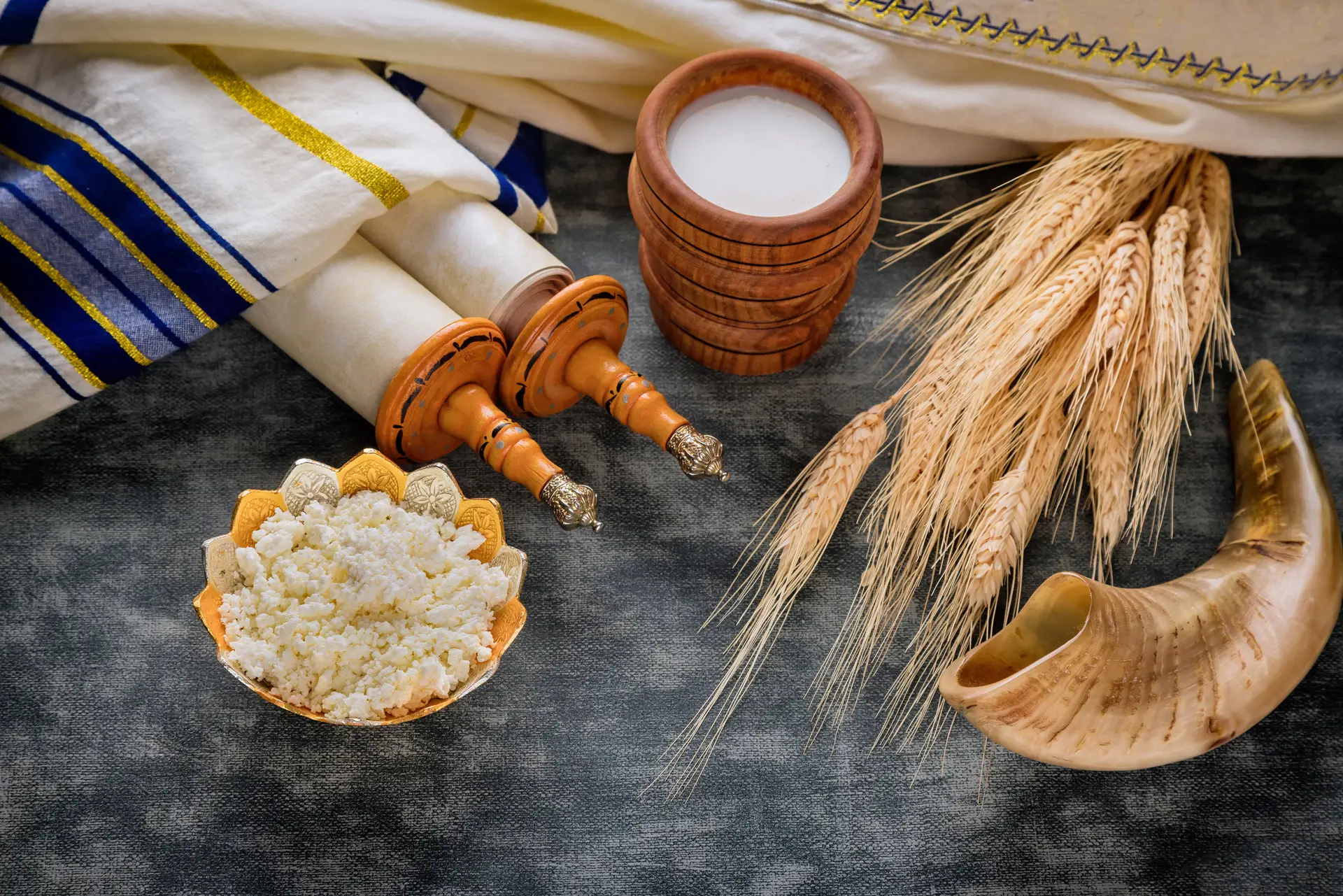

Introduction
The Festival of Weeks, or Shavuot, is the celebration of the giving of the Torah, and it is the second of the “Three Pilgrimage Festivals” – Passover, Shavuot, and Sukkot. It is the only holiday that does not have a fixed date, but it is held at the end of the seven weeks of the “Counting of the Omer”. In the modern Hebrew calendar, which is fixed, Shavuot always falls on the 6th of Sivan. This holiday is also different from the other two pilgrimage festivals in that it is celebrated for only one day, not seven.
Outside of Israel, Shavuot is celebrated for two days: the 6th and 7th of Sivan.
The Story of the Giving of the Torah
In the year 2448 after the creation of the world, after the Israelites’ exodus from Egypt, Moses informed them that they were destined to receive the “Torah” and “commandments” from God, and by accepting and observing them they would become His chosen people.
The Preparation of Purity
The Israelites prepared for this defining event over seven weeks, counting the days in eager anticipation, shedding the vile habits they had acquired during hundreds of years of slavery in the land of sin (Egypt), and undergoing a deep spiritual transformation of purification and sanctification.
On the 3rd of Sivan, God instructed Moses to prepare the Israelites for a ‘final preparation’ towards receiving the Torah, and to warn them not to approach Mount Sinai for 3 days.
The Day of the Giving of the Torah
On the morning of Shavuot, at an early hour, God woke the Israelites with the sound of a very loud shofar. God’s revelation on Mount Sinai was accompanied by lightning, heavy cloud, fire, and smoke.
Moses led the frightened people out of the camp, and together they stood at the foot of the mountain. God called Moses to ascend the mountain and once again warned the Israelites not to approach or touch it.
The Ten Commandments
All the people heard the first two “Words” directly from God: “I am the Lord your God”, and “You shall have no other gods before Me”. Because of the immense power of this divine revelation, and fear that they might die during it, the Israelites asked Moses to be the ‘mediator’ between them and God and to convey the rest of the “Words” to them, which indeed happened.
The “Ten Commandments” is the name given to the ten directives that the Israelites were commanded at that awe-inspiring event, including ‘divine’ and mystical ones such as “I am the Lord your God”, as well as ‘physical’ ones like “You shall not murder”.
The Purpose
The purpose of this event was to bind the Israelites, to instill awe of their name among the nations of the world, and to bring them to a state of “Fear of Heaven” and experiential faith in God. In addition to faith, it was an event where God gave His people His ‘manufacturer’s instructions’ – the “Ten Commandments” – which would form the foundation and basis for the entire Torah for future generations. This event symbolized a kind of ‘covenant’ between the people and God. For this reason, the tablets on which the “Words” were written are also called the “Tablets of the Covenant”.
Holiday Names
Shavuot: This is the most common name of the holiday, named after the Torah’s commandment to count the seven weeks that connect Passover to Shavuot. The word “weeks” can also be interpreted as “oaths”, hinting at the two oaths that took place at the time of Mount Sinai: The oath God swore to the people of Israel that He would never replace them with another nation, and the oath of the Jews, who committed themselves to remain faithful to God, His Torah, and His commandments.
Time of Giving Our Torah: It’s called this because on this day, God gave us the Torah on Mount Sinai.
Festival of First Fruits: Named after the season of the “first fruits”, which begins on Shavuot, when farmers would bring to the Temple the first fruits they produced that year.
Atzeret: The meaning of the word “Atzeret” is: stopping, ending, and sealing. In a certain sense, Shavuot is the culmination and ‘sealing’ of Passover, due to the period of “Counting the Omer” that connects and binds them together. Also, on the holiday we simply stop from doing work.
Festival of Harvest: In Israel, the wheat harvest season began before Shavuot. During the holiday, a special offering was brought to the Temple that symbolizes this fact. The offering was called “Two Loaves of Bread,” and was made from two loaves made of wheat.


