








Surrounding Environment
The surrounding environment has a great impact on the quality of our life. Therefore, when we are looking for where to live, we should not only check if we are close to the municipal pool or the children’s school, but also the surrounding environment.
We don’t only need to worry about nice neighbors with whom we can share a cup of coffee on a day off, or who can be a babysitter in an ’emergency’, but also neighbors who create a traditional Jewish environment and atmosphere. Make sure we have potential neighbors with a worldview that suits us and the lifestyle we want to live. They will greatly shape – even if we don’t want – our relationship with the Creator and His commandments.
It is also worth making sure there is a suitable synagogue for us in the area. The best thing is to actually visit the intended place before closing a contract on the apartment and find the synagogue where we feel comfortable, and preferably it also suits the liturgy and prayer style we are familiar with so we feel ‘at home’.
Another important thing, perhaps more than anything, is our children’s company. While we are already mentally and spiritually shaped one way or another and not every ‘prevailing wind’ can knock us down, our children are not the same. They are still soft seedlings growing and developing in all aspects, and for them, an undesirable environment or one that is not to our liking can cause irreversible spiritual and moral damage. It is necessary to check and ‘smell’ our children’s future company!
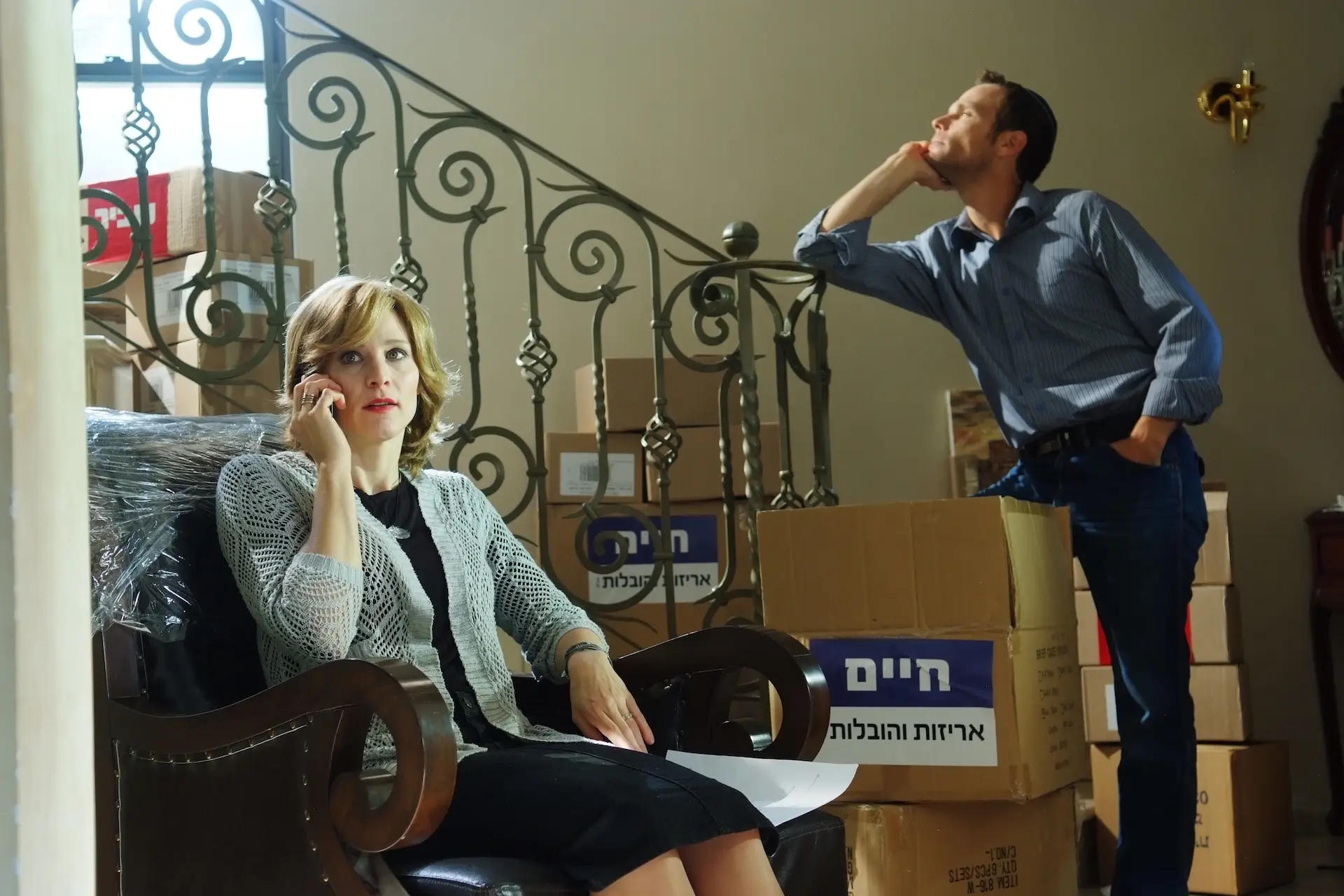
Moving Home
- It is recommended to first bring holy books into the new home and to affix the mezuzot as soon as possible.
- It is not advisable to move into a new home during the days between the 17th of Tammuz and the 9th of Av, known as ‘the Three Weeks’. There is also a preference to move into a new home on a Tuesday (which “was blessed twice with ‘it is good’”) more than any other day.
Living in a Building
In Judaism, there are extensive guidelines regarding ‘neighbor laws’. Here are a few on the tip of the fork:
- Avoid making loud noise at unreasonable hours on a regular basis. You may ask for permission for a one-time event.
- Make sure that children do not drag chairs and the like during rest hours, especially if you have neighbors below.
- Returning from an event in the late night hours? Try not to slam doors or speak loudly.
- Meeting your neighbor in the elevator or on the staircase? Greet them with a smile and a ‘Good Morning!’.
- Make sure to pay your housing association fees on time.
Building a New Home?
Building a home? There are several important details that you need to pay attention to from the planning stage, in order to avoid problems, heartache, and unnecessary expenses. For example: building a guardrail for dangerous places, a sink for ritual hand washing outside the bathroom, and more.
In a Jewish home, several elements need to be ’embedded’ into it – see on Signs of a Jewish home.
Home Dedication
Upon moving into a new home, it is customary to hold a ‘Home Dedication’ ceremony. ‘Dedication’ comes from the word ‘education’. We educate our new home.
Everything we have comes from the Creator of the Universe, and of course, we need to thank Him for it.
In Judaism, we often encounter the principle that the ‘beginning’ and ‘opening’ of different things are dedicated to the Creator of the Universe, as a sign of thanks and appreciation for what He has given us.
So too with the new home that we are dedicating now, where we dedicate one of the first moments to God – by affixing the mezuzah, saying blessings, giving charity, and discussing Torah.
Renting an apartment? There’s no need to hold a Home Dedication ceremony. Wait with it until you move into your own private home.
When is a Home Dedication conducted?
The Home Dedication ceremony can be held at any time. The preference is to conduct it as close as possible to the time of moving into the home (there’s no need to conduct ceremonies among the boxes of clothing, you can wait for a certain ‘reset’). However, if we did not conduct it when we moved in, we can still give thanks to God later on.
How is it done?
The Home Dedication party is a custom that does not have a fixed procedure, but there are several things it should contain. As the principle underlying it is giving thanks to the Creator of the Universe, it should include these elements: charity, prayer, blessings, affixing the mezuzah, and discussions of Torah.
Over time, different customs have developed on the matter: some simply invite family and friends and hold a ceremony without a predefined plan: affixing a mezuzah at the entrance to the house, sitting together at a set table, and making blessings over the food (the “Shehecheyanu” blessing on the house as well as blessings on a variety of foods), giving charity, and discussing Torah.
Many people follow a specific text for the Home Dedication ceremony that was written more than two hundred years ago by the Chida (Rabbi Chaim Joseph David Azulai, a great halachic decisor and Kabbalist), which includes a prayer for the house and its inhabitants, and various Torah passages from several books.


