








What is it?
The sages instructed us to light Shabbat candles as one of the mitzvahs that must be done before Shabbat begins.
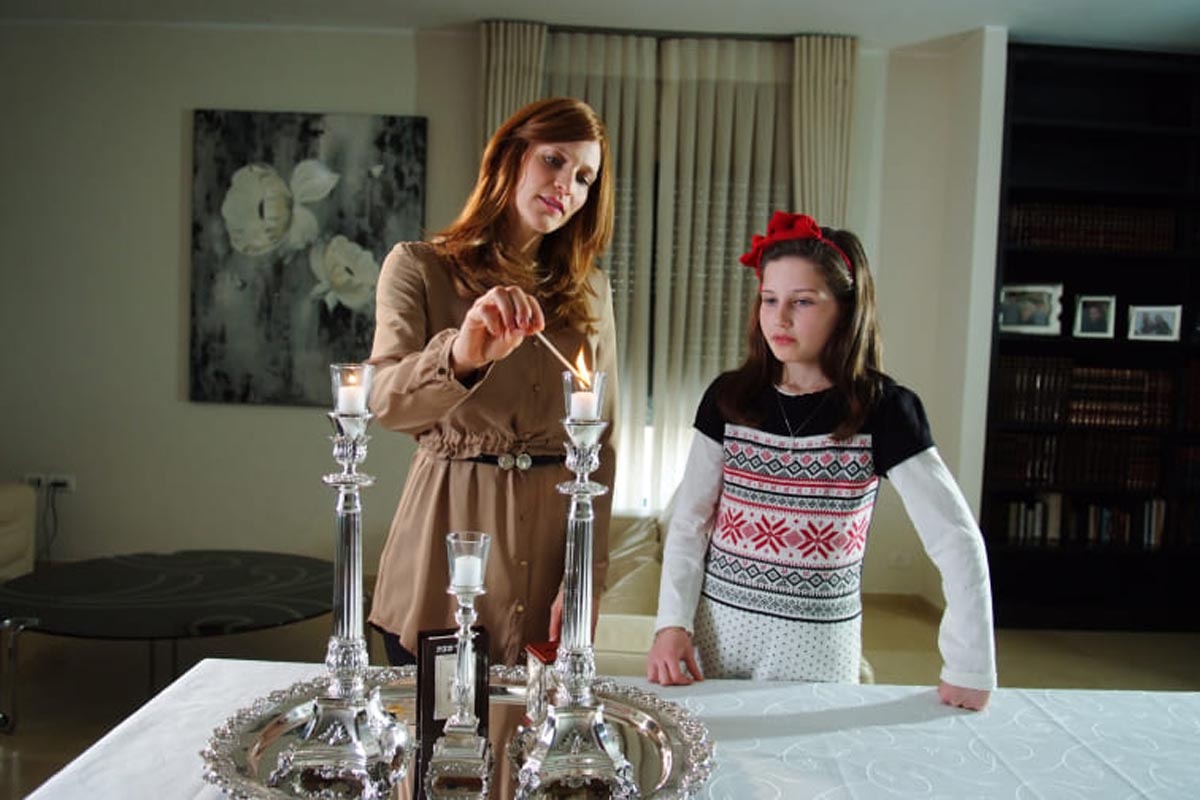
Shabbat preparations are complete, the food is ready and waiting, the house is clean, everything is neat and tidy. The family is showered and fresh, beaming in their Shabbat clothes, the time has come to light the Shabbat candles.
Now is when the woman of the home receives our special guest – the Shabbat Queen.
Why do we light?
There are several explanations offered for this “illuminating” custom:
-
- Honoring the ShabbatIn Jewish tradition, we believe that every Jew receives an additional soul on Shabbat. This soul gives us the special feeling of rest and sanctity. King Solomon in his wisdom, compared the soul to a candle (“God’s candle is the human soul”). Thus, we honor the Shabbat by lighting a candle to illuminate the table, to illuminate the home, and to “kindle” a great light in the soul as well.
- Enhancing the pleasure of ShabbatThe very presence of candlelight creates feelings of pleasure and joy in the home. The light also stimulates our appetite and enhances our enjoyment of the Shabbat meal which is one of the central and important mitzvahs of Shabbat. Thus, we try to light the candles near the Shabbat table meal so that we can truly savor and take joy from the special dishes.
- Bringing peace to the homeNot too long ago, candles were the most common means of lighting a home. For the home to feel peaceful and at rest, it had to be well-lit so that no one would, God forbid, stumble, and fall in the dark – causing grief and distress. For this reason, we still light candles in the home.
Today we address this aspect of the mitzvah by turning on our electric lights before Shabbat, but we still light candles to fulfill the other reasons.
Who lights the candles?
The mitzvah of lighting Shabbat candles applies to men and women alike. However, for reasons that we explain below, it is customary for women to light the Shabbat candles. Still, if a woman is not at home, her husband should light the two candles.
It is good for a husband to take part in the mitzvah by preparing the candles for his wife to light.
Those who live in their parents’ home do not need to light their own candles. They “fulfill” the mitzvah through their mother’s candles. However, if she does not yet light candles, or if one lives in their own home, they should light the two Shabbat candles independently at home.
When should a young girl begin to light Shabbat candles?
It is a great mitzvah to teach girls to light their own candles from the age of two. Little girls should light their candles before their mother (who has not yet lit her own candles, and thus has not accepted Shabbat) so that she can help with lighting the fire if necessary.
When a young girl lights Shabbat candles for the first time, it is good for her to recite the blessing on a new mitzvah (this blessing is called shehecheyanu (literally, “who has given us life”) in addition to the blessing on the candles. A girl may recite this blessing if she us under the age of bat mitzvah when she lights candles for the first time. After she turns twelve, she should not say the blessing of shehecheyanu even it if it is the first time she is lighting candles.
It is best to “schedule” the first time a girl lights Shabbat candles for a Shabbat when she wears a new dress, or on a holiday eve (when shehecheyanu is always recited at candle lighting).
What type of candles should I light?
Any type of candles can be used for Shabbat candles. Many families have the custom of lighting olive oil because of its beautiful, lucid light.
It is a mitzvah to light candles that are tall or generously sized (or to light a generous amount of oil) so they will stay lit throughout the Shabbat meal, and even better – remain lit after the meal as well.
- Today, the easiest way to light is with wax or paraffin candles. They are readily available in most supermarkets, and they won’t make a mess. You can also use tea lights which can be used “as is” without candlesticks or candle holders. This makes lighting Shabbat candles as simple as possible and easy to clean up.
How many candles should I light?
A married woman must light (at least) two candles, one for “zachor” and one for “shamor”– two phrases used by the Torah in connection with Shabbat. “Zachor” means to commemorate the Shabbat; “shamor” means to observe the Shabbat.
- Many Jewish mothers have a beautiful custom to light, together with the two candles, an additional candle for each child that will “brighten” their lives. For example, a married woman with two children will light four candles.
Why specifically women?
The mitzvah of lighting Shabbat candles was given specifically to women because they are naturally more present in the home. They are more occupied with the needs of the home, and their nature is more suited to managing it.
There is also another, deeper reason. Today, all represent the first woman in history – Eve. In the infamous “sin of the tree of knowledge” in Genesis, Eve tempted Adam to eat from the forbidden fruit. She caused him (and all of humanity throughout history) to receive the punishment that God had warned of – death – which did not exist in the world until that moment.
A person’s soul is called a “candle” and she extinguished the “candles” of the world by bringing death to the world.
Thus, women specifically need to light the Shabbat candles. Through the candles, they correct the damage that was done by Eve. Since the Shabbat candles are generally lit by women, the laws and customs described below are addressed to women. However, if a man needs to light candles, he follows the same customs in the same order.
Where do we light?
As mentioned above, one of the main reasons for Shabbat candles is to give the Shabbat meal an “upgrade.” Therefore, the custom is to light where the Shabbat meal will be eaten. If possible, it is best to light the candles on the Shabbat table itself (only if that is safe and the candles can remain on the table throughout the meal).
If you light the candles on the Shabbat table, place the challah (or something else that has significance like kiddush wine) on the table before lighting. That way the table will not become muktzeh (forbidden for use on Shabbat) and can be used throughout Shabbat.
When do we light?
Shabbat candles should be lit just before Shabbat to show that they were lit specifically in honor of Shabbat. They should be lit at least eighteen minutes before sunset. If that is not possible, they can be lit up until the time of sunset. After sunset – it is strictly forbidden to light candles!
The time that Shabbat begins usually depends on the time of sunset. The moment that the sun sets – Shabbat has begun. However, when a woman lights Shabbat candles, she is technically “accepts” the Shabbat, even if she lights before the sun actually sets. Therefore, she must be careful not to do any activity that is forbidden on Shabbat after she lights candles.
- The rest of the household may accept Shabbat at sunset even though she accepted Shabbat beforehand (when she lit candles).
The exact time for candle lighting can be found in Jewish calendars or online at sites like Chabad.org.il.
Before lighting candles:
-
- Dress in Shabbat clothes: If a woman thinks she may not have time to change into Shabbat clothes before candle lighting, she should light in her weekday clothes rather than risk transgressing Shabbat, God forbid, if she lights later on and Shabbat has already begun.
- Recite the afternoon prayers.
- Give a coin to charity.
The household should gather around the Shabbat table while the candles are being lit and answer Amen after the blessing. These special moments become deeply engraved on the hearts of all who are present, leaving an indelible mark of Jewish sanctity.
The candle lighting ceremony
When performing most mitzvahs that require a blessing, we say the blessing first and then perform the mitzvah. When we light Shabbat candles, we first light the candles (perform the mitzvah) and recite the blessing only after the candles are lit.
Lighting the candles
- When lighting with matches, the matches should be placed on a piece of foil or something similar on which the fire can burn out on its own.
-
- After lighting the candles, it is customary to wave your hands around the candles three times, then cover your eyes with your hands and recite the blessing:
- After lighting the candles, it is customary to wave your hands around the candles three times, then cover your eyes with your hands and recite the blessing:
בָּרוּךְ אַתָּה אַדֹנָ-י אֱ-לֹהֵינוּ מֶלֶךְ הָעוֹלָם אֲשֶׁר קִדְּשָׁנוּ בְּמִצְוֹתָיו וְצִוָּנוּ לְהַדְלִיק נֵר שֶׁל שַׁבָּת קֹדֶשׁ
Transliteration: Bah-rookh ah-tah ah-doh-noi eh-loh-hay-noo meh-lekh hah-oh-lahm ah-sher ki-deh-shah-noo beh-mitz-voh-tahv veh-tzee-vah-noo leh-hahd-lik nehr shehl shah-baht koh-dehsh.
Translation: Blessed are You, Lord our God, King of the Universe, Who has made us holy through His commandments, and has commanded us to light the holy Shabbat candles.
- During candle lighting, while your eyes are still covered, it is customary to say a silent prayer to the Creator of the Universe for the health of your children, for their success, that you will be able to take pride in them and in your family.
- Every woman may pray for whatever is in her heart.
- Then, uncover your eyes and gaze upon the Shabbat candles.
- At this point, after the candles are lit, the woman has “accepted” Shabbat. Shabbat has begun for her, and she may not perform any activity that is forbidden on Shabbat, even if she lit candles a few minutes before Shabbat truly begins.
- After the candles are lit, it is customary to wish her husband and children, “Shabbat shalom,” (have a peaceful Shabbat, in English, some say “Good Shabbos”).
After candle lighting
- After lighting the candles, ask a man who is present (and has not yet accepted Shabbat) to remove the matches (or the charity box) from the table and put them away because they are considered muktzeh on Shabbat.
- Once the candles are lit, do not touch them or move them to another place as long as they are still lit.
- One should not eat or drink after candle lighting until after kiddush at the Shabbat meal.
Oh no! I forgot to light Shabbat candles!
A woman who lights Shabbat candles regularly, and forgets to light candles one week, must light an additional candle from then on (starting from the next week) – adding to the number of candles she otherwise needs to light.
This additional candle will serve as a reminder not to forget candle lighting again in the future.
If a woman was not able to light candles (because she had to care for someone who is sick, etc.), there is no need to add another candle in future since she was not simply “careless,” she did not just “forget” to light.
Q: Recently, thank God, I have come closer to Judaism and Torah and have taken upon myself to light Shabbat candles each week. Should I light an additional candle to “make up” for the weeks when I did not light?
A: First of all, I wish you much success on your journey back to your heritage. Regarding “making up” for the past, you do not need to light another candle for the weeks when you did not light. Begin with the number of candles that you need to light right now. Their light will dispel the “darkness” of past Shabbat days.


