








Introduction
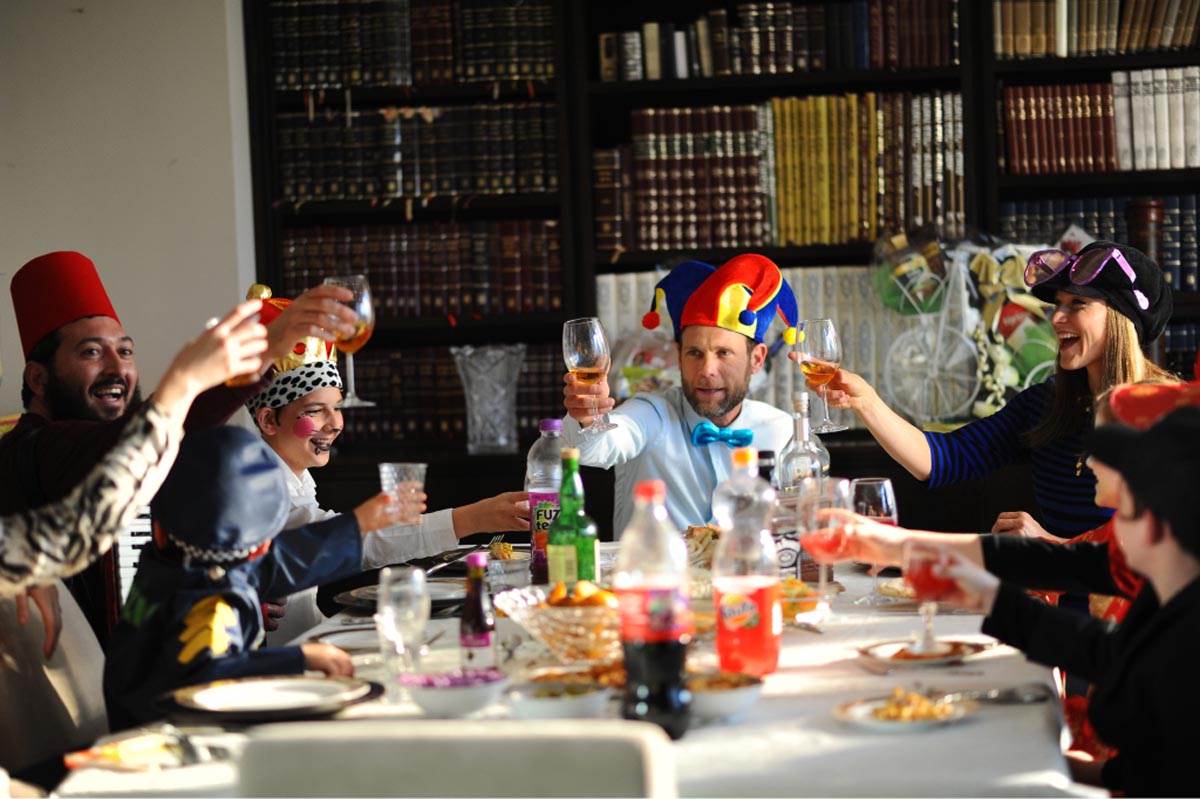
The mitzvah most associated with the holiday of Purim is ”Feast and Joy”. In memory of the great joy that prevailed among the people of Israel after the great miracle that happened to them, we are commanded to hold a festive meal on Purim, to eat tasty foods, and to drink a lot of wine that brings a feeling of joy.
Why specifically wine?
If we pay attention, we’ll notice that all the events that take place in the story of the Megillah revolve around wine, and therefore our sages commanded us to specifically drink wine on Purim:
All the Jews were at a giant feast held in King Ahasuerus’s courtyard for 180 days, the king punished his wife Vashti for refusing to appear before him during the feast – which led to Esther coming in her place, and most importantly: Haman’s downfall and the annulment of the decree occur during wine feasts with Esther and Ahasuerus.
”Until he does not know”
The Talmud presents us with the ‘drunkenness measure’ by which we know if we were joyful as indeed appropriate to rejoice at the Purim meal: ”A person is obligated to get drunk on Purim until he does not know to definitively say whether ”Haman” is the ”cursed” and whether ”Mordechai” is the ”blessed”…
However, this does not mean ‘losing one’s head’ completely and leading to carelessness and disrespect of the commandments, God forbid. Therefore, if a person knows that drunkenness might lead him to undesirable territories, it is better to go to sleep – and from his sleep, he also will not know to differentiate between ”Cursed is Haman” and ”Blessed is Mordechai”…
During the meal
-
- During the meal, one should increase in praises and thanks to the Creator of the world for all the miracles He has done with us in the past and does with us in the present, and also to say Torah ideas and ‘words of Torah’ related to the holiday of Purim.
- It’s good to light a few candles (without a blessing of course) during the meal, in order to increase the feeling of joy.
In many communities, it is customary to eat pastries filled with meat during the meal (in Yiddish: ‘Kreplach’), for two main reasons:
-
- In memory of the Purim miracle that was ‘disguised’ and hidden within a chain of seemingly ‘natural’ events.
- Since Purim is actually a ‘disguised’ holiday: it is customary to hold a festive meal like on other holidays, but on the other hand, it is allowed to do ”work”. Therefore, we eat a food that indeed contains meat – which symbolizes the joy of the holiday according to the sages ”there is no joy without meat and wine” – but it is covered in dough.
In connection to the mitzvah of Feast and Joy, Maimonides, Rabbi Moses ben Maimon, writes:
”It is better for a person to increase in gifts to the poor than to increase in his meals and sending gifts to his friend. Because there is no great and glorious joy other than to bring joy to the hearts of the poor, orphans, widows, and strangers. For one who brings joy to these downtrodden ones is similar to the Divine, as it is said: ‘to revive the spirit of the lowly and to revive the heart of the downcast’.”


